

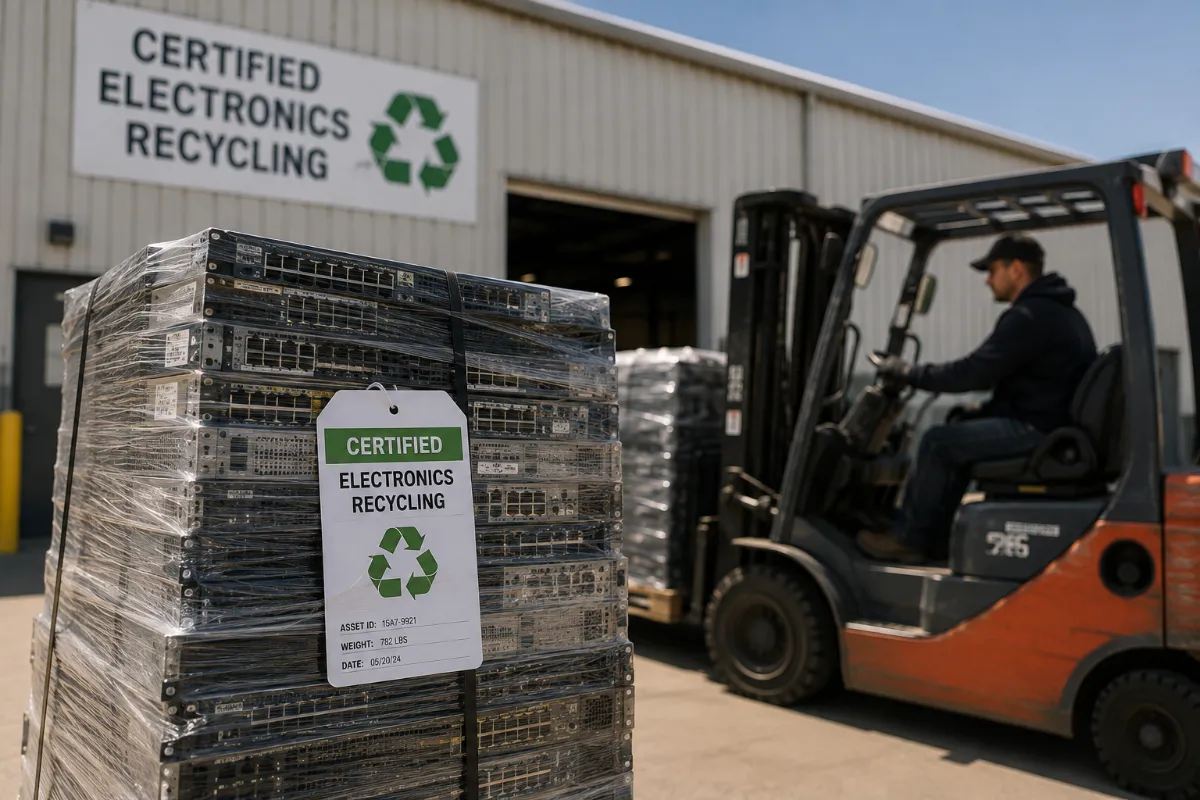
Old IT equipment does not become harmless when it leaves your building. Retired laptops, servers, hard drives, storage arrays, networking gear, and mobile devices can still carry data, hazardous materials, audit risk, and recoverable value.
That is why certified electronics recycling matters.
Certified electronics recycling is the secure, documented, and environmentally responsible process of retiring technology assets. It protects data, tracks equipment, manages downstream vendors, supports environmental compliance, and helps organizations meet ESG and circular economy goals.
For organizations building a formal ITAD program, DES Technologies provides Certified Electronics Recycling for Responsible ITAD as part of a secure asset disposition workflow.
What Is Certified Electronics Recycling?
Certified electronics recycling is more than dropping old devices at a recycler. It is a controlled process for handling retired electronics from pickup through final disposition.
A strong program may include:
- Asset inventory
- Barcode scanning
- Chain of custody
- Data destruction
- Device sorting
- Reuse evaluation
- Commodity recovery
- Downstream vendor control
- Recycling documentation
- Environmental reporting
The goal is simple: protect your organization while keeping usable equipment and valuable materials out of the waste stream.
Why Responsible Recycling Matters
Every retired device has risk attached to it.
A laptop may hold employee files. A server may hold customer data. A storage array may contain business records. Even broken equipment can include drives, SSDs, tapes, batteries, circuit boards, and other components that require proper handling.
Responsible recycling helps your organization:
- Reduce data exposure
- Avoid unmanaged disposal
- Support audit readiness
- Meet internal sustainability goals
- Improve ESG reporting
- Lower environmental liability
- Prove that equipment was handled correctly
The EPA notes that recycling electronics helps conserve natural resources and recover valuable materials such as metals, plastics, and glass. That matters for businesses trying to reduce waste and support a circular economy.
R2v3 and Why It Matters
R2v3 is one of the most important standards in electronics recycling and ITAD. It is managed by SERI, the organization behind the R2 Standard.
R2v3 focuses on key areas such as:
- Data security
- Environmental protection
- Worker health and safety
- Reuse and recycling controls
- Downstream vendor accountability
- Material tracking
- Process documentation
For enterprise teams, R2v3 matters because it gives structure to the recycling process. It helps show that a provider is not simply moving equipment out the door without controls.
DES Technologies uses a risk-first process built around secure ITAD, documented handling, and responsible recycling standards.
The Role of Downstream Vendors
Downstream vendors are companies that receive materials after the first processing stage.
For example, one vendor may handle circuit boards. Another may process metals. Another may manage plastics or batteries. If those downstream vendors are not controlled, your organization can still face risk after the equipment leaves your site.
That is why downstream vendor management is a major part of certified electronics recycling.
A qualified recycling program should document:
- Where materials are sent
- How vendors are reviewed
- What materials each vendor receives
- Whether sensitive components are controlled
- How final disposition is confirmed
Without downstream visibility, your organization may not know where retired equipment actually ended up.
Certified Recycling vs. Basic Disposal
Basic disposal is often fast, cheap, and poorly documented. Certified recycling is structured, traceable, and built for risk control.
| Area | Basic Disposal | Certified Electronics Recycling |
|---|---|---|
| Asset tracking | Limited or none | Documented chain of custody |
| Data security | Often unclear | Data destruction process before recycling |
| Vendor control | Unknown | Downstream vendor oversight |
| Documentation | Minimal | Reports, certificates, and audit records |
| Environmental handling | Unverified | Responsible recycling workflow |
| ESG support | Weak | Better reporting for sustainability teams |
How Certified Electronics Recycling Supports ESG Goals
ESG reporting depends on proof. It is not enough to say your organization recycled old electronics. You need records that show what happened.
Certified electronics recycling can support ESG programs by documenting:
- Equipment collected
- Devices reused or remarketed
- Materials recycled
- Assets diverted from landfill
- Secure destruction activity
- Final disposition results
- Environmental handling methods
This gives sustainability teams cleaner data for reports, procurement reviews, and internal goals.
It also supports circular economy principles. Instead of treating retired electronics as waste, a circular approach looks for the best next use. That may mean reuse, parts recovery, repair, refurbishment, resale, or material recovery.
Common Mistakes to Avoid
Many organizations create avoidable risk during electronics recycling.
Common mistakes include:
- Storing retired equipment for months or years
- Letting employees take old devices without approval
- Using an unknown recycler
- Skipping data destruction
- Failing to track serial numbers
- Ignoring batteries or damaged equipment
- Not asking about downstream vendors
- Accepting verbal promises instead of documentation
The safest approach is to treat retired electronics like active business assets until final disposition is complete.
The Certified Electronics Recycling Process
1. Plan the Project
Start with the scope. Identify what equipment is being retired, where it is located, and who owns the project internally.
Useful details include:
- Asset type
- Quantity
- Location
- Data risk
- Condition
- Reporting needs
- Pickup timing
- Compliance requirements
This step helps prevent missed assets and last-minute confusion.
2. Inventory the Equipment
Inventory is the foundation of a clean ITAD project.
For larger projects, asset records may include:
- Manufacturer
- Model
- Serial number
- Asset tag
- Location
- Device type
- Drive status
- Condition
- Final disposition
Good inventory helps IT, finance, compliance, and procurement teams reconcile records after the project.
3. Secure the Chain of Custody
Chain of custody shows who handled each asset, when it moved, and where it went.
This is especially important for regulated organizations such as healthcare providers, schools, government agencies, financial firms, and enterprise companies with internal security requirements.
A strong chain of custody helps answer the question every auditor asks:
Can you prove the asset stayed under control?
4. Destroy or Sanitize Data
Data-bearing assets should be handled before recycling or reuse.
This may include:
- Software erasure
- Cryptographic erasure
- Degaussing
- Shredding
- Crushing
- Physical destruction
NIST 800-88 is commonly used as a media sanitization reference. The right method depends on the device, data type, reuse plan, and internal policy.
For example, a reusable laptop may be erased and remarketed. A failed hard drive may require physical destruction. A healthcare device may require stricter documentation because of HIPAA-related privacy concerns.
5. Recover Value When Possible
Responsible recycling does not always mean immediate dismantling.
Some retired equipment still has market value. Servers, switches, storage systems, laptops, memory, CPUs, GPUs, and enterprise hardware may qualify for reuse or remarketing after data handling.
This is good for both budget and sustainability. Reuse often delivers a better environmental outcome than recycling alone.
6. Recycle End-of-Life Assets
Equipment with no reuse value should move into certified recycling channels.
This may include:
- Sorting parts
- Separating batteries
- Recovering metals
- Processing circuit boards
- Managing plastics and glass
- Routing materials to approved downstream vendors
The goal is to recover materials safely and document the outcome.
7. Close the Project With Documentation
A completed recycling project should end with a clear paper trail.
Ask for documentation such as:
- Asset disposition report
- Chain of custody records
- Certificates of data destruction
- Recycling certificates
- Weight reports
- Exception reports
- Missing asset reports
- Downstream documentation when needed
This documentation helps your team close the loop.
When Your Organization Should Use Certified Recycling
Certified electronics recycling is useful for almost any business, but it becomes critical when you manage:
- Employee laptops
- Healthcare devices
- School district technology
- Government equipment
- Data center hardware
- Servers and storage systems
- Backup media
- Networking equipment
- Large refresh projects
- Multi-site office cleanouts
If the equipment held data, had asset tags, supported regulated work, or needs ESG reporting, certified recycling is the better path.
How DES Technologies Helps
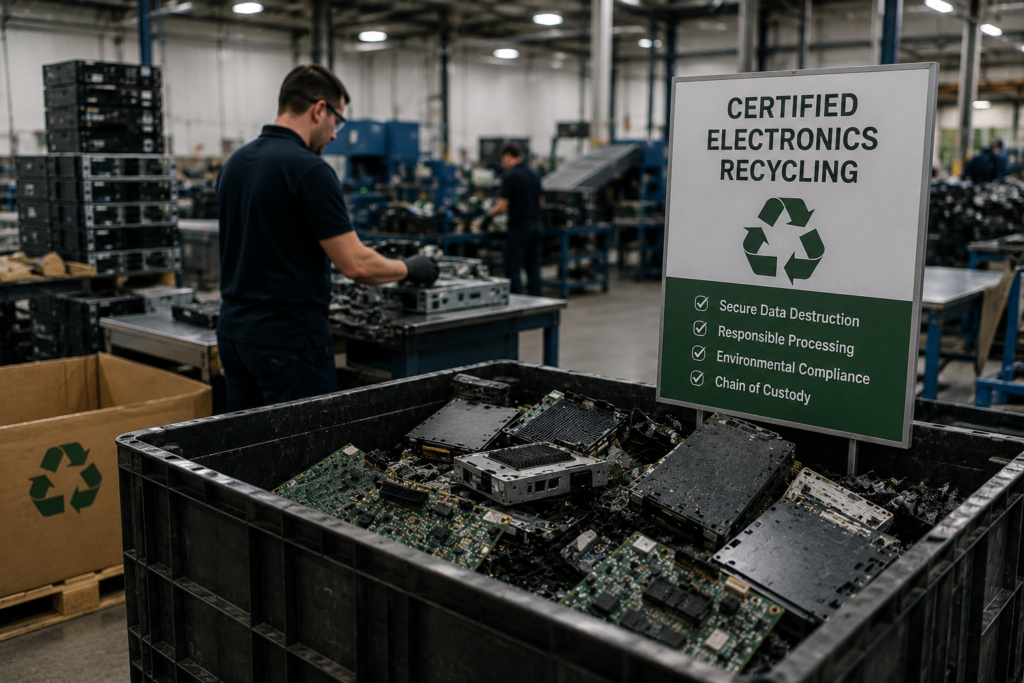
DES Technologies helps organizations manage certified electronics recycling as part of a secure ITAD program. DES supports the full workflow, from project planning through pickup, inventory, data destruction, value recovery, recycling, and reporting.
That means your team gets a cleaner process, stronger documentation, and less internal burden.
DES can help with:
- Responsible recycling
- R2v3-aligned workflows
- Downstream vendor control
- Chain of custody
- Secure data destruction
- ESG-ready reporting
- Environmental compliance support
- Enterprise IT lifecycle management
- Data center and office cleanout projects
If your organization is planning a hardware refresh, decommissioning project, or ongoing ITAD program, start with the DES page on Certified Electronics Recycling for Responsible ITAD.
FAQ
What is certified electronics recycling?
Certified electronics recycling is a documented process for retiring electronic equipment through secure and environmentally responsible methods. It may include inventory, data destruction, reuse, material recovery, downstream vendor control, and final reporting.
Why is R2v3 important in electronics recycling?
R2v3 is important because it sets expectations for data security, environmental practices, worker safety, reuse, recycling, and downstream vendor accountability. It helps businesses choose providers with stronger process controls.
What are downstream vendors?
Downstream vendors are companies that receive equipment, parts, or recovered materials after initial processing. They may handle metals, plastics, circuit boards, batteries, or other materials. Vendor oversight helps reduce environmental and compliance risk.
How does certified electronics recycling support ESG?
Certified electronics recycling supports ESG by documenting reuse, material recovery, recycling activity, landfill diversion, and final disposition. These records help sustainability teams prove how retired technology was handled.
Do electronics need data destruction before recycling?
Yes, data-bearing electronics should be erased, sanitized, or destroyed before recycling or reuse. This includes laptops, desktops, servers, storage arrays, hard drives, SSDs, mobile devices, and backup media.