

Certified electronics recycling helps organizations retire outdated technology without data risk, compliance gaps, or avoidable landfill waste. DES Technologies manages responsible recycling for enterprise IT assets through secure handling, chain of custody, and accountable processing.
When equipment reaches end of life, your team needs more than pickup. You need proof of how assets were handled, where materials went, and how data-bearing devices were protected.
For a broader asset retirement program, visit our ITAD services hub.
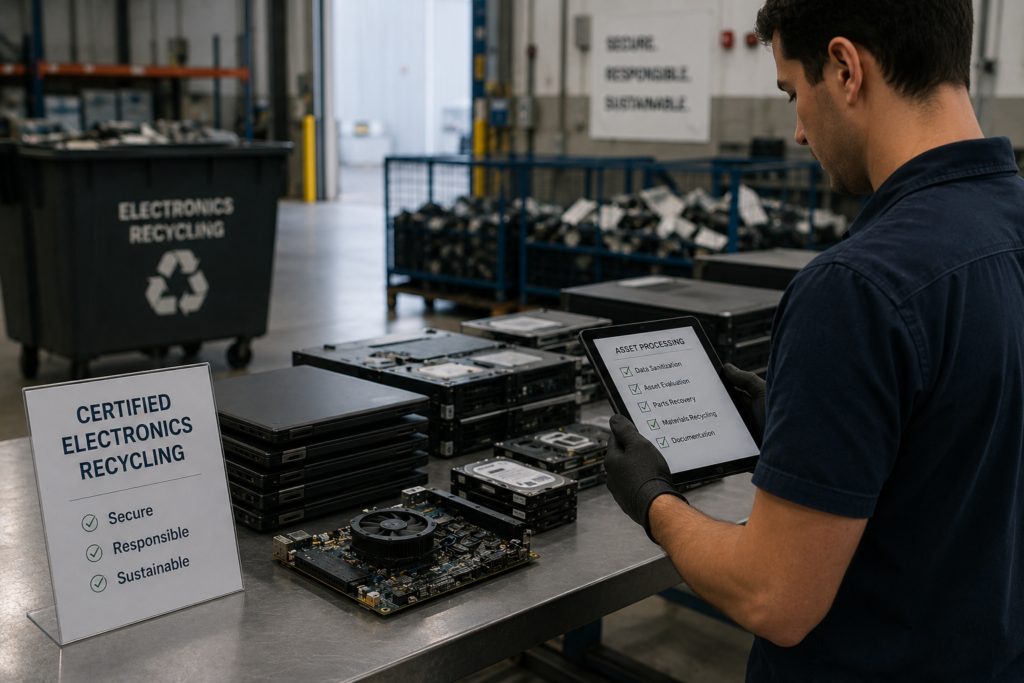
What Certified Electronics Recycling Includes
Certified electronics recycling is the documented process of collecting, sorting, tracking, sanitizing, recycling, or recovering retired IT equipment. It can include laptops, desktops, servers, storage systems, networking gear, hard drives, SSDs, tapes, and mixed electronics.
DES prioritizes reuse and recovery when assets still have value. End-of-life equipment moves through responsible recycling channels that support R2v3 expectations, environmental compliance, ESG goals, and circular economy reporting.
Why Responsible Recycling Matters
A weak recycling process can create missing assets, unmanaged downstream vendors, data exposure, and environmental liability. A strong process gives your team control through final disposition.
DES helps provide:
- Chain of custody from pickup through closeout
- Asset inventory and serialized reporting
- Secure data destruction aligned with NIST 800-88
- Recycling records for audit and ESG teams
- Responsible downstream vendor routing
- Support for enterprise IT lifecycle management
Our Certified Recycling Process
1. Review the Project
DES reviews equipment type, quantity, location, data risk, reporting needs, and compliance requirements.
2. Track Assets
Assets are tracked through intake, processing, and final disposition. Reports can include make, model, serial number, asset tag, condition, and status.
3. Protect Data
Data-bearing assets receive added controls. DES can support erasure, degaussing, or physical destruction based on media type, risk, and policy. These workflows can support HIPAA privacy needs and NIST 800-88 guidance.
4. Reuse, Recover, or Recycle
Reusable equipment may move through value recovery channels. End-of-life electronics move into certified recycling streams for material recovery and responsible disposition.
Recycling Controls That Support Compliance
| Recycling Control | What DES Helps Document |
|---|---|
| Responsible recycling | Controlled handling for retired electronics |
| R2v3 expectations | Reuse, recycling, data security, and downstream controls |
| Downstream vendors | Routing and oversight after primary processing |
| Environmental compliance | Records for internal and regulatory review |
| ESG reporting | Disposition and recycling documentation |
| Circular economy | Reuse, parts recovery, and material recovery |
| Secure data destruction | NIST 800-88-aligned workflows and certificates |
Benefits for Enterprise Teams
Certified recycling helps reduce storage costs, lower data risk, improve audit readiness, and support sustainability reporting. IT teams get a repeatable process. Compliance teams receive better proof. Leadership gets clearer ESG and circular economy outcomes.
Why Choose DES Technologies
DES Technologies brings a risk-first approach to ITAD, secure data destruction, and certified recycling. We manage secure logistics, chain of custody, serialized reporting, downstream vendor control, recycling documentation, and project closeout.
Certified Electronics Recycling FAQs
What is certified electronics recycling?
Certified electronics recycling is the documented process of retiring electronic equipment through secure, responsible, and environmentally controlled methods.
Why does R2v3 matter for electronics recycling?
R2v3 matters because it sets expectations for responsible electronics reuse, recycling, data security, environmental controls, and downstream vendor oversight.
What are downstream vendors in electronics recycling?
Downstream vendors are companies that receive equipment, parts, commodities, or materials after the first processing stage.
Can certified recycling support ESG reporting?
Yes. Certified recycling can provide records for asset disposition, reuse, material recovery, and responsible recycling.
How does DES protect data before recycling?
DES protects data through secure handling, chain of custody, asset tracking, and data destruction workflows aligned with NIST 800-88.
Start a Certified Recycling Program With DES
If your organization is planning a hardware refresh, office cleanout, data center project, or ongoing ITAD program, DES Technologies can help you recycle electronics with less risk and better documentation.
Request a consultation, submit an equipment list, or contact DES to plan a certified electronics recycling workflow that supports environmental compliance, data security, ESG goals, and responsible asset disposition.