

SATA hard drives use the Serial ATA interface to connect storage devices to business systems. They are common in servers, desktops, workstations, storage arrays, DVR systems, and backup appliances. They remain popular because they offer high capacity, broad compatibility, and cost-effective storage.
DES Technologies helps organizations manage retired SATA hard drives through secure ITAD, data destruction, asset recovery, and certified recycling. If your team is clearing out storage, refreshing servers, or decommissioning a data center, DES can help. We provide a documented process from intake to final reporting.
Request a secure asset evaluation for your SATA hard drive project.
What Are SATA Hard Drives?
SATA stands for Serial ATA. It is a widely used storage connection standard for hard drives, SSDs, hybrid drives, and optical drives. According to SATA-IO, SATA supports desktop, mobile, embedded, and enterprise storage markets.
In business environments, SATA hard drives often appear in file servers, backup systems, archive storage, NAS devices, and older data center hardware. They may not be as fast as NVMe or SAS drives. Still, they can hold resale, reuse, or recycling value. Capacity, age, brand, condition, and quantity all matter.
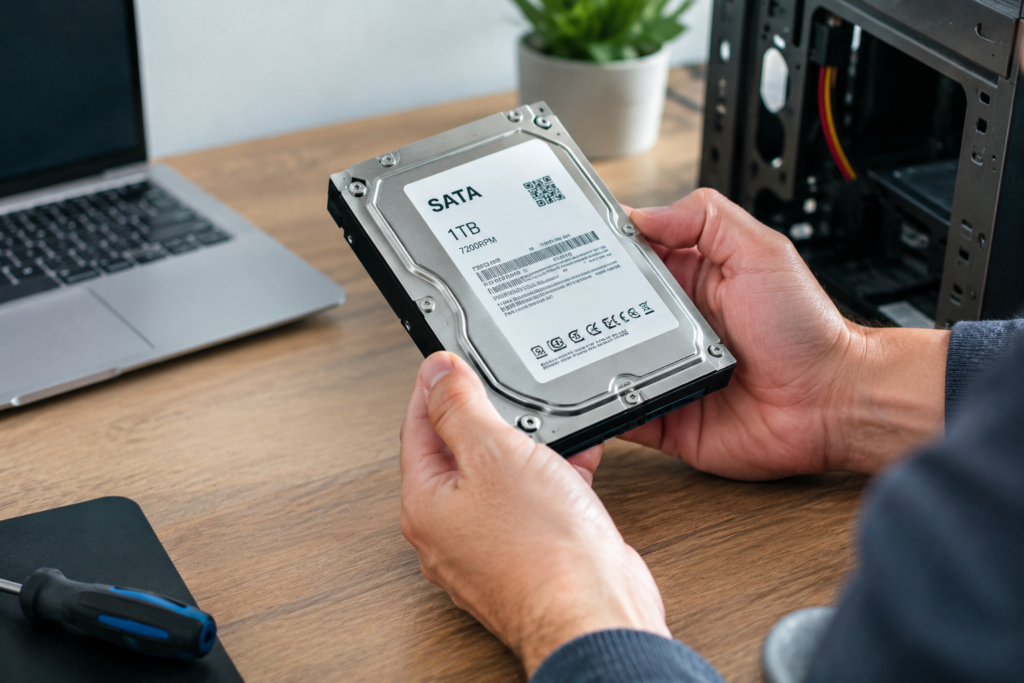
Types of SATA Hard Drives DES Handles
DES works with a wide range of SATA hard drives and related storage media, including hard drives and SSDs.
| SATA Drive Type | Common Use | What DES Reviews |
|---|---|---|
| 2.5-inch SATA HDDs | Laptops, compact servers, mobile workstations | Brand, capacity, health, quantity, and data risk |
| 3.5-inch SATA HDDs | Desktops, NAS systems, servers, and backup appliances | Capacity, model, SMART status, and resale demand |
| Enterprise SATA HDDs | Data centers, archive storage, and bulk storage systems | Lot size, drive hours, part numbers, and chain of custody |
| SATA SSDs | Business desktops, laptops, and storage appliances | Type, capacity, wear level, and sanitization options |
| Mixed SATA lots | Office refreshes, school upgrades, and decommissions | Inventory quality, sorting needs, and recovery value |
Common brands include Western Digital, Seagate, Toshiba, Hitachi, Samsung, HPE, Dell, Lenovo, IBM, and Supermicro-labeled drives.
Why SATA Drive Retirement Matters
Retired SATA hard drives can contain customer records, employee files, financial data, medical records, credentials, backups, and intellectual property.
Deleting files or formatting a drive is not the same as secure data destruction. A weak process can create data exposure, compliance gaps, missing audit records, lost value, and environmental risk.
DES manages SATA drives with secure handling, serialized tracking, and documented workflows. We support enterprise IT, healthcare, education, government, finance, and data center teams.
SATA Hard Drive Buyback Process
DES keeps the SATA hard drive buyback and ITAD process clear.
- Submit your drive list with brand, model, capacity, quantity, condition, and location.
- DES coordinates pickup, shipping, or receiving.
- Assets are tracked through chain of custody.
- Drives are reviewed for resale, reuse, or recycling.
- Data-bearing devices are processed through secure workflows aligned with NIST SP 800-88.
- DES provides closeout reporting, Certificates of Destruction, recycling records, and buyback details when value applies.
Compliance, Security, and Documentation
SATA drives are small, easy to misplace, and often data-rich. That makes documentation critical.
DES supports Zero Trace data destruction, R2v3 certified processes, NIST 800-88 aligned sanitization, physical destruction options, and audit-ready reporting.
For regulated teams, this can support HIPAA, vendor risk reviews, internal security policies, and enterprise IT lifecycle management. If your policy references NAID, NIST, or industry-specific controls, DES can help map the project to your documentation needs.
Sustainability and Asset Recovery
Not every SATA drive should be destroyed. Some drives may still have reuse value after proper data handling. Others should be recycled because of age, condition, failed health checks, or compliance rules.
DES helps your organization recover value where possible while keeping hazardous materials out of landfills.
Why Choose DES Technologies?
DES Technologies has supported organizations since 1965. Our team manages ITAD, secure data destruction, asset recovery, and data center decommissioning. We also handle hard drives, SSDs, tapes, servers, and enterprise storage hardware.
Clients choose DES for R2v3 certified ITAD support, NIST 800-88 aligned data destruction, secure chain of custody, and serialized reporting. DES is based in Southern California and supports organizations nationwide.
Frequently Asked Questions
What are SATA hard drives?
SATA hard drives are storage devices that use the Serial ATA interface. They are common in desktops, servers, workstations, NAS systems, backup appliances, and storage arrays.
What types of SATA hard drives can DES process?
DES can process 2.5-inch SATA hard drives, 3.5-inch SATA hard drives, enterprise SATA HDDs, and SATA SSDs. DES can also handle mixed storage lots.
Do SATA hard drives have buyback value?
Some SATA hard drives have buyback value. Value depends on capacity, brand, model, health, age, quantity, and current market demand. Drives that cannot be reused may still need certified recycling.
How does DES protect data on SATA hard drives?
DES uses secure chain of custody, asset tracking, and data destruction workflows aligned with NIST 800-88. Physical destruction is available when drives cannot be sanitized or must be destroyed by policy.
Can DES handle bulk SATA hard drive projects?
Yes. DES can support bulk SATA hard drive projects from data centers, schools, healthcare organizations, refresh projects, and office cleanouts. DES also supports storage array decommissions.