

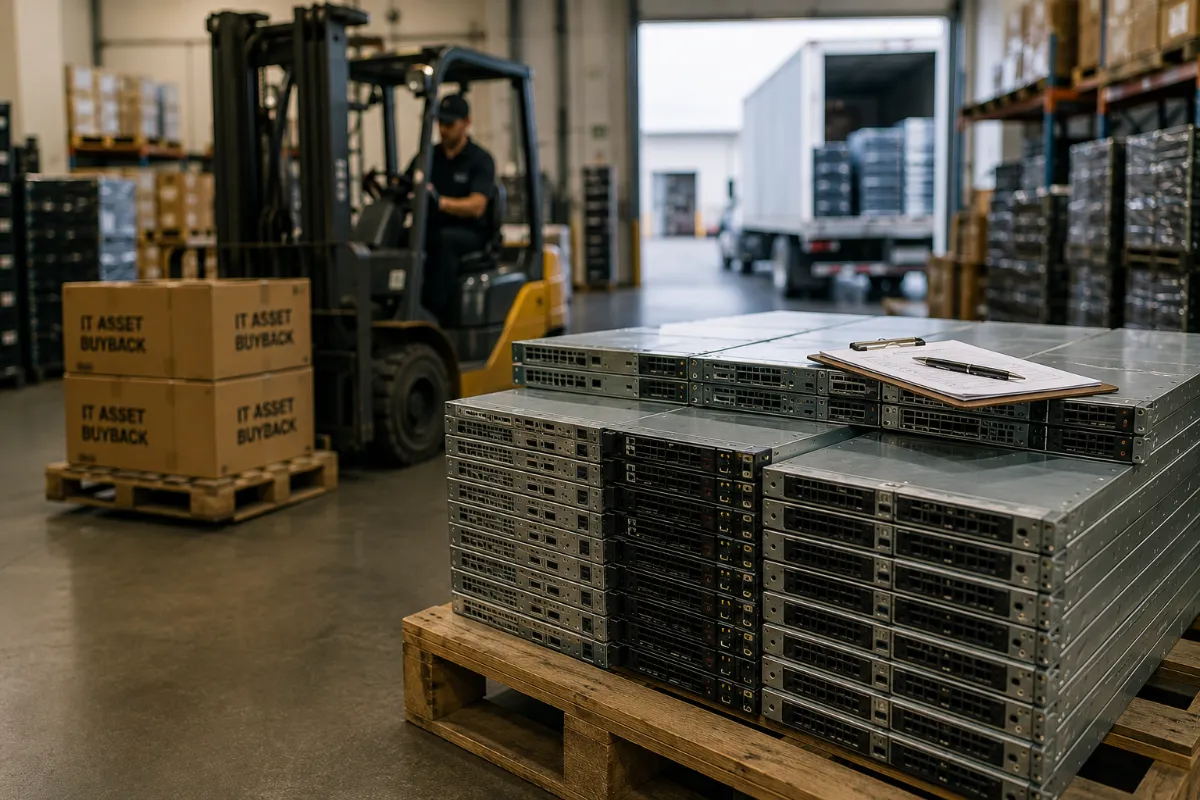
Retired IT equipment can still hold real value. Servers, storage arrays, networking equipment, memory, CPUs, GPUs, laptops, and data center hardware may help offset refresh, relocation, or decommissioning costs.
The key is using a buyback process that protects both value and data. A good IT Asset Buyback Program should explain what equipment is accepted, how valuation works, how logistics are handled, when payment happens, and what records your team receives.
If your organization wants a structured program, DES Technologies provides an IT Asset Buyback Program that connects fair market value, secure logistics, data handling, and reporting.
What Is an IT Asset Buyback Program?
An IT Asset Buyback Program helps organizations recover value from retired, surplus, or decommissioned technology.
Instead of letting old equipment sit in storage, your team can send an asset list, receive a quote, coordinate pickup, protect data-bearing devices, and complete the payment process.
A strong buyback program can support:
- Hardware refresh projects
- Office closures and relocations
- Data center decommissioning
- Cloud migration projects
- Storage room cleanouts
- Lease returns
- Multi-site asset recovery
For larger projects, buyback can also connect with ITAD services and data center services.
What Equipment Does DES Buy?
DES evaluates a wide range of enterprise and business IT equipment.
Common buyback items include:
- Servers and blade systems
- Enterprise storage arrays
- Networking equipment
- Switches, routers, and firewalls
- Memory, CPUs, and GPUs
- Tape libraries and backup systems
- Laptops, desktops, and workstations
- Monitors, docks, and accessories
- Racks, PDUs, and data center hardware
Equipment does not always need to be new to have value. Many buyers still need tested enterprise hardware, spare parts, replacement systems, and components for active environments.
If your team is removing a larger environment, DES can combine buyback with data center hardware removal and project closeout support.
How Valuation Works
Fair market value depends on what the equipment is, how it is configured, and what demand looks like at the time of review.
The biggest valuation factors include:
- Brand and model
- Age and generation
- CPU, memory, storage, and configuration
- Quantity
- Cosmetic and working condition
- Current resale demand
- Included accessories
- Location and logistics needs
- Testing or processing requirements
A server with higher memory, newer CPUs, and clean configuration details may quote better than a system with missing specs. A storage array with shelves, drives, controllers, and support details may also be easier to price than an incomplete lot.
The clearer your asset list is, the faster the quote can move.
What to Include in Your Equipment List
You do not need a perfect inventory to start, but better details help.
For the most accurate quote, include:
- Make and model
- Serial number or asset tag
- Quantity
- Condition
- Location
- Photos of labels
- Specs or configuration details
- Notes about missing parts, locks, damage, or drives
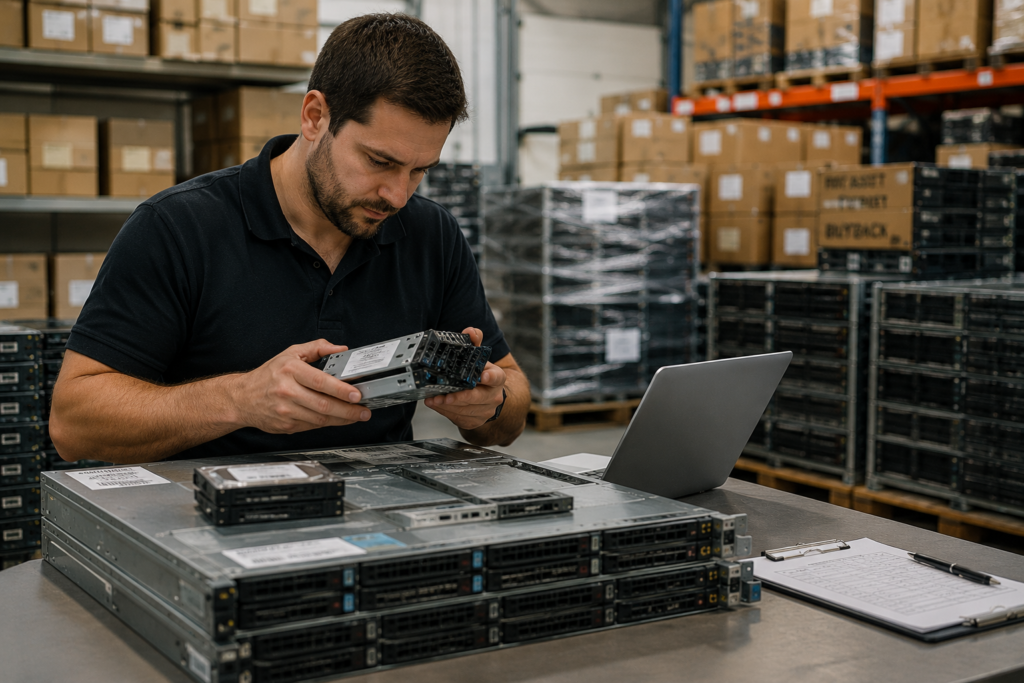
If your records are incomplete, DES can support IT asset inventory and auditing before valuation. This helps your team confirm what is on site before the equipment leaves your control.
How the Payment Process Works
Payment timing depends on the project size, contract terms, asset verification, and testing needs.
For smaller lots, payment may be simpler once equipment is received and verified. For large enterprise lots, payment may involve a line-item review, condition checks, serial matching, and final settlement.
Before the project starts, your team should understand:
- When payment is issued
- What verification is required
- How exceptions are handled
- Whether pricing is fixed or subject to inspection
- What reports are provided after processing
This matters for procurement, finance, and IT teams that need clean records for budget recovery.
Logistics and National Pickup
Logistics can make or break a buyback project.
A box of laptops may be simple to ship. A full rack of servers, storage arrays, and networking gear needs a different plan. Large projects may require packing, palletizing, liftgate service, dock access, secure transportation, or staged pickups.
DES can support national pickup and secure shipping for qualified projects. This helps keep equipment controlled from pickup through processing.
For enterprise teams, logistics should include:
- Pickup coordination
- Packing or pallet requirements
- Site access planning
- Chain of custody
- Transportation records
- Receiving confirmation
- Exception reporting
The goal is to move assets without losing track of value, data, or documentation.
Enterprise Contracts and Multi-Site Programs
A one-time buyback is helpful. A repeatable enterprise program is better for teams with ongoing refresh cycles.
Enterprise contracts can define pricing rules, pickup workflows, reporting needs, payment terms, data security requirements, and recycling expectations. This gives IT, finance, and compliance teams a cleaner process across locations.
This is especially useful for:
- Healthcare systems
- School districts
- Government agencies
- National businesses
- Data center operators
- Multi-office companies
- Managed refresh programs
If buyback is part of a broader lifecycle plan, DES can also support enterprise IT lifecycle management and end-of-life asset handling.
Data Security Comes Before Resale
A buyback program should never create a data risk.
Data-bearing assets need a documented process before reuse, resale, or recycling. That may include data erasure, media sanitization, physical destruction, chain of custody, and certificates of destruction.
The NIST SP 800-88 Rev. 2 media sanitization guidance is a trusted reference for handling data on retired media. DES can support secure data destruction workflows and Phoenix Certified data erasure when data-bearing assets are processed.
This is important for healthcare, finance, education, government, and any business with sensitive da
What Happens to Equipment With No Value?
Not every asset has resale value. Some equipment is too old, damaged, incomplete, or low-demand.
That does not mean it should be ignored. Equipment with no value may still contain data or regulated materials. It may need secure data destruction, certified recycling, and final disposition records.
The EPA electronics recycling guidance explains why reuse and responsible recycling matter for old electronics. DES can help route non-reusable equipment through responsible recycling as part of a complete ITAD program.
Why Choose DES Technologies?
DES Technologies helps organizations recover value without losing control of the process.
DES combines asset buyback, ITAD, logistics, data security, inventory, certified recycling, and reporting. That gives your team one program for valuation, pickup, secure handling, payment, and documentation.
If your team is planning a refresh, office cleanout, data center project, or national hardware recovery program, DES can help you build a better process from the start.
Start Your IT Asset Buyback Review
If your organization has retired servers, storage, networking equipment, components, laptops, or data center hardware, start with the DES IT Asset Buyback Program.
Send your equipment list, request a quote, or ask DES how to structure a secure enterprise buyback program.
FAQ
What equipment does DES buy?
DES evaluates servers, storage arrays, networking equipment, memory, CPUs, GPUs, tape libraries, laptops, desktops, workstations, monitors, docks, and data center hardware.
How does DES determine fair market value?
DES reviews brand, model, age, configuration, condition, quantity, market demand, logistics needs, and resale potential. Clear asset details help speed up valuation.
Can DES support national pickup?
Yes. DES can support national pickup for qualified IT asset buyback projects. Larger projects may include packing, palletizing, secure logistics, chain of custody, and reporting.
How long does the payment process take?
Payment timing depends on project size, asset verification, testing needs, contract terms, and final condition. DES confirms the payment process before work begins.
Can data be destroyed before equipment is resold?
Yes. Data-bearing assets should be sanitized or destroyed before resale, reuse, or recycling. DES can support secure data destruction, chain of custody, and documentation.