

Phoenix Certified Enterprise Server Memory
When infrastructure uptime matters, memory is not a place to guess. DES Technologies supplies Phoenix Certified enterprise server memory for IT teams, data centers, procurement departments, healthcare organizations, schools, government agencies, and businesses that need reliable memory for mission-critical infrastructure.
Whether you are expanding an existing server fleet, replacing failed modules, staging spare parts, or sourcing memory for a refresh project, DES helps you match the right technology, capacity, speed, and configuration to your environment.
Send DES your server model, current memory configuration, target capacity, preferred manufacturers, and quantity requirements. Our team will review available inventory and help you request a quote for tested enterprise memory that fits your project.
Enterprise Memory for Mission-Critical Infrastructure
Enterprise server memory supports the workloads your organization depends on: virtualization, databases, backup systems, analytics, cloud infrastructure, healthcare applications, education platforms, government systems, and business-critical file services.
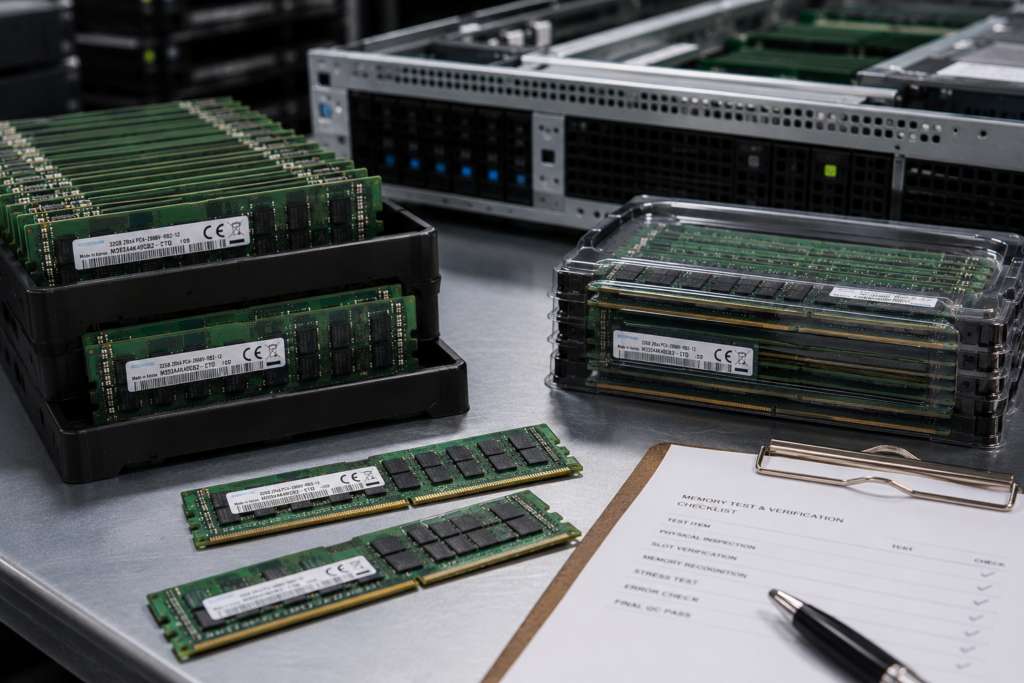
Phoenix Certified memory gives buyers a more controlled sourcing option than unknown surplus parts. DES built the Phoenix Certified process around inspection, testing, verification, serialized tracking where applicable, responsible reuse, and documented IT lifecycle practices.
That process helps procurement and IT teams reduce avoidable risk while keeping enterprise infrastructure running.
Available Memory Types and Technologies
DES can help source a wide range of enterprise server memory based on current availability and compatibility requirements.
| Memory Type | Best Fit | What to Confirm Before Ordering |
|---|---|---|
| DDR4 server memory | Existing enterprise servers, virtualization hosts, storage platforms, and legacy refresh projects | Capacity, speed, rank, ECC support, DIMM population rules, and server compatibility |
| DDR5 server memory | Newer enterprise platforms that need higher bandwidth and current-generation performance | Server generation, supported speeds, module capacity, RDIMM or LRDIMM requirements, and firmware compatibility |
| Registered DIMMs (RDIMMs) | Most enterprise servers that need stable, scalable memory configurations | Module speed, rank, capacity, platform support, and whether the server requires registered memory |
| Load reduced DIMMs (LRDIMMs) | High-capacity server builds where memory density matters | Platform support, capacity targets, memory channel population, and compatibility with existing modules |
| ECC memory | Mission-critical infrastructure where error correction helps protect workload stability | ECC requirement, motherboard and CPU support, module type, and whether the system supports RDIMM, LRDIMM, or another format |
Available memory technologies may include:
- DDR4 server memory
- DDR5 server memory
- Registered DIMMs
- Load reduced DIMMs
- ECC memory for error correction
- High-capacity memory modules for dense server environments
- Memory for rack servers, blade servers, and storage platforms
- Matched memory sets for upgrade and replacement projects
If your environment requires a specific speed, rank, capacity, voltage, manufacturer part number, or server compatibility profile, include those details in your quote request. DES can help identify available options that align with your hardware requirements.
Memory Configurations Available
Server memory is not one-size-fits-all. The right configuration depends on your platform, processor generation, motherboard layout, DIMM population rules, workload, and capacity goals.
DES can help support common enterprise memory needs such as:
- Capacity upgrades for virtualization hosts
- Replacement modules for failed or aging systems
- Matched DIMM sets for balanced performance
- Memory expansion for databases and analytics workloads
- Spare inventory for data center maintenance teams
- Project-based memory sourcing for multi-server refreshes
When possible, include server make and model, existing DIMM layout, target capacity, module speed, and part numbers. This helps DES quote memory that is more likely to fit your infrastructure the first time.
Supported Manufacturers
DES can help source enterprise memory from trusted manufacturers and OEM-compatible inventory based on availability. Common requests may include server memory for Dell, HPE, Lenovo, Cisco, Supermicro, IBM, Oracle, and other enterprise platforms.
Availability changes often. The fastest path is to send your exact requirement, including OEM part numbers or compatible third-party part numbers if you have them. DES will review current stock and provide quote options when matching inventory is available.
Phoenix Certified Memory Process
The Phoenix Certified memory process is built for buyers who need more confidence than a generic used-memory listing can provide.
1. Intake and Identification
DES receives, inspects, and identifies memory modules by type, capacity, speed, label information, and physical condition.
2. Testing and Verification
Qualified memory is reviewed and tested so DES can verify basic function and confirm key specifications before resale.
3. Inventory and Traceability
Modules are organized for resale with supporting inventory information. Serialized tracking is used where applicable to support internal controls and order accuracy.
4. Secure Handling and Responsible Reuse
Memory modules are not storage drives, but they often come from servers, arrays, and systems that may include sensitive data-bearing assets. DES connects memory resale with broader chain of custody, data erasure, and NIST 800-88 compliance services when full systems or storage media are part of the project.
For retired storage devices handled alongside memory, DES aligns media sanitization workflows with NIST SP 800-88 Rev. 2 media sanitization guidance.
5. Packaging and Fulfillment
Memory is packed with care for business and data center delivery. DES can also support secure shipping for larger procurement, refresh, or ITAD projects.
Common Applications
Phoenix Certified enterprise server memory can support a wide range of business and infrastructure needs.
Common applications include:
- Virtualization and private cloud environments
- Database servers
- Backup and disaster recovery systems
- High-availability infrastructure
- Healthcare and records systems
- Education and research platforms
- Government and municipal IT systems
- Data center maintenance and spare parts programs
- Test labs, staging environments, and secondary workloads
For regulated environments, DES also supports industry-specific workflows for healthcare, enterprise, education, and government organizations.
Related Services for Enterprise IT Teams
Many memory purchases are part of a larger infrastructure project. DES can support the full IT lifecycle, from procurement and asset recovery to decommissioning, data destruction, and certified recycling.
Related services include:
- IT asset disposition for retired servers and hardware
- Data center decommissioning for large-scale refreshes
- Asset recovery for equipment with resale value
- Secure data destruction for storage media
- R2v3 certified recycling and reuse programs
- Warranty and guarantee information for DES customers
Sustainable Enterprise IT Lifecycle Management
Phoenix Certified memory supports a more sustainable IT lifecycle by extending the useful life of qualified enterprise components. When tested memory can be reused, organizations may reduce unnecessary new manufacturing demand, control costs, and keep functional hardware in service longer.
When equipment cannot be reused, DES supports responsible downstream handling through certified recycling and documented ITAD workflows. This helps procurement, compliance, and sustainability teams make better decisions across the full lifecycle of enterprise technology.
Why Choose DES Technologies?
DES Technologies has supported enterprise technology, ITAD, secure data handling, and asset recovery since 1965. Based in Southern California and serving organizations nationwide, DES brings procurement support and certified lifecycle expertise together in one partner.
You get more than memory modules. You get a team that understands enterprise infrastructure, compatibility questions, secure logistics, documentation, reuse, recycling, and the pressure IT teams face when critical systems need parts quickly.
Frequently Asked Questions
What is Phoenix Certified memory?
Phoenix Certified memory is enterprise server memory processed through DES Technologies’ proprietary Phoenix Certified program. The process focuses on inspection, testing, verification, inventory control, responsible reuse, and business-ready fulfillment.
What memory types are available?
Availability changes, but DES can help source DDR4, DDR5, RDIMMs, LRDIMMs, ECC memory, high-capacity modules, and matched memory sets for enterprise servers and storage platforms.
Can DES help match memory to my server model?
Yes. Include your server model, current DIMM layout, target capacity, memory speed, part number, and any manufacturer requirements. DES can review current inventory and quote compatible options when available.
What manufacturers does DES support?
DES can help source memory for platforms from Dell, HPE, Lenovo, Cisco, Supermicro, IBM, Oracle, and other enterprise manufacturers, depending on current inventory and compatibility requirements.
Is enterprise server memory sanitized like hard drives?
Memory is volatile and is not handled the same way as hard drives or SSDs. However, memory often comes from larger systems that may include data-bearing storage. DES can support data erasure, NIST 800-88 workflows, chain of custody, and secure data destruction when those assets are part of the project.
Who should buy Phoenix Certified enterprise memory?
Phoenix Certified memory is a strong fit for enterprise IT teams, data centers, healthcare organizations, schools, government agencies, MSPs, SMBs, and procurement teams that need tested memory for mission-critical infrastructure.
Request a Quote for Phoenix Certified Memory
Tell DES what you need: memory type, capacity, speed, form factor, part numbers, server models, quantity, and timeline. Our team will review current availability and help you move forward.