

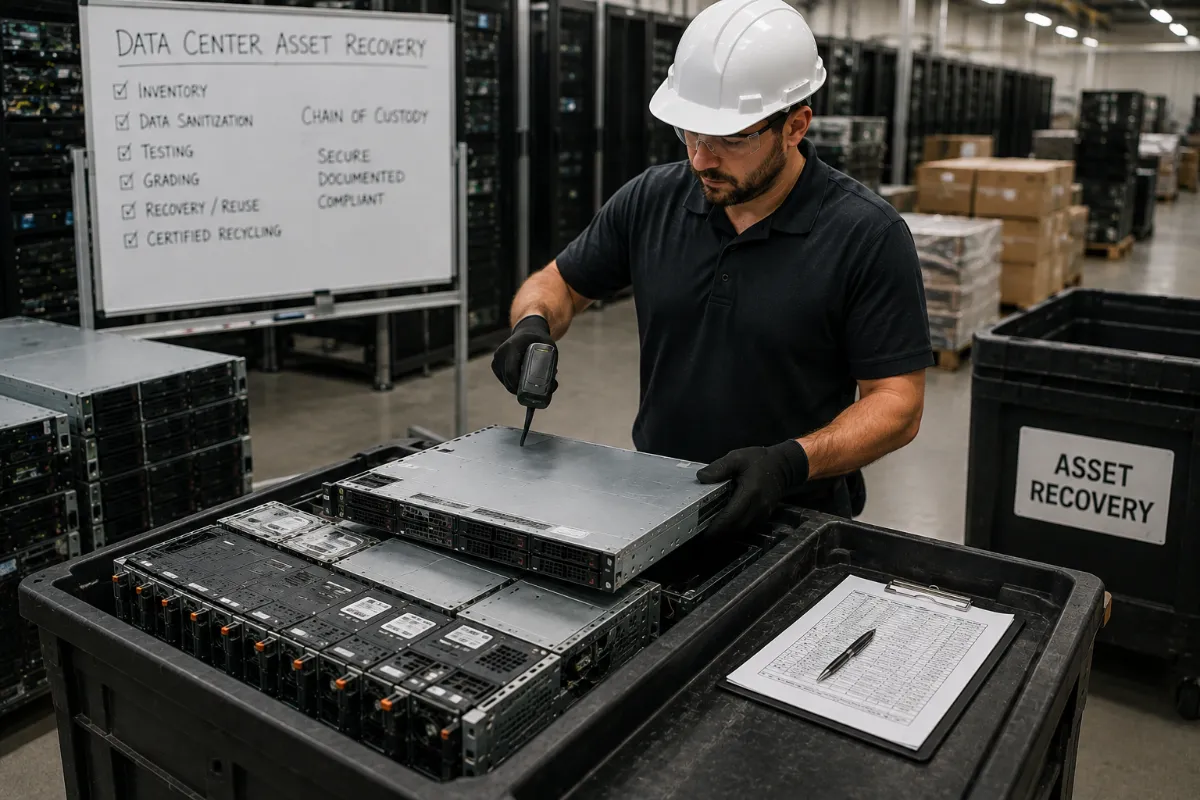
If your data center refresh is coming up, there’s a decision buried in that project that most teams don’t think about until it’s too late: what happens to the equipment you’re pulling out.
Too often, the answer is “someone hauls it away.” That’s a mistake. Servers, SAN storage, switches, and tape infrastructure that still work, or can be repaired to work, carry real resale value. Scrap it without evaluating it first, and you’re leaving money on the table that could have offset the cost of your new hardware.
This guide walks through how data center asset recovery actually works, what equipment holds value, how to estimate what yours is worth, and how to avoid the mistakes that quietly kill resale value before a recovery team ever sees your gear.
What Is Data Center Asset Recovery?
Data center asset recovery is the process of evaluating retired IT infrastructure, servers, storage systems, network equipment, and tape libraries, to determine what can be resold, what can be repaired and resold, and what should be responsibly recycled.
It’s different from a straight data center decommissioning job. Decommissioning focuses on getting equipment out of your facility safely and securely. Asset recovery focuses on what happens to that equipment afterward, and specifically, how much value you can get back from it.
The two go hand in hand. A well-run decommission that ends in a dumpster is still a missed opportunity.
Why Recovering Value Matters More Than Ever
Enterprise hardware budgets are tighter, and refresh cycles are getting more frequent as workloads shift and infrastructure ages faster than it used to. That combination makes recovered value more important, not less.
A few reasons this matters right now:
- Secondary markets for enterprise hardware are active. There’s steady demand for used servers, storage, and networking gear from businesses that don’t need brand-new equipment.
- Component and material costs remain volatile. Recovered systems and parts help offset the unpredictability of new hardware pricing.
- Sustainability reporting is becoming standard. Reselling and refurbishing equipment instead of scrapping it supports environmental goals that more organizations are being asked to report on.
- Refresh budgets rarely grow as fast as infrastructure needs. Recovered capital from an old refresh can directly reduce the net cost of the next one.
What Equipment Actually Holds Resale Value
Not everything in a data center is worth the same, and assuming old equipment is worthless is one of the most common ways companies underestimate what they’re sitting on.
Enterprise Servers
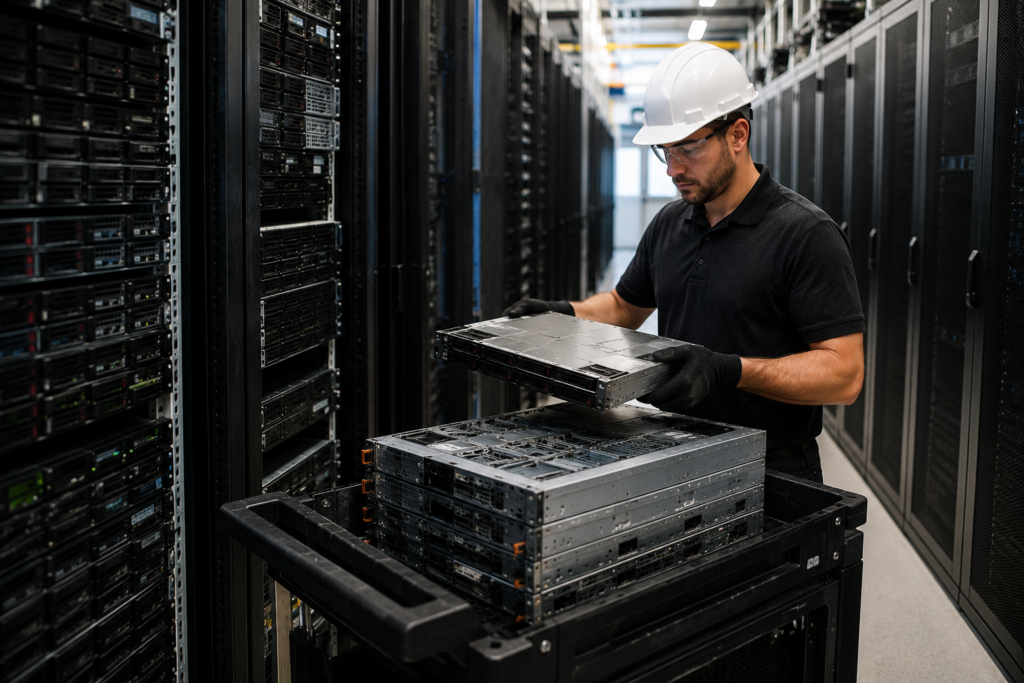
Rack, blade, and tower servers from major manufacturers hold consistent resale value, especially when they’re still under a reasonable age range and in working condition. Even non-working units often have valuable components, like processors, memory, and drives, that can be recovered separately.
Enterprise Storage and SAN Systems
Storage arrays and SAN infrastructure are frequently underestimated. Many organizations assume a decommissioned SAN system has no market, when in reality, functioning or repairable storage systems can recover significant value, particularly from businesses running similar infrastructure that need spare or replacement units.
Network Equipment
Switches and routers often get bulk-scrapped without individual evaluation, which is a mistake. Network gear tends to hold better resale value than most teams expect, especially enterprise-grade switches from established manufacturers.
Tape Infrastructure
As more organizations migrate away from tape-based backup, tape libraries and related infrastructure are being retired in volume. That equipment still has a market, particularly among businesses maintaining legacy backup systems or archival requirements.
If you’d rather sell working equipment outright instead of running it through a full recovery evaluation, the IT equipment buyback program is built for that.
How to Estimate What Your Equipment Is Worth
Before committing to a decommissioning timeline, it helps to have a realistic estimate of recovery value, not a guess. That’s where an ROI calculator becomes useful.
A good asset recovery estimate factors in:
- Equipment type and manufacturer
- Age and model
- Condition and working status
- Quantity
- Current secondary market demand
Here’s what a sample estimate might look like for a mid-size data center refresh:
| Equipment Type | Estimated Units | Estimated Recovery Value |
|---|---|---|
| Enterprise servers | 40 units | $18,000 – $32,000 |
| SAN storage arrays | 6 units | $22,000 – $45,000 |
| Network switches | 60 units | $9,000 – $16,000 |
| Tape infrastructure | 4 libraries | $4,500 – $9,000 |
These numbers shift based on market conditions and equipment specifics, but the exercise matters. Running your equipment list through the data center asset recovery ROI calculator before you finalize a refresh budget gives you a number to plan around instead of an unknown.
The Data Center Asset Recovery Process, Step by Step
A properly run recovery project follows a consistent sequence, regardless of how much equipment is involved.
- Inventory the equipment. Document makes, models, quantities, and condition for everything being retired.
- Get a preliminary valuation. An experienced recovery partner can provide an estimated range before removal even begins.
- Remove equipment securely. On-site de-installation and de-racking should be handled by a team that understands data center environments, not a general hauling service.
- Destroy data first. Every data-bearing device needs to be sanitized or destroyed before any resale evaluation happens. This step is non-negotiable.
- Test and grade. Functional equipment gets tested and graded for resale. Non-functional units get evaluated for parts recovery or certified recycling.
- Remarket the equipment. Graded equipment moves through resale channels to recover value.
- Report the results. You should receive documentation showing what was destroyed, what was recycled, and what was recovered.
Mistakes That Quietly Kill Resale Value
Most lost value doesn’t happen because equipment is worthless. It happens because of how it’s handled during decommissioning.
- Scrapping equipment without evaluation. Assuming old hardware has no value is the single biggest cause of lost recovery.
- Mixing working and non-working units without sorting. Bulk lots get discounted; sorted, graded equipment sells for more.
- Skipping data destruction documentation. Buyers and resale channels want proof equipment was handled securely, and missing documentation can slow or block resale.
- Waiting too long to decommission. Resale value declines the longer equipment sits idle after being pulled from production.
- Using a general hauling or recycling vendor instead of a recovery specialist. A vendor focused on volume and scrap weight isn’t incentivized to evaluate individual resale value the way a dedicated ITAD services provider is.
A Real-World Example
An enterprise IT team recently went through a storage refresh, replacing an aging SAN environment with newer infrastructure. Their original plan was straightforward: decommission the old SAN systems and scrap them along with a batch of retired switches.
Before that happened, the equipment was evaluated instead. The SAN arrays, still functional, had solid resale demand from organizations running similar legacy environments. The switches, initially slated for bulk scrap, were sorted and graded individually rather than lumped together.
The recovered value from that evaluation covered a meaningful portion of the new storage purchase. Scrapped outright, that same equipment would have returned only a fraction of its actual worth.
Where Compliance and Security Fit In
Recovering value doesn’t mean cutting corners on security. Every device capable of holding data needs to be sanitized or destroyed to recognized standards, such as NIST 800-88, before it’s evaluated for resale. A documented chain of custody from removal through final disposition protects your organization and gives your compliance team something to point to if it’s ever needed.
This is also where a specialized asset recovery partner earns its value. Handling resale and data security as separate, disconnected steps creates risk. Handling them as one coordinated process, with data destruction always happening first, doesn’t.
Recovery Supports Sustainability Goals Too
Every server or SAN system that gets remarketed instead of scrapped is one less piece of hardware manufactured from raw materials. Equipment that genuinely can’t be resold should still be routed through certified recycling rather than landfill disposal. A well-run asset recovery program supports your budget and your sustainability commitments at the same time, without treating them as competing priorities.
Ready to See What Your Equipment Is Worth?
If you’re planning a data center refresh, migration, or full decommission, don’t let recoverable value get scrapped by default. A proper evaluation, backed by secure data destruction and documented reporting, can meaningfully offset the cost of your next infrastructure investment.
Get a data center asset recovery estimate for your servers, storage, switches, and tape infrastructure before you finalize your decommissioning plan.
Frequently Asked Questions
What is data center asset recovery? Data center asset recovery is the process of evaluating retired servers, storage systems, network equipment, and tape infrastructure to determine what can be resold, repaired, or recycled, with the goal of recovering value instead of scrapping equipment outright.
How do I know what my old data center equipment is worth? Value depends on equipment type, manufacturer, age, condition, and current market demand. An ROI calculator or a preliminary valuation from a recovery specialist can give you a realistic estimate before you commit to a decommissioning timeline.
Is it safe to resell servers and storage that held company data? Yes, as long as data destruction happens before any resale evaluation. Devices should be sanitized or destroyed according to standards like NIST 800-88, with documented proof of destruction, before equipment moves into resale or recycling channels.
Do network switches have resale value, or should they just be scrapped? Enterprise-grade switches often hold more resale value than teams expect. Evaluating them individually instead of bulk-scrapping is one of the easiest ways to recover value that would otherwise be lost.
What happens to equipment that can’t be resold? Equipment that can’t be repaired or resold should be routed through certified recycling rather than landfill disposal, recovering usable materials while keeping the process environmentally responsible.