

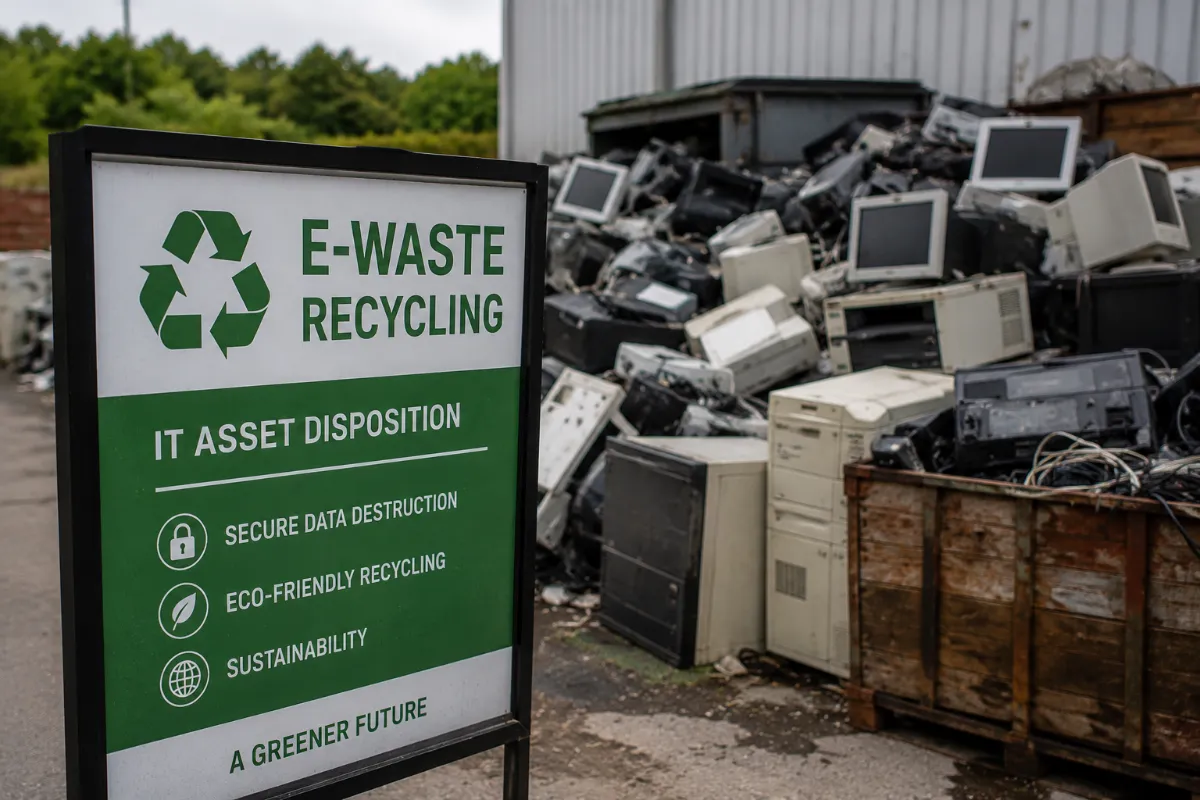
End-of-life IT asset management is the process of retiring technology in a controlled, documented way. It protects data, preserves chain of custody, supports compliance, recovers value where possible, and routes unusable equipment into responsible recycling.
For many organizations, the risk begins when hardware leaves daily use. A laptop in a storage closet can still hold sensitive data. So can a server pulled from a rack or a bin of retired drives. Without a clear plan, those assets can become an audit problem, a security gap, or a missed recovery opportunity.
DES Technologies helps organizations manage this process through secure ITAD workflows. For a full service overview, visit our End-of-Life IT Asset Management page.
What End-of-Life Planning Should Cover
End of life planning should start before the first asset is unplugged. A good plan tells every team what happens, who owns each step, and what documentation will be provided at the end.
Your plan should define:
- Which assets are in scope
- Where the assets are located
- Who approves release
- What data may be present
- Which assets need secure logistics
- What data destruction method applies
- How value recovery will be reviewed
- What records are required for compliance
- Which equipment must be recycled
This is especially important for healthcare, education, government, finance, and data center environments. These teams often need proof that retired equipment was handled correctly.
Why Compliance Starts With Inventory
You cannot protect what you cannot track. Inventory is the first control in an end-of-life ITAD program.
At minimum, a retired asset inventory should include:
| Field | Why It Matters |
|---|---|
| Asset type | Helps classify risk and processing method |
| Manufacturer and model | Supports valuation and disposition planning |
| Serial number | Creates asset-level tracking |
| Location | Helps plan secure logistics |
| Data status | Identifies systems that need sanitization or destruction |
| Final disposition | Shows whether the asset was reused, recycled, or destroyed |
Good inventory data makes every next step easier. It helps DES manage chain of custody, process assets correctly, and prepare closeout reports for compliance teams.
Chain of Custody Is the Control Layer
Chain of custody tracks who handled an asset, where it moved, and how it was processed. It is one of the most important parts of end-of-life IT asset management. Retired hardware often moves through several hands before final disposition.
A strong chain-of-custody process helps answer questions like:
- When did DES receive the equipment?
- Which assets were included?
- Who handled the assets?
- Where were they processed?
- Which data destruction method was used?
- What final disposition was completed?
This documentation matters during audits, vendor reviews, insurance reviews, and internal security investigations. It also reduces confusion between IT, procurement, facilities, and finance.
Secure Logistics Reduce Risk Before Processing
Secure logistics is more than moving equipment from one place to another. It is the controlled transfer of assets that may contain data, value, or regulated material.
For small projects, secure logistics may involve packed and tracked shipments. For larger projects, it may require coordinated pickup, staged removal, palletization, sealed containers, or scheduled data center removal.
DES supports secure logistics for:
- Laptop and desktop refreshes
- Server retirement projects
- Office cleanouts
- Data center decommissioning
- Storage array removals
- Drive and SSD disposition
- Mixed IT asset lots
The goal is simple: assets should not disappear between collection and final reporting.
Data Destruction Is Not Optional
Retired equipment can contain customer records, employee files, health information, student data, credentials, financial records, backups, and intellectual property. Deleting files or resetting a device is not enough for most business environments.
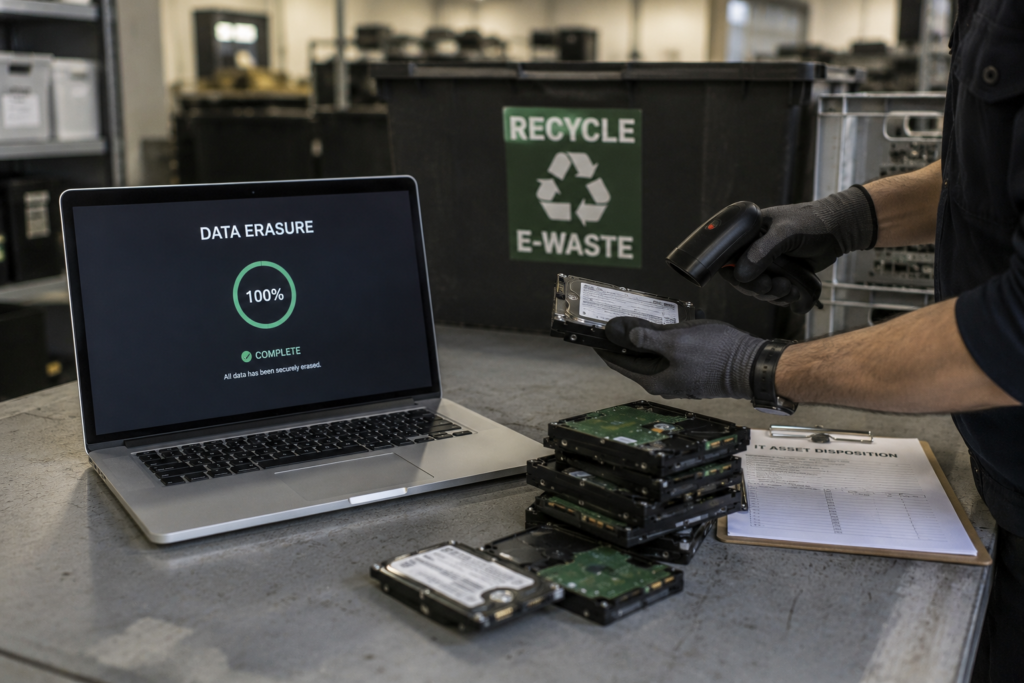
DES uses data destruction workflows aligned with NIST SP 800-88. Depending on the device and policy, data destruction may include erasure, degaussing, shredding, crushing, or other physical destruction methods.
The right method depends on:
- Device type
- Data sensitivity
- Compliance requirements
- Reuse potential
- Client policy
- Audit needs
When the work is complete, documentation may include Certificates of Destruction, asset reports, and disposition summaries.
Value Recovery Helps Offset Project Costs
Not every retired IT asset is waste. Some equipment still has reuse or remarketing value after proper data handling.
Value recovery may apply to:
- Business laptops and desktops
- Enterprise servers
- Storage systems
- Networking equipment
- Memory and processors
- Hard drives and SSDs
- Data center hardware
Value recovery can help offset refresh, relocation, decommissioning, and recycling costs. It also keeps usable hardware in circulation longer, which supports sustainable IT lifecycle management.
That said, value should never come before security. DES evaluates reuse only after data risk, condition, demand, and compliance needs are reviewed.
Recycling Handles What Cannot Be Reused
Some equipment is too old, damaged, incomplete, or data-sensitive to reuse. In those cases, recycling becomes the safest path.
Certified recycling helps organizations avoid improper disposal and reduce environmental impact. It also supports internal sustainability goals and ESG reporting.
DES supports responsible recycling for end-of-life hardware, including systems that cannot be remarketed. Our process is designed to protect data, reduce waste, and maintain documentation through final disposition.
End-of-Life ITAD Checklist
Use this checklist before your next refresh, office cleanout, or data center project:
- Build a complete asset list.
- Identify data-bearing devices.
- Confirm compliance requirements.
- Decide who approves release.
- Plan secure logistics.
- Require chain-of-custody documentation.
- Match data destruction methods to policy.
- Review value recovery options.
- Route non-reusable assets to certified recycling.
- Collect certificates and closeout reports.
This checklist creates a cleaner handoff between internal teams and your ITAD partner.
Why DES Technologies
DES Technologies has supported enterprise technology, ITAD, secure data destruction, asset recovery, and recycling since 1965. DES manages projects for enterprise IT teams, data centers, healthcare organizations, schools, government agencies, and businesses with complex compliance needs.
Our process is built around risk control:
- We manage secure logistics.
- We track chain of custody.
- We execute data destruction workflows.
- We document final disposition.
- We recover value where appropriate.
- We route end-of-life equipment to certified recycling.
If your organization needs a structured program, start with our End-of-Life IT Asset Management service page.
Frequently Asked Questions
What is end-of-life IT asset management?
End-of-life IT asset management is the process of retiring technology assets in a controlled way. It includes planning, inventory, secure logistics, chain of custody, data destruction, value recovery, recycling, and reporting.
Why does chain of custody matter in ITAD?
Chain of custody shows who handled each asset, where it moved, and how it was processed. It gives compliance and security teams proof that retired equipment stayed under control.
What assets should be included in an end-of-life ITAD program?
Include laptops, desktops, servers, storage systems, hard drives, SSDs, tapes, networking equipment, mobile devices, and data center hardware.
How should data destruction be handled for retired equipment?
Data destruction should follow a documented workflow based on the device, data risk, and policy requirements. DES aligns workflows with NIST 800-88 and can support erasure, degaussing, or physical destruction.
Can retired IT equipment still recover value?
Yes. Some retired equipment may have value after proper data handling. DES evaluates reusable assets for value recovery and routes non-reusable equipment to certified recycling.
Plan Your Next IT Asset Retirement Project
If your organization is planning a hardware refresh, data center decommission, relocation, office cleanout, or ongoing ITAD program, DES Technologies can help. We help you manage the process with less risk and better documentation.