

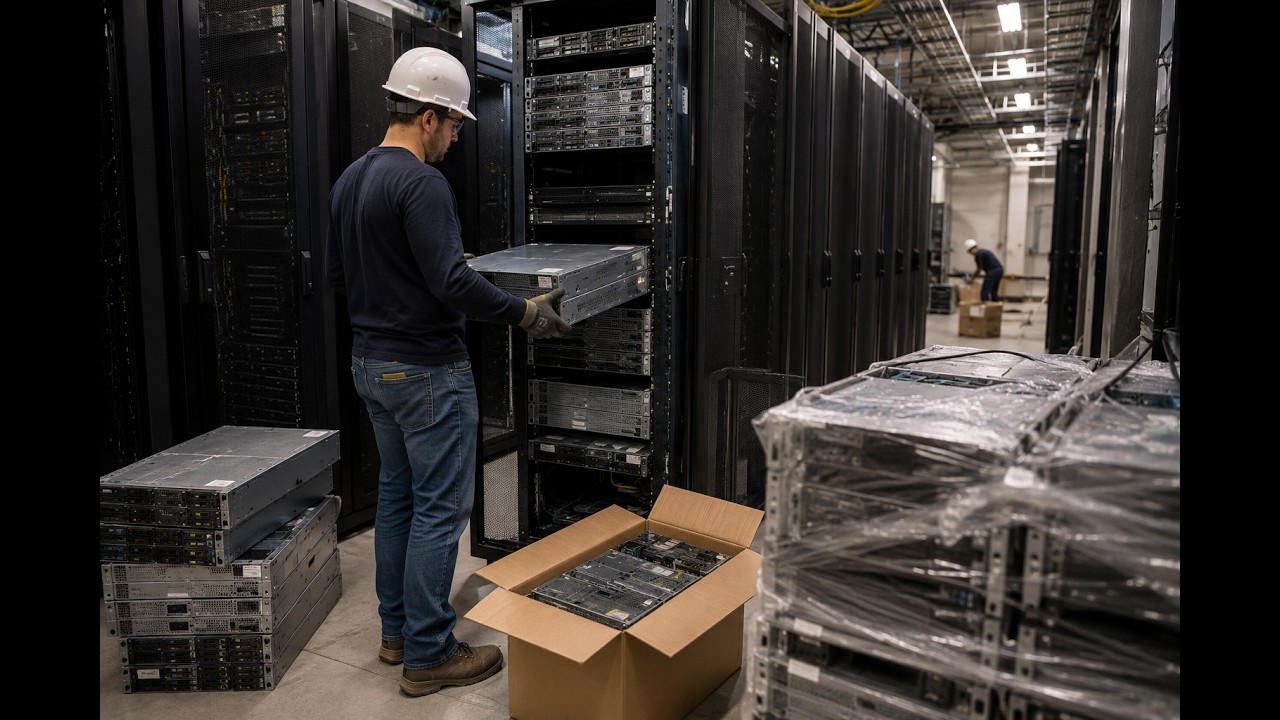
Data center decommissioning is the onsite process of shutting down, de-racking, packing, and removing infrastructure. ITAD is the secure disposition process that follows, including data destruction, chain of custody, asset recovery, resale, recycling, and final reporting. In this video, DES Technologies explains why most data center exit projects need both.
Many teams use “data center decommissioning” and “ITAD” as if they mean the same thing. They are closely connected, but they solve different problems. Decommissioning focuses on the field operation. It deals with site access, power dependencies, cabling, racks, servers, storage systems, networking hardware, packing, freight, and facility deadlines.
ITAD, or IT Asset Disposition, focuses on what happens to equipment after it leaves active use. That includes inventory tracking, secure data erasure, physical data destruction, resale evaluation, certified recycling, audit records, and Certificates of Data Destruction. If decommissioning gets equipment out of the data center, ITAD closes the risk around data, value, compliance, and final disposition.
This distinction matters because a clean hardware removal is not enough on its own. Retired servers, drives, SSDs, storage arrays, tapes, switches, routers, and firewalls may still contain sensitive data or valuable components. Without a documented ITAD process, organizations can lose resale value, break chain of custody, miss compliance records, or recycle equipment that should have been recovered for value.
DES Technologies helps organizations manage both sides of the project. Our team supports data center decommissioning, IT asset disposition, data center hardware removal, secure shipping, chain-of-custody documentation, and data erasure. The goal is to move from rack to final report with fewer gaps, fewer handoffs, and better documentation.
Key Takeaways
- Data center decommissioning is the physical field operation.
- ITAD is the secure disposition and documentation process.
- Most data center exits need both services.
- Hardware removal should not happen without a data plan.
- Chain of custody protects assets from pickup to final disposition.
- Secure shipping connects onsite removal to downstream ITAD.
- Asset recovery can help preserve resale value.
- Certified recycling should be used for end-of-life equipment.
Video Transcript
Data center decommissioning and ITAD are related, but they are not the same service. Decommissioning is the work that happens inside the facility. It includes planning the shutdown, checking dependencies, removing equipment from racks, packing assets, and preparing the site for turnover or reuse.
ITAD is what happens to the equipment after it leaves active use. It includes asset tracking, data destruction, resale, recycling, chain of custody, and final reporting. If your project involves servers, storage, drives, tapes, switches, or other data-bearing hardware, ITAD is not optional.
The safest projects connect both workflows from the start. That means planning onsite removal, secure shipping, data erasure, asset recovery, certified recycling, and documentation before the first asset is pulled from the rack.
Need help planning a data center exit or ITAD project? Request a consultation with DES Technologies.