In today’s rapidly evolving technological world, the market for used IT hardware has become more important than ever. Businesses looking to reduce operational costs, individuals wanting to upgrade equipment affordably, and IT asset disposition (ITAD) companies maximizing equipment recovery all rely on a clear understanding of what impacts used hardware pricing.
Whether you’re buying, selling, or trading in IT equipment, the question remains: What truly drives used IT hardware prices? Why does one five-year-old laptop still hold value while another becomes nearly worthless? Why do some servers retain 60–70% of their original price after three years, while others drop by half in just 12 months?
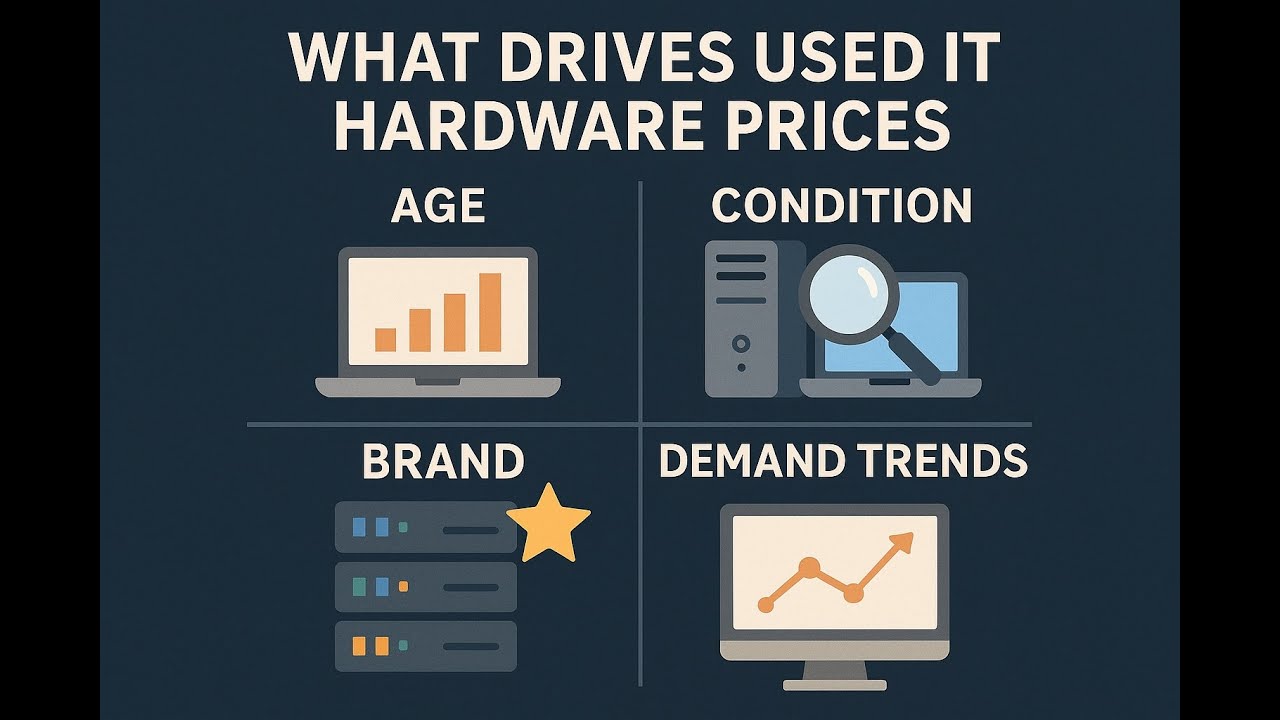
This article dives deep into the four primary pricing drivers—Age, Condition, Brand, and Demand Trends—and explores how each factor influences resale value. We’ll also discuss market nuances, lifecycle patterns, and actionable insights to help you maximize ROI when buying or selling used IT gear.

1. Age: The Most Predictable (Yet Not Always the Most Powerful) Variable
Age is the most intuitive factor in determining used hardware pricing. As equipment gets older, value typically decreases—yet the rate and pattern of depreciation depend heavily on the product category and market conditions.
Typical Depreciation Curve
Most IT hardware follows a similar depreciation schedule:
-
Year 0–1: Rapid Drop (20–40%)
Once equipment leaves the “new” category, it loses value quickly. -
Year 1–3: Moderate Decline (10–15% annually)
During this period, hardware is still useful, compatible with current software, and widely deployed. -
Year 3–5: Steady Decline (15–20% annually)
Many businesses begin upgrades, especially for laptops, desktops, and networking gear. -
Year 5+: Sharp Decline or Stabilization
Some hardware drops to scrap value, while enterprise gear (servers/switches) may hold stable prices if secondary market demand continues.
Why Age Isn’t Always Linear
Some exceptions cause age-related values to deviate from the typical curve:
A. Supply Chain Disruptions
During events like COVID-19, chip shortages, or global logistics issues, used equipment prices can rise, even for older gear. In 2020–2022, many laptops and networking devices sold for higher prices used than they had just a year prior.
B. End-of-Life (EOL) Surges
When manufacturers end support, organizations rush to buy replacement units to maintain homogeneity—temporarily increasing demand for older models.
C. Performance Plateaus
Some devices don’t age as fast because performance improvements slow down.
Example: business laptops with Intel 8th-gen processors (2017–2020) remained viable for years because newer generations weren’t drastically faster.
Key Insight:
Age sets the baseline value, but market events can override age trends. If you’re buying used, slightly older hardware with long support cycles often provides the best price–performance ratio.
2. Condition: The Most Immediate and Visible Price Driver
Condition affects pricing as much as—if not more than—age. Buyers are willing to pay significantly more for equipment that looks and functions like new.
The Four Main Categories of Condition
Most ITAD companies and resellers use these tiers:
-
Grade A (Excellent)
-
Minimal cosmetic wear
-
Fully functional
-
No scratches or dents
-
Screen free of defects
-
Can command 20–40% higher resale values

-
-
Grade B (Good)
-
Light wear, minor scratches
-
Fully functional
-
Small blemishes allowed
-
The most common category for business surplus devices
-
-
Grade C (Acceptable / Heavy Use)
-
Visible wear, dents, or screen marks
-
Still fully functional
-
Often sold in bulk at deeply discounted prices
-
-
For Parts / Not Working
-
May power on or may not
-
Used for refurbishing, repairs, or recycling
-
Value based primarily on salvageable components
-
Why Condition Impacts Price So Strongly
A. Cosmetic Impressions Affect Perceived Performance
Even if hardware functions perfectly, cosmetic flaws reduce buyer confidence. This is especially true for laptops, smartphones, and desktops.
B. Business Buyers Prefer Uniform, High-Grade Hardware
Companies purchasing in bulk want units that look the same, especially for employee-facing devices. This drives up demand (and prices) for Grade A/B equipment.
C. Repair Costs Add Risk for Buyers
If hardware needs new batteries, screens, hinges, or power supplies, the cost and labor decrease its value.
Components That Impact Condition-based Pricing
Some condition elements disproportionately affect resale value:
-
Battery Health (Laptops/Tablets)
Poor battery performance can reduce value by 10–20%. -
LCD Quality
Scratches, dead pixels, or pressure spots significantly drop value. -
Keyboard Wear
Especially important on premium brands like Apple or Lenovo. -
Server Components
-
Drive life
-
Fan hours
-
Power supply condition
-
Dust levels
-
Key Insight:
Condition is the fastest way to raise (or lose) value. Investing in proper cleaning, testing, and refurbishment often pays off substantially in resale margins.
3. Brand: The Silent Force Behind Resale Value
Brand reputation plays a major role in determining the resale value of used IT equipment. Some manufacturers simply hold value better due to durability, desirability, or enterprise trust.
Top Brands That Hold Resale Value Best
A. Laptops
-
Apple (MacBook) – Holds value exceptionally well; strong consumer demand.
-
Dell Latitude / Dell Precision – Business industry standard.
-
Lenovo ThinkPad – Extremely durable and trusted by enterprises.
-
HP EliteBook / ZBook – Reliable with strong parts availability.
These brands can retain 40–60% of their value after 3 years, depending on the model.
B. Servers
-
Dell PowerEdge
-
HPE ProLiant
-
Cisco UCS
Enterprise brands maintain long-term demand due to compatibility with existing infrastructure—some remain valuable for up to 7–10 years.
C. Networking Equipment
-
Cisco is the undisputed leader in retained value due to certification programs (CCNA, CCNP, etc.).
-
Ubiquiti and Juniper retain lower but stable prices.
Why Brand Impacts Value
A. Reliability and Durability
Business-grade hardware undergoes more rigorous testing than consumer models.
B. Enterprise Adoption
Companies standardize around certain brands, increasing long-term secondary market demand.
C. Repairability and Parts Availability
Brands like Dell and Lenovo offer easily replaceable components, boosting refurbishment value.
D. Prestige and Consumer Perception
Apple, for instance, benefits from strong desirability—even older models sell quickly.
Key Insight:
Brand acts as a multiplier. A three-year-old ThinkPad may be worth more than a one-year-old budget laptop because enterprise-grade brands depreciate more slowly.
4. Demand Trends: The Most Dynamic and Unpredictable Pricing Driver
Demand trends can accelerate or reverse price movements overnight. They’re influenced by global events, corporate refresh cycles, and changes in technology standards.
A. Technology Cycles
As businesses upgrade to newer standards, older equipment floods the market—pushing prices down. For example:
-
The shift from Wi-Fi 5 to Wi-Fi 6 lowered prices for older access points.
-
Intel’s transition from 6th/7th gen to 8th/9th gen reduced older laptop values rapidly.
B. Cloud Adoption
As companies migrate to AWS, Azure, or Google Cloud:
-
Old servers may decrease in value.
-
But some storage arrays may rise because companies use them for hybrid environments.
C. Work-From-Home (WFH) Booms
Events such as the 2020 pandemic caused unprecedented spikes in demand for:
-
Laptops
-
Webcams
-
Docking stations
-
Monitors
WFH and hybrid work continue to influence the used market.
D. Certification Programs
Brands linked to industry certifications create consistent demand.
-
Cisco hardware benefits from CCNA and CCNP training labs.
-
This keeps resale prices high even for older models.
E. Enterprise Refresh Cycles
Large organizations typically replace equipment on fixed schedules:
-
Laptops: every 2–4 years
-
Servers: every 3–5 years
-
Networking gear: every 5–7 years
When thousands of units hit the secondary market at once, prices drop due to increased supply.
F. End-of-Life (EOL) & End-of-Support (EOS)
Counterintuitively, EOL equipment often increases in price short-term, especially if:
-
Companies still use the hardware
-
Replacement systems are expensive
-
The older model has unique compatibility requirements
Example: Cisco catalyst switches often rise in value for 6–18 months after EOL.
G. Environmental and Corporate Sustainability Policies
Many companies now aim to reduce e-waste and use refurbished equipment. This shifts demand upward for:
-
Business laptop models
-
Server components
-
Networking hardware
-
Data center racks
Key Insight:
Demand is the wildcard. Prices can shift dramatically based on global events, workforce changes, or technology shifts. Staying informed allows buyers and sellers to make smarter decisions.
5. Secondary Factors That Also Influence Used Hardware Prices
While age, condition, brand, and demand trends are the core drivers, several secondary factors also play meaningful roles:
A. Warranty Availability
Used equipment with a remaining manufacturer or reseller warranty commands higher prices.
B. Hardware Specifications
Even within the same model, specs massively influence price:
-
RAM
-
Storage type (SSD vs HDD)
-
Processor generation
-
GPU capability
C. Configuration & Accessories
Units that include:
-
Power adapters
-
Original packaging
-
Docking stations
-
Keyboards/mice (for desktops)
can sell for significantly more.
D. Bulk Purchasing Discounts
Larger buyers receive lower per-unit pricing, which affects market expectations.
E. Operating System Licensing
Windows COA, macOS supportability, and compatibility with modern OS versions affect value.
F. Geographic Market Differences
Some regions place a higher premium on certain brands due to availability and infrastructure standards.
6. How Buyers Can Use This Information
If you’re buying used IT hardware, apply the following strategies to maximize value:
✓ Target hardware 2–3 years old
This is usually the sweet spot between price and performance.
✓ Look for reputable brands
ThinkPad, Dell Latitude, HP EliteBook, MacBook—these last longer and resell better.
✓ Buy Grade A or Grade B for best ROI
Avoid Grade C unless building lab environments or buying for parts.
✓ Check market demand cycles
Buy during periods of high supply (post-corporate-refresh seasons).
✓ Ensure OS support and firmware availability
Outdated firmware can reduce device lifespan.
7. How Sellers Can Maximize Resale Value
If you’re selling used IT hardware:
✓ Improve Condition Before Selling
Cleaning, replacing batteries, and fixing cosmetic issues can raise value 10–30%.
✓ Sell in High-Demand Windows
Examples: back-to-school season, WFH surges, or post-tax-return periods.
✓ Test and certify hardware
Full diagnostics reports increase buyer trust and sale price.
✓ Bundle accessories
Devices with chargers or docks always sell faster.
✓ Focus on enterprise-grade brands
These models retain the highest resale value.
✓ Track EOL announcements
Demand often spikes immediately after.
Conclusion: A Dynamic Market Shaped by Multiple Forces
Used IT hardware pricing is influenced by a complex blend of age, condition, brand reputation, and shifting market demand. While age provides a general baseline, condition and brand can dramatically increase or decrease value. Meanwhile, demand trends—often driven by economic events, technology transitions, and enterprise behavior—can shift prices overnight.
For buyers, understanding these factors helps in making smart purchases at the best possible value. For sellers—especially ITAD companies, refurbishers, and organizations offloading surplus equipment—these insights help maximize recovery value and stay ahead of market shifts.
In a world where technology evolves fast and budgets are tighter than ever, knowing what really drives used IT hardware prices is essential for making informed, cost-effective decisions.