In today’s hyper-connected world, data security is no longer just about encryption or strong passwords. Even when data is deleted digitally, forensic techniques can often retrieve fragments that remain on storage devices. For organizations that handle highly sensitive or regulated information—financial records, healthcare data, intellectual property, defense secrets, or classified government material—this lingering risk is unacceptable.
That’s where Level III data destruction comes into play. Unlike software-based wiping or simple degaussing, Level III destruction involves physical destruction of the storage medium itself, ensuring that no forensic technique—present or future—can recover the data.
This blog explores what Level III data destruction is, why it matters, the methods used, and when organizations should consider physical destruction as a non-negotiable step in their data security strategy.
Understanding Data Destruction Levels
Before diving into Level III, it’s helpful to understand how the industry typically categorizes destruction practices. While terminology varies slightly by standard and vendor, three broad levels are commonly recognized:
-
Level I – Basic Data Deletion
-
Software-based deletion methods such as overwriting or using built-in OS commands (e.g., formatting).
-
Inexpensive but insufficient against forensic recovery.
-
-
Level II – Secure Overwriting & Degaussing
-
Employs advanced overwriting algorithms (multi-pass wipes).
-
May also include degaussing, which erases magnetic fields from storage media.

-
Stronger than Level I but can still be vulnerable if devices are physically intact and targeted by skilled forensic teams.
-
-
Level III – Physical Destruction
-
The storage device itself is irreversibly damaged—shredded, pulverized, melted, or incinerated.
-
No data remnants survive in a usable form.
-
Considered the highest standard of assurance against forensic recovery.
-
Level III is the final safeguard: once implemented, data is beyond recovery, regardless of technological advances in digital forensics.
Why Level III Destruction Is Essential
1. Forensics Keeps Advancing
Digital forensics has made remarkable strides. Data once thought permanently erased can sometimes be reconstructed using specialized tools. What’s secure today may be vulnerable tomorrow. Physical destruction removes this uncertainty.
2. Regulatory Compliance
Industries like healthcare (HIPAA), finance (GLBA, SOX), and government (NIST, DoD standards) often require proof that sensitive data has been destroyed beyond recovery. Failing to comply can result in massive fines, lawsuits, and reputational harm.
3. Eliminating Insider Threats
Employees, contractors, or third parties with technical skills may attempt to retrieve deleted information. Level III destruction eliminates the possibility by destroying the medium itself.
4. End-of-Life Asset Management
Organizations regularly retire outdated servers, hard drives, laptops, mobile devices, and removable storage. Leaving this hardware intact creates a ticking time bomb of potential data leaks.
5. Brand and Trust Protection
Data breaches destroy consumer confidence. Customers expect companies to safeguard personal data from cradle to grave. Demonstrating a strong destruction policy is a competitive trust-builder.
Methods of Level III Data Destruction
Not all physical destruction methods are equal. Here are the most common techniques, their advantages, and considerations:
1. Shredding
-
What it is: Specialized industrial shredders reduce hard drives, SSDs, and tapes into small fragments.
-
Why it works: Even if fragments remain, they’re too small and incomplete to reconstruct.
-
Best for: Bulk destruction in enterprise or government settings.
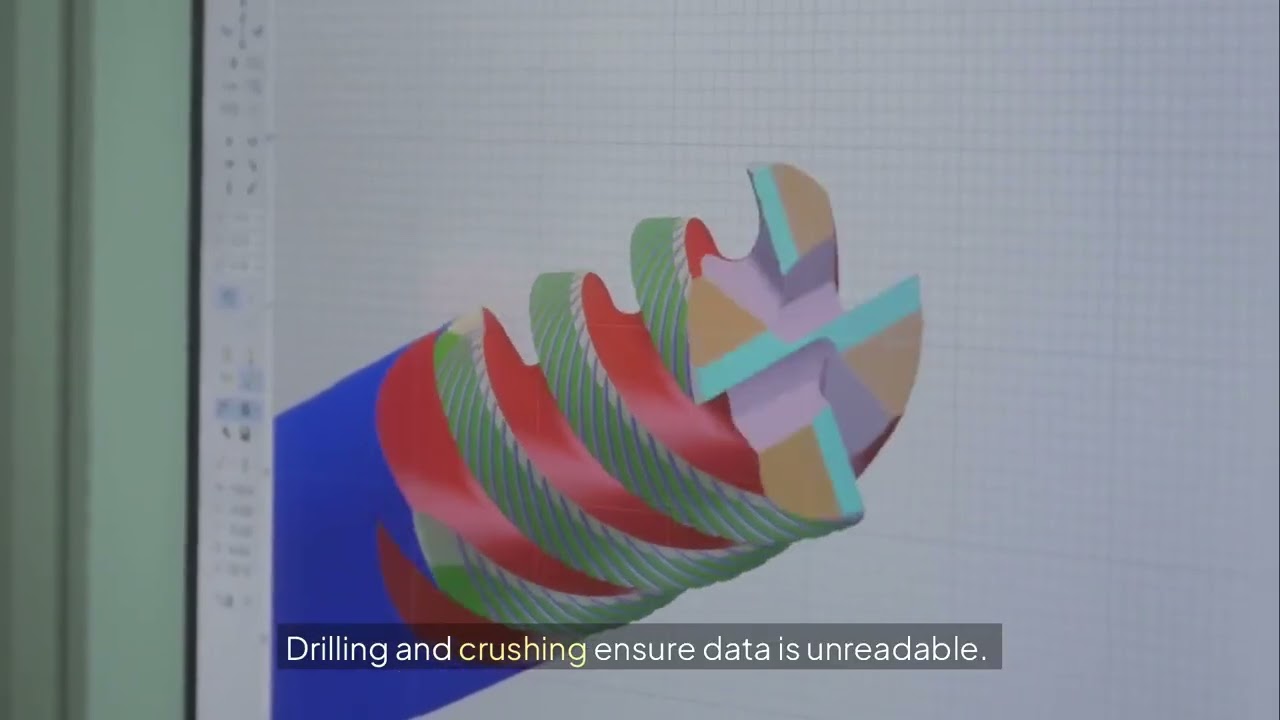
2. Drilling & Crushing
-
What it is: Physical force is applied to storage devices—often by drilling holes or using hydraulic presses.
-
Why it works: The platters or chips that store data are shattered or deformed, rendering them unreadable.
-
Best for: Smaller-scale operations or field destruction when shredders aren’t available.
3. Pulverizing
-
What it is: Drives are ground into fine particles using heavy-duty equipment.
-
Why it works: Reduces devices to powder or small shards, far beyond recognition.
-
Best for: High-security needs such as defense contractors or classified government projects.
4. Incineration
-
What it is: Storage devices are exposed to extremely high temperatures until they are melted or burned.
-
Why it works: Heat irreversibly alters the physical composition of storage media, destroying data storage capacity.
-
Best for: Highly sensitive data where complete molecular-level destruction is required.
5. Chemical Destruction
-
What it is: Certain chemicals can dissolve the materials used in storage devices.
-
Why it works: Physically corrodes or breaks down platters and memory chips.
-
Best for: Niche environments but less common due to handling risks and environmental concerns.
Level III and SSDs: A Special Challenge
Traditional magnetic hard drives (HDDs) are easier to destroy physically because data is stored on spinning platters. Solid-state drives (SSDs), however, use NAND flash chips, which complicate things:
-
Fragmentation: Data is distributed across many chips, making selective wiping unreliable.
-
Density: Even a small chip can hold gigabytes of sensitive data.
-
Durability: SSD chips may survive crushing or drilling if not completely pulverized.
For SSDs, pulverization, shredding into dust-sized particles, or incineration are the only truly reliable destruction methods.
Forensic Threat Landscape: What We’re Defending Against
Understanding the risks makes the importance of Level III clearer. Forensic experts can recover data using:
-
Magnetic Force Microscopy (MFM): Can read overwritten magnetic tracks on HDDs.
-
Chip-Off Forensics: Removes NAND chips from SSDs and reads them directly.
-
Residual Magnetism: Even after degaussing, some drives retain weak signals that advanced tools can interpret.
-
Firmware Exploits: Hidden storage areas, like remapped sectors, may still contain recoverable data.
These techniques may seem like science fiction, but they’re already in use by law enforcement, intelligence agencies, and cybercriminals with resources.
Level III destruction ensures that even if adversaries gain access to storage devices, there is nothing left to analyze.
When Should You Use Level III Destruction?
1. Regulated Data Disposal
Any industry bound by compliance frameworks—healthcare, finance, defense, education—should incorporate Level III destruction into their data lifecycle policies.
2. Decommissioning Equipment
When servers, laptops, or removable storage devices are retired, they should not be resold or recycled without physical destruction of their drives.
3. Data Breach Risk Mitigation
If a breach is suspected, immediate Level III destruction of compromised storage devices may prevent further exposure.
4. Corporate Mergers or Exits
During mergers, acquisitions, or company closures, data-handling responsibilities change hands. Level III destruction ensures no residual data slips through the cracks.
5. High-Security Projects
Government, defense, R&D, or confidential business ventures often require complete assurance that data will never resurface.
Environmental and Ethical Considerations

Physical destruction has clear benefits, but it raises environmental questions. Shredded or incinerated devices generate electronic waste (e-waste), which contains heavy metals and hazardous materials. To mitigate impact:
-
Partner with certified e-waste recyclers who can safely process the remnants.
-
Adopt a dual strategy—reuse hardware where possible, but enforce Level III destruction when data sensitivity demands it.
-
Stay compliant with environmental regulations such as WEEE (EU) or R2 (U.S.) recycling standards.
Ethically, organizations should balance the need for total data destruction with sustainable disposal practices.
Certification and Proof of Destruction
For compliance and audit trails, it’s not enough to just destroy drives—you need documented proof. Most professional destruction services provide:
-
Certificates of Destruction (CoD): Documents listing serial numbers of destroyed devices and methods used.
-
Video/Photo Evidence: Some services record the process for additional assurance.
-
Chain-of-Custody Tracking: Ensures drives are accounted for from pickup to destruction.
This documentation protects organizations from liability and demonstrates due diligence to regulators and stakeholders.
Outsourcing vs. In-House Destruction
Should you manage Level III destruction internally or hire a certified provider? Both have merits:
In-House
-
Pros:
-
Greater control and immediate assurance.
-
No risk of drives being intercepted in transit.
-
-
Cons:
-
Requires expensive equipment.
-
Ongoing maintenance and staff training needed.
-
Outsourced
-
Pros:
-
Specialized providers with industrial-grade equipment.
-
Compliance documentation provided.
-
Scalable for large volumes.
-
-
Cons:
-
Requires trust in the vendor’s chain of custody.
-
Sensitive data leaves your premises temporarily.
-
For most organizations, outsourcing to a certified, accredited destruction provider is the most cost-effective and compliant solution. However, entities handling classified or top-secret data may prefer in-house destruction for maximum control.
The Future of Data Destruction
As storage technology evolves, so must destruction methods. Three trends to watch:
-
Denser Storage Media: With storage capacities increasing, ensuring thorough destruction will require even more robust equipment.
-
Cloud Storage & Virtualization: While physical destruction handles on-premises devices, cloud service providers will need to enforce secure decommissioning of their own hardware.
-
Green Destruction Methods: Expect innovations that combine forensic-proof destruction with eco-friendly processing of e-waste.
Conclusion
Level III data destruction is the ultimate safeguard against forensic recovery. While overwriting and degaussing have their place, they leave open the possibility of data fragments being retrieved by determined adversaries. Physical destruction—whether through shredding, pulverizing, or incineration—provides finality.
For organizations entrusted with sensitive or regulated information, Level III is not just an option—it’s an obligation. By integrating physical destruction into your data security strategy, you ensure that when devices leave your control, your data doesn’t go with them.
In a world where cybercriminals, forensic experts, and technological progress constantly raise the stakes, the only guarantee of permanent data erasure is destruction you can see with your own eyes.