In today’s digital-first learning environments, Chromebooks and other IT devices are the backbone of modern education. From classrooms to libraries, and even remote learning setups, these devices enable students and teachers to collaborate, research, and engage with interactive content. However, as technology advances rapidly, schools and universities face a recurring challenge: device refresh cycles.
Every few years, large numbers of laptops, tablets, and Chromebooks reach the end of their usable life. For institutions managing fleets of hundreds or even thousands of devices, the refresh process is complex and costly. More importantly, it has serious environmental implications if not managed with sustainability in mind.
This blog explores how educational institutions can take a sustainable approach to refreshing their IT fleets—maximizing financial efficiency, minimizing e-waste, and aligning with broader climate goals.
Why Sustainable IT Fleet Management Matters
1. The Scale of Device Usage in Education
Since the COVID-19 pandemic, schools worldwide have invested heavily in one-to-one device programs. Chromebooks, in particular, became the go-to choice for affordability and ease of management. Today, it’s common for districts and universities to have tens of thousands of devices in circulation.
With such scale comes an inevitable cycle: devices age, warranties expire, operating systems stop receiving updates, and performance slows. Without a clear strategy, institutions risk unnecessary expenses, device shortages, or worse—mountains of electronic waste.
2. The Environmental Impact of Device Disposal
Electronic waste is the fastest-growing waste stream in the world. According to the UN, the world generated over 62 million tons of e-waste in 2022, and only about 20% was formally recycled. Discarded Chromebooks, tablets, and laptops contribute to this growing crisis, often ending up in landfills where toxic materials can leach into the soil and water.
By prioritizing sustainable refresh strategies, schools can:
-
Reduce landfill contributions.
-
Lower carbon emissions associated with manufacturing new devices.
-
Demonstrate environmental leadership to students and the community.
3. Financial & Educational Responsibility
Budgets in education are tight. A short-sighted refresh approach can lead to overspending, wasted grant money, or even budget shortfalls. Conversely, sustainability-driven strategies often result in cost savings through reuse, resale, and repair.
Students, too, are increasingly aware of climate issues. Schools that embed sustainability in their IT decisions model real-world responsibility and show leadership in climate-conscious practices.
Key Challenges in Refreshing Chromebook & IT Fleets
Before exploring solutions, let’s understand the common hurdles universities and schools face:
-
Aging Hardware: Chromebooks typically have an Auto Update Expiration (AUE) date after which they no longer receive OS updates, forcing institutions to phase them out.
-
Volume Management: Refresh cycles often involve thousands of devices at once, creating logistical headaches for IT teams.
-
Data Security: Devices leaving school systems must be securely wiped to prevent data leaks.
-
Budget Pressures: Replacing fleets of devices is expensive, especially for schools dependent on public funding or grants.
-
E-Waste Disposal: Without sustainable disposal partners, old devices often end up in landfills.
Understanding these challenges makes it clear why proactive, sustainable strategies are essential.
Strategies for Sustainable Chromebook & IT Device Refresh
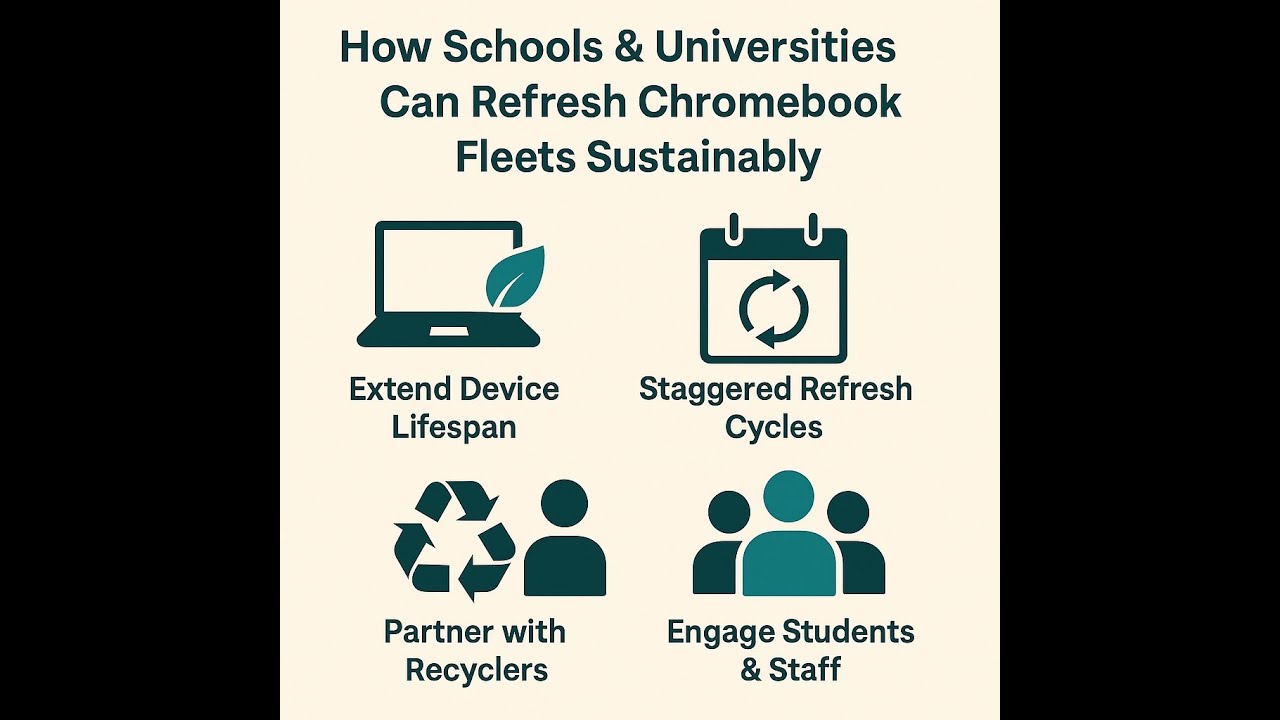
1. Extend the Lifespan of Devices Wherever Possible
Not every device needs to be replaced immediately at the end of its warranty or AUE. Schools can:
-
Repurpose devices for lighter use: Devices unsuitable for advanced coursework may still serve administrative roles, library kiosks, or testing stations.
-
Leverage ChromeOS Flex: Google now allows older PCs and Macs to run ChromeOS Flex, extending their usable life.
-
Replace parts, not devices: Batteries, keyboards, and screens can often be swapped at a fraction of the replacement cost.
Extending device life not only delays refresh costs but also reduces environmental impact.
2. Plan Staggered Refresh Cycles
Rather than refreshing the entire fleet at once, schools should adopt staggered refresh models. This spreads costs over multiple years, eases IT workloads, and prevents sudden spikes in e-waste.
For example:
-
Year 1: Replace 25% of devices.
-
Year 2: Replace another 25%.
-
Continue in cycles, ensuring that no cohort of devices ages beyond its usable threshold.
3. Implement Robust Asset Management Systems
Knowing the exact condition, location, and lifecycle stage of each device is crucial. Modern asset management platforms allow schools to:
-
Track device performance and repairs.
-
Predict when a device is nearing replacement.
-
Automate warranty claims and returns.
This data-driven approach ensures devices are not prematurely discarded, saving costs and reducing waste.
4. Partner with Certified Refurbishers & Recyclers
When devices truly reach end-of-life, schools should collaborate with certified recycling and refurbishment partners. These partners can:
-
Refurbish and resell devices into secondary markets.
-
Ensure proper recycling of parts and materials.
-
Provide documentation for sustainability reporting.
Some vendors even offer buy-back programs that give schools credit toward new purchases when they return old devices.
5. Emphasize Secure Data Wiping & Reuse
Data privacy is non-negotiable. Before devices leave a school’s possession, IT teams must perform certified data wiping to comply with FERPA and other regulations. Sustainable refresh doesn’t just mean environmentally sound—it also means secure and compliant.
6. Choose Greener Procurement Options
Sustainability starts at the procurement stage. When purchasing new devices, schools can:
-
Prioritize vendors with strong environmental commitments.
-
Look for ENERGY STAR certified devices.
-
Consider models with easily replaceable parts for longer usability.
This reduces the environmental footprint of each refresh cycle right from the beginning.
7. Engage Students & Staff in Sustainability Initiatives
Schools can turn refresh programs into teachable moments. For instance:
-
Students can participate in device collection drives.
-
Classes can study the environmental benefits of recycling programs.
-
Schools can publish annual sustainability reports to showcase progress.
This not only reduces e-waste but also fosters a culture of responsibility.
Benefits of Sustainable IT Fleet Refresh
By adopting these strategies, schools and universities gain multiple advantages:
-
Financial Efficiency: Lower procurement costs, repair savings, and buy-back credits.
-
Environmental Responsibility: Reduced e-waste, lower carbon footprint, and sustainable material reuse.
-
Community Leadership: Schools position themselves as leaders in sustainability, setting positive examples for students.
-
Operational Smoothness: Staggered refresh cycles reduce IT stress and minimize classroom disruptions.

Looking Ahead: The Future of Sustainable Device Management
Sustainability is no longer optional—it’s a necessity. As technology evolves, schools will need to balance innovation with responsibility. Some emerging trends include:
-
Circular economy practices where devices are continuously reused, refurbished, and recycled.
-
AI-driven asset management systems that predict device failure before it happens.
-
Government incentives and funding for schools that demonstrate strong sustainability commitments.
By embracing these practices, schools can ensure that technology continues to empower learning without compromising the environment.
Conclusion
Refreshing Chromebook and IT fleets is inevitable—but how schools and universities approach the process makes all the difference. A short-term view leads to overspending, operational headaches, and environmental harm. A sustainable refresh strategy, however, transforms this challenge into an opportunity: saving money, protecting the planet, and setting a powerful example for future generations.
By extending device lifespans, planning staggered cycles, partnering with recyclers, and engaging the entire community, educational institutions can achieve a refresh model that is both financially smart and environmentally responsible.
In a world where technology and sustainability are both crucial to our future, schools have the chance to lead the way—one Chromebook at a time.