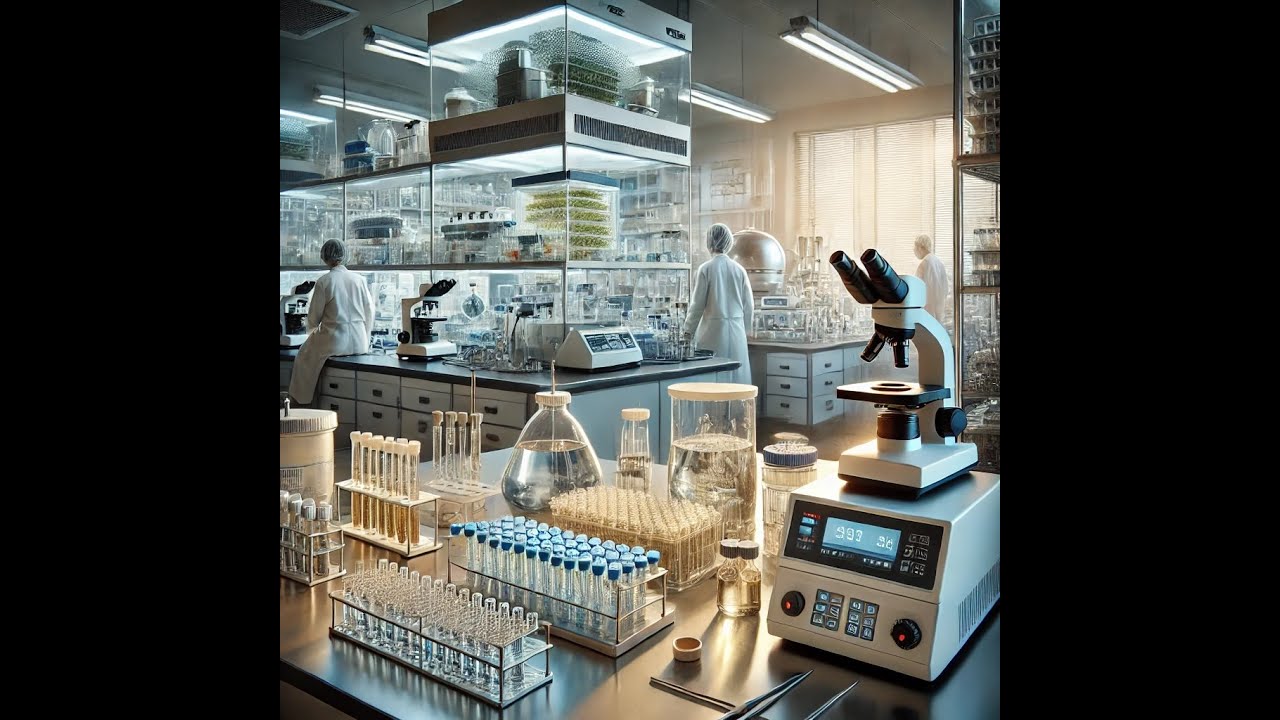
Essential Laboratory Equipment for Every Scientist
 In the realm of science, laboratory equipment plays a pivotal role. It’s the backbone of every scientific experiment and medical test.
From microscopes to centrifuges, these tools are indispensable. They enable scientists to observe, measure, and analyze the world around us.
In a hospital setting, lab gear is equally crucial. It aids in diagnosing diseases, monitoring patient health, and researching new treatments.
Choosing the right lab equipment is a task that requires careful consideration. It’s not just about picking the most advanced tools.
The best models are those that offer precision, reliability, and ease of use. They come from top manufacturers who prioritize quality and innovation.
This article will guide you through the essential laboratory equipment for every scientist. We’ll delve into their uses, the best models, and the top manufacturers.
Whether you’re a seasoned scientist, a lab technician, or a student, this guide is for you. Let’s explore the fascinating world of lab tools and their integral role in scientific discovery.
Understanding Essential Laboratory Equipment
Laboratory equipment refers to the various tools and devices used in scientific labs. These tools are designed to help scientists perform precise and accurate experiments.
The range of lab equipment is vast. It includes everything from basic tools like beakers and test tubes to complex machines like spectrometers and electron microscopes.
Here’s a brief list of some common lab equipment:
- Pipettes
- Balances
- Spectrophotometers
Each piece of equipment serves a unique purpose. They aid in tasks like sample preparation, measurement, analysis, and data collection.
The Role of Laboratory Equipment in Scientific Research
In scientific research, lab equipment is indispensable. It’s the cornerstone of every experiment, every test, and every analysis.
Microscopes, for instance, allow scientists to observe things invisible to the naked eye. They’ve been instrumental in discoveries across biology, geology, and materials science.
Centrifuges, on the other hand, are used to separate substances of different densities. They’re vital in fields like biochemistry and molecular biology.
Essential Equipment in Hospital Laboratories
In hospital laboratories, the role of lab equipment is equally crucial. It’s used for a variety of diagnostic tests and medical research.
For example, autoclaves are used to sterilize equipment, preventing the spread of infections. Meanwhile, incubators are used to culture cells and bacteria for research and testing.
Spectrophotometers play a key role in diagnosing diseases. They measure the concentration of substances in blood and urine samples.
In short, lab equipment is the backbone of hospital laboratories. It aids in patient care, disease diagnosis, and the development of new treatments.
Core Lab Tools for Various Applications
 Laboratory tools are designed for a wide range of applications. They cater to the diverse needs of scientists across different fields.
Here’s a list of some core lab tools and their applications:
- Microscopes: Used for magnifying objects that are too small to see with the naked eye.
- Centrifuges: Used for separating substances of different densities.
- Pipettes: Used for transferring precise volumes of liquid.
- Balances: Used for measuring the mass of objects.
- Incubators: Used for growing and maintaining microbiological cultures or cell cultures.
- Autoclaves: Used for sterilizing equipment and supplies.
Each of these tools plays a critical role in scientific research and medical diagnostics.
Microscopes: Types and Uses
Microscopes are one of the most essential tools in a lab. They come in various types, each designed for a specific use.
Compound microscopes, for instance, are used in biology labs for viewing small specimens like cells. Electron microscopes, on the other hand, are used in research labs to view even smaller objects, like molecules.
Centrifuges: Essential Features and Applications
Centrifuges are another vital piece of lab equipment. They use centrifugal force to separate substances of different densities.
For example, in a biology lab, centrifuges are used to separate cells from a liquid sample. In a chemistry lab, they might be used to separate different components of a mixture.
Pipettes and Balances: Precision in Measurement
Pipettes and balances are crucial tools in any laboratory, ensuring precision and accuracy in measurements. Pipettes precisely transfer specific volumes of liquid, while balances measure the mass of objects with high accuracy.
In a chemistry lab, for instance, pipettes and balances are used in almost every experiment. They ensure accuracy and reproducibility in measurements.
Incubators and Autoclaves: Culturing and Sterilization
Incubators and autoclaves are vital for laboratory work, supporting essential tasks like culturing and sterilization. Incubators create a stable, controlled environment ideal for growing and sustaining microbiological or cell cultures, while autoclaves sterilize equipment to prevent contamination, ensuring a safe and effective lab setup.
Autoclaves, on the other hand, are used for sterilizing equipment and supplies. They use high-pressure steam to kill bacteria, viruses, and other pathogens.
Selecting the Best Models from Top Manufacturers
Choosing the right lab equipment is crucial for achieving accurate and reliable results. It’s not just about picking the most advanced tools, but also about selecting the best models that suit your specific needs.
The market is flooded with a variety of lab equipment from numerous manufacturers. This can make the selection process quite challenging. However, understanding your requirements and knowing what to look for can simplify the task.
It’s also important to consider the reputation of the manufacturer. Top manufacturers are known for their quality products, excellent customer service, and reliable after-sales support.
Criteria for Choosing High-Quality Lab Equipment
When choosing lab equipment, there are several factors to consider. First, the equipment should meet the specific requirements of your experiments or procedures.
Second, the equipment should be reliable and durable. It should be able to withstand the rigors of daily use in the lab.
Lastly, consider the after-sales support provided by the manufacturer. This includes warranty, maintenance, and repair services.
Top Manufacturers of Laboratory Equipment
There are several top manufacturers known for their high-quality lab equipment. These include Thermo Fisher Scientific, Agilent Technologies, and Becton, Dickinson and Company.
Thermo Fisher Scientific is a leading provider of lab equipment, serving scientists in various fields. Agilent Technologies is known for its innovative lab solutions, particularly in life sciences and diagnostics. Becton, Dickinson and Company, on the other hand, specializes in medical devices, instrument systems, and reagents.
Technological Advancements in Lab Equipment
 The field of laboratory equipment has seen significant advancements over the years. These advancements have not only improved the efficiency and accuracy of lab work but also expanded the scope of research and diagnostics.
One of the key advancements is the integration of digital technology. This has led to the development of smart lab equipment that can be controlled and monitored remotely. It has also facilitated the automation of various lab processes, reducing human error and increasing productivity.
Another notable advancement is the miniaturization of lab equipment. This has made it possible to conduct complex experiments and analyses in smaller, more portable devices. It has also paved the way for the development of lab-on-a-chip technologies, which can perform multiple lab functions on a single chip.
Automation and Digitalization in the Lab
Automation and digitalization have revolutionized the way lab work is done. Automated lab equipment can perform repetitive tasks with high precision and speed, freeing up scientists to focus on more complex tasks.
Digitalization, on the other hand, has made it easier to collect, store, and analyze data. It has also facilitated remote monitoring and control of lab equipment, improving efficiency and flexibility.
Moreover, digitalization has enabled the integration of lab equipment with laboratory information management systems (LIMS). This has streamlined workflow management, inventory tracking, and data analysis.
The Future of Lab Equipment: AI and Machine Learning
Artificial intelligence (AI) and machine learning (ML) are set to play a significant role in the future of lab equipment. These technologies can analyze large volumes of data and identify patterns that humans might miss.
AI and ML can also predict equipment failures and suggest preventive maintenance, reducing downtime and improving efficiency. They can also automate data analysis, making it faster and more accurate.
Furthermore, AI and ML can facilitate personalized medicine by analyzing individual patient data and suggesting customized treatment plans. This could revolutionize healthcare and improve patient outcomes.
Maintenance, Safety, and Compliance
Maintaining lab equipment in top shape is crucial for accurate and reliable results. Regular maintenance can also extend the lifespan of the equipment and reduce the need for costly repairs or replacements.
Safety is another critical aspect of lab work. Lab equipment can pose various risks if not used or maintained properly. Therefore, it’s important to follow safety guidelines and use personal protective equipment (PPE) when necessary.
Compliance with regulatory standards is also essential. These standards ensure the quality and safety of lab equipment. They also require regular equipment validation to verify that the equipment is functioning as intended.
Keeping Your Lab Gear in Top Shape
Regular maintenance of lab equipment involves cleaning, calibration, and inspection for damage. It’s important to follow the manufacturer’s maintenance guidelines to ensure the equipment’s optimal performance.
Preventive maintenance, such as replacing worn-out parts, can prevent equipment failures and downtime. It’s also important to keep a record of all maintenance activities for reference and compliance purposes.
In case of equipment malfunction, it’s advisable to seek professional repair services. Attempting to fix complex lab equipment without proper training can cause further damage and pose safety risks.
Safety Considerations and PPE
Using lab equipment involves various safety risks, such as exposure to harmful substances, electrical shocks, and physical injuries. Therefore, it’s important to follow safety guidelines and use appropriate PPE.
PPE can include lab coats, gloves, safety glasses, and face shields. The type of PPE required depends on the nature of the lab work and the risks involved. It’s also important to ensure that the PPE is in good condition and fits properly.
In addition to PPE, it’s important to maintain a safe and organized lab environment. This includes proper storage of chemicals, regular cleaning of the lab, and proper disposal of waste. 
Regulatory Standards and Equipment Validation
Regulatory standards for lab equipment vary by country and industry. They cover various aspects of the equipment, such as design, manufacturing, performance, and safety. Compliance with these standards is often a legal requirement and can also enhance the credibility of the lab.
Equipment validation involves testing the equipment to verify that it’s functioning as intended. This includes checking the accuracy, precision, and repeatability of the equipment’s measurements. Validation should be performed regularly and whenever the equipment is repaired or moved to a new location.
In addition to validation, some regulatory standards require equipment calibration. This involves adjusting the equipment’s output to match a known standard. Calibration ensures the accuracy of the equipment’s measurements and is crucial for quantitative analyses.
Conclusion and Future Outlook
In conclusion, essential laboratory equipment plays a pivotal role in scientific research and medical diagnostics. From microscopes to centrifuges, these tools enable scientists to observe, measure, and analyze various phenomena. As technology advances, we can expect to see more automation, digitalization, and integration of AI in lab equipment, enhancing precision, efficiency, and data management.
Looking ahead, the focus will likely be on developing more sustainable, energy-efficient, and user-friendly lab equipment. As scientists continue to push the boundaries of knowledge, the demand for innovative, high-quality lab equipment will undoubtedly continue to grow.