

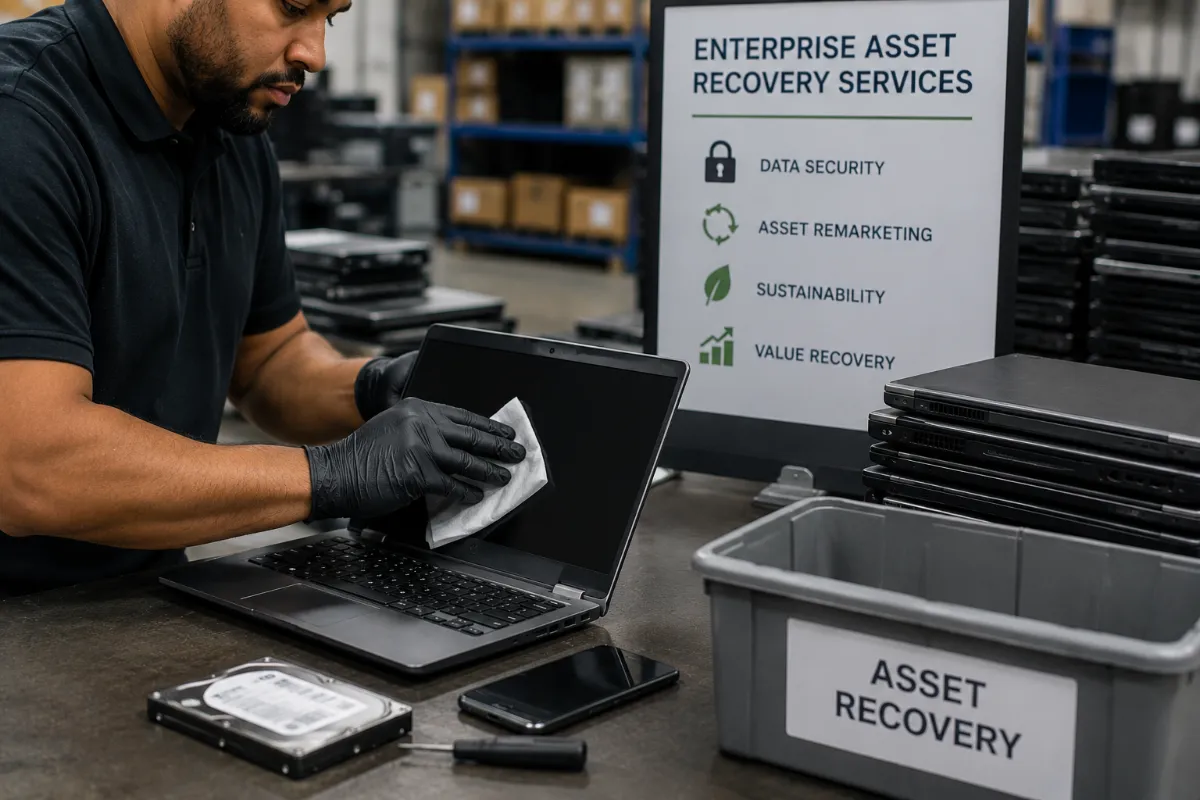
Enterprise asset recovery services help organizations find value in retired technology before it gets stored, scrapped, or forgotten. Servers, storage systems, networking equipment, memory, CPUs, tape libraries, and enterprise storage may still hold real market value. This is especially true after a refresh, relocation, or data center project.
The mistake many teams make is waiting too long. Enterprise hardware loses value as platforms age, demand shifts, and inventory details get lost. A structured recovery plan helps your team move faster. It also helps document assets, protect data, and recover more from equipment that still has life left.
DES Technologies helps organizations manage enterprise asset recovery as part of a secure ITAD and data center services program. To view the service page connected to this topic, visit Enterprise Asset Recovery Services.
What Is Enterprise Asset Recovery?
Enterprise asset recovery is the process of evaluating retired IT hardware for resale, reuse, parts value, or responsible recycling. The goal is to recover value while keeping control of data, chain of custody, logistics, and documentation.
It often applies to equipment removed during:
- Data center decommissioning
- Hardware refresh projects
- Cloud migrations
- Office relocations
- Storage cleanouts
- Lease return reviews
- Mergers, closures, or consolidation projects
Asset recovery is different from simple disposal. The focus is value first, with security and compliance built into the workflow.
Hardware Categories That Often Hold Recovery Value
Not every retired asset is equal. Brand, model, configuration, age, condition, quantity, and market demand all affect recovery value.
| Hardware Category | What Teams Should Review |
|---|---|
| Server buyback | Rackmount servers, blade servers, tower servers, GPU systems, CPUs, memory, drives, and RAID configurations |
| Storage buyback | SAN systems, NAS systems, disk shelves, controllers, hard drives, SSDs, and storage arrays |
| Networking equipment | Switches, routers, firewalls, wireless controllers, access points, and network storage hardware |
| Memory | DDR3, DDR4, DDR5, ECC, RDIMM, LRDIMM, laptop memory, desktop memory, and server memory |
| CPUs | Server processors, workstation CPUs, high-performance CPUs, AI infrastructure CPUs, and bulk processor lots |
| Tape libraries | LTO libraries, tape drives, backup systems, enterprise media, and related storage hardware |
| Enterprise storage | NetApp, Dell EMC, HPE, IBM, Lenovo, Supermicro, Cisco, Oracle, and mixed data center storage assets |
This is why a line-item inventory matters. A full rack may look like old hardware. In reality, CPUs, memory, controllers, drives, and enterprise storage components may each carry separate value.
Why Waiting Can Reduce Recovery Value
Hardware value is tied to timing. Equipment that is current today may become less desirable after the next platform refresh cycle.
Waiting can create several problems:
- Asset labels get damaged.
- Configurations become harder to verify.
- Parts get separated from systems.
- Storage costs rise.
- Demand may weaken.
- Data-bearing devices remain unmanaged.
- Quotes become less accurate.
The best time to start asset recovery planning is before the project begins. That gives your team time to gather model numbers, configurations, quantities, and site details.
How DES Approaches Enterprise Asset Recovery
DES Technologies manages enterprise asset recovery with a practical, value-focused process.
1. Inventory Review
DES reviews equipment lists, photos, configurations, quantities, and locations. For servers, include CPUs, memory, drives, RAID cards, and GPU details when available.
2. Market-Based Valuation
DES evaluates resale demand, parts value, model age, condition, and project logistics. This helps your team understand which assets may recover value and which assets need another disposition path.
3. Secure Logistics
DES can coordinate pickup, freight, shipping, or staged removal. For larger projects, DES can connect asset recovery to data center services such as rack removal, inventory support, and closeout reporting.
4. Data Handling
Servers, storage arrays, SSDs, hard drives, and tape libraries may contain sensitive data. DES supports workflows aligned with NIST SP 800-88, including erasure, degaussing, or physical destruction when required.
5. Recovery, Reporting, and Recycling
Reusable assets move into value recovery. Hardware with no resale or parts value can move into certified recycling. DES documents the final disposition so your team has records for compliance and internal reporting.
How to Prepare an Equipment List for a Better Quote
A clean equipment list helps speed up valuation and improve quote accuracy.
Include:
- Asset category
- Brand and model
- Serial number, if available
- Quantity
- Configuration
- Condition
- Location
- Photos of labels
- Notes on missing parts
- Data-bearing media details
For servers, list processors, memory, drives, GPU cards, and storage controllers. For storage buyback, include controller models, drive counts, drive sizes, expansion shelves, and licensing details when known.
Value Recovery and Data Security Can Work Together
Some organizations delay recovery because they worry about data security. That concern is valid, but it should not stop value recovery.
The right process protects both priorities. DES can separate reusable hardware from data-bearing media, apply secure data destruction workflows, track chain of custody, and document disposition.
This matters for healthcare, education, government, finance, enterprise IT, and data center teams. It also helps procurement and finance teams justify recovery decisions with clear records.
Why Choose DES Technologies?
DES Technologies has supported ITAD, asset recovery, data destruction, and electronics recycling since 1965. DES understands that enterprise hardware recovery is not just about moving equipment. It is about getting the most value from retired assets while protecting the organization.
DES helps teams recover value from:
- Servers
- Storage systems
- Networking equipment
- Memory
- CPUs
- Tape libraries
- Enterprise storage
- Mixed data center lots
When recovery is part of a larger facility project, DES can align asset recovery with secure logistics and data center services. DES can also support chain of custody and certified recycling.
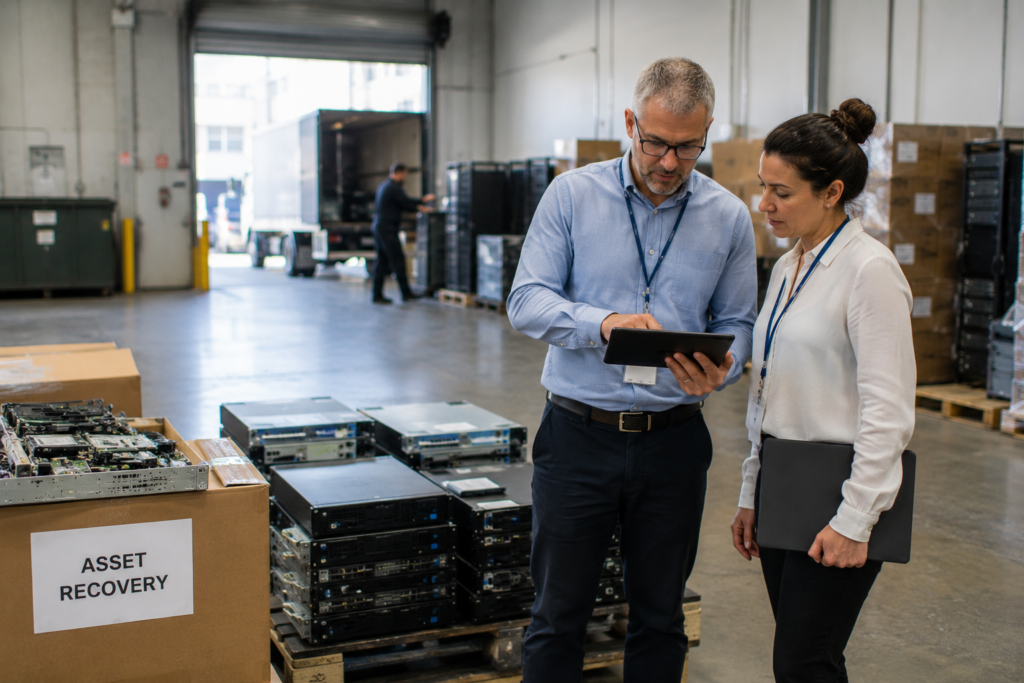
Frequently Asked Questions
What are enterprise asset recovery services?
Enterprise asset recovery services help organizations recover value from retired servers, storage, networking equipment, memory, CPUs, tape libraries, and enterprise storage. They can also apply to other IT hardware.
What enterprise equipment has the best recovery value?
Value depends on brand, model, age, configuration, condition, quantity, and market demand. Servers, storage arrays, networking equipment, memory, CPUs, and tape libraries may all have recovery value.
Can asset recovery be part of a data center project?
Yes. Asset recovery can be part of a data center project. DES can support inventory, rack removal, secure logistics, valuation, data destruction, reporting, and certified recycling.
How does DES protect data during asset recovery?
DES uses secure logistics, chain of custody, asset tracking, and data destruction workflows aligned with NIST 800-88. Physical destruction is available when required by policy.
What happens to enterprise hardware with no resale value?
Equipment with no resale or parts value is routed through certified recycling. DES helps document final disposition for compliance, sustainability, and internal reporting.
Recover Value Before Hardware Loses Momentum
If your organization is planning a refresh, data center decommission, office relocation, storage cleanout, or hardware consolidation project, DES Technologies can help. We help you recover more value with less risk.
Start with the full service overview: Enterprise Asset Recovery Services.