

Skip to content

Toll Free / West Coast: (800) 700-7683 — East Coast: (800) 821-1782 — 9033 9th St. Rancho Cucamonga, CA 91730

DES Technologies
DES Technologies
  • IT Asset Disposition
    • Enterprise ITAD
    • Healthcare ITAD
    • Education Buyback
    • Government ITAD
    • Asset Recovery
    • ITAD Value Return
  • Data Security
    • Data Erasure
    • Physical Data Destruction
    • Degaussing
    • Phoenix Certified Erasure
    • Zero Trace Certified
    • Chain of Custody
    • NIST 800-88
  • Decommissioning & Asset Recovery
    • Decommissioning
    • Hardware Removal
    • Cloud Migration Services
    • On-Site ITAD, Data Destruction & Data Center Services
    • Secure Shipping
    • Media Labeling
  • Industries
    • Healthcare
    • Enterprise
    • Education
    • Government
    • Financial Services
    • International
  • Certifications
    • R2v3
    • ISO 9001:2015
    • ISO 14001:2015
    • ISO 45001:2018
    • Phoenix
    • HIPAA
  • Resources
    • Videos
    • Blog
    • Testimonials
    • Case Studies
    • ITAD Pricing Guide
    • How to Choose an ITAD Vendor
    • Certificate of Destruction Explained
    • About Us
    • Contact Us
    • Frequently Asked Questions
    • Privacy Policy
    • Warranty
    • Web Accessibility Statement
  • IT Asset Disposition
    • Enterprise ITAD
    • Healthcare ITAD
    • Education Buyback
    • Government ITAD
    • Asset Recovery
    • ITAD Value Return
  • Data Security
    • Data Erasure
    • Physical Data Destruction
    • Degaussing
    • Phoenix Certified Erasure
    • Zero Trace Certified
    • Chain of Custody
    • NIST 800-88
  • Decommissioning & Asset Recovery
    • Decommissioning
    • Hardware Removal
    • Cloud Migration Services
    • On-Site ITAD, Data Destruction & Data Center Services
    • Secure Shipping
    • Media Labeling
  • Industries
    • Healthcare
    • Enterprise
    • Education
    • Government
    • Financial Services
    • International
  • Certifications
    • R2v3
    • ISO 9001:2015
    • ISO 14001:2015
    • ISO 45001:2018
    • Phoenix
    • HIPAA
  • Resources
    • Videos
    • Blog
    • Testimonials
    • Case Studies
    • ITAD Pricing Guide
    • How to Choose an ITAD Vendor
    • Certificate of Destruction Explained
    • About Us
    • Contact Us
    • Frequently Asked Questions
    • Privacy Policy
    • Warranty
    • Web Accessibility Statement
Menu
Contact Us
DES Technologies
  • IT Asset Disposition
    • Enterprise ITAD
    • Healthcare ITAD
    • Education Buyback
    • Government ITAD
    • Asset Recovery
    • ITAD Value Return
  • Data Security
    • Data Erasure
    • Physical Data Destruction
    • Degaussing
    • Phoenix Certified Erasure
    • Zero Trace Certified
    • Chain of Custody
    • NIST 800-88
  • Decommissioning & Asset Recovery
    • Decommissioning
    • Hardware Removal
    • Cloud Migration Services
    • On-Site ITAD, Data Destruction & Data Center Services
    • Secure Shipping
    • Media Labeling
  • Industries
    • Healthcare
    • Enterprise
    • Education
    • Government
    • Financial Services
    • International
  • Certifications
    • R2v3
    • ISO 9001:2015
    • ISO 14001:2015
    • ISO 45001:2018
    • Phoenix
    • HIPAA
  • Resources
    • Videos
    • Blog
    • Testimonials
    • Case Studies
    • ITAD Pricing Guide
    • How to Choose an ITAD Vendor
    • Certificate of Destruction Explained
    • About Us
    • Contact Us
    • Frequently Asked Questions
    • Privacy Policy
    • Warranty
    • Web Accessibility Statement
Contact Us
  • West Coast(800) 700-7683
  • East Coast(800) 821-1782
Linkedin-in Facebook-f X-twitter Youtube Instagram

Data Sanitization vs. Data Destruction: Key Differences, Use Cases, and Best Practices

  • Dakodah
  • data destruction, Data Sanitization
  • July 15, 2025
Home Blog data destruction Data Sanitization vs. Data Destruction: Key Differences, Use Cases, and Best Practices
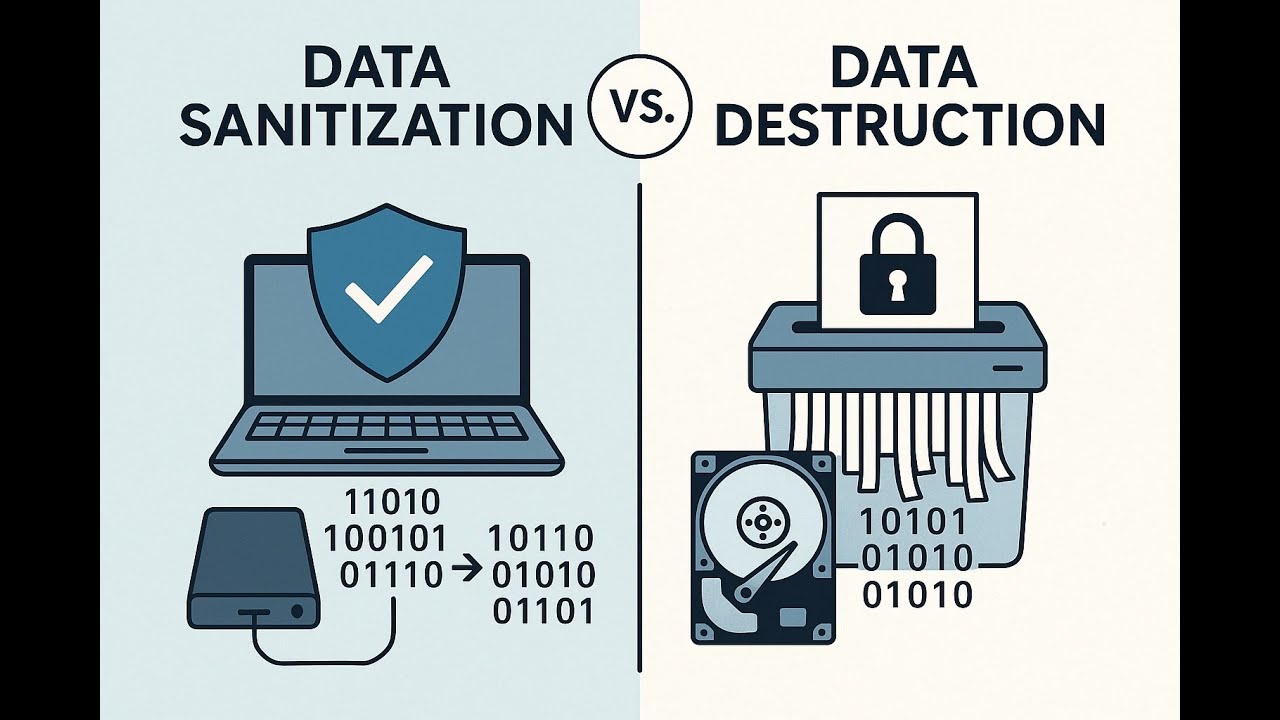
"Data Sanitization vs. Data Destruction" with image of laptop and shredder
  • Dakodah
  • data destruction, Data Sanitization
  • July 15, 2025

Data Sanitization vs. Data Destruction: What’s the Difference and When to Use Each

In today’s digital landscape, managing sensitive data responsibly is a core requirement for businesses of all sizes. Whether driven by regulatory compliance, security protocols, or corporate responsibility, ensuring that sensitive data is handled securely is not negotiable. However, a common point of confusion persists: What’s the difference between data sanitization and data destruction? And more importantly, when should each method be used?

In this comprehensive blog, we’ll clarify this crucial distinction, compare key techniques like overwriting vs shredding, explore secure data erasure, and outline IT Asset Disposition (ITAD) best practices. By the end, you’ll understand how to safeguard your organization against data breaches while meeting compliance standards.


Understanding Data Sanitization

Data sanitization refers to the deliberate, permanent, and irreversible process of removing or altering data so that it cannot be recovered or reconstructed. It is essential when repurposing IT assets without compromising sensitive information. Data sanitization techniques ensure that data, once erased, cannot be restored using forensic methods.

Common Methods of Data Sanitization

  1. Overwriting

    • Involves writing random or predetermined patterns over data.Secure Data Erasure

    • Multiple passes may be required for higher security standards.

    • Suitable for hard drives, solid-state drives (SSDs), and other storage media.

    • Advantage: Media can be reused post-process.

  2. Cryptographic Erasure

    • Encrypts data and then deletes the encryption keys, rendering data unreadable.

    • Fast and effective, especially for large-scale data.

    • Frequently used in cloud environments and SSDs.

  3. Degaussing

    • Applies a high-powered magnetic field to disrupt the magnetic domains of storage media.

    • Effective but renders the media unusable thereafter.

When to Use Data Sanitization

  • Repurposing or reselling IT equipment.

  • Transferring assets within different departments.

  • Complying with data privacy laws like GDPR or CCPA.

  • Maintaining corporate sustainability goals by reducing e-waste.


Understanding Data Destruction

Data destruction is the process of physically or logically destroying media so that data is permanently inaccessible. Unlike data sanitization, where the media may remain functional, data destruction ensures that both the data and the medium are rendered unusable.

Common Methods of Data Destruction

  1. Physical Shredding

    • Hard drives and other media are physically crushed or shredded.

    • Guarantees data cannot be recovered.

    • Typically performed by certified vendors with specialized equipment.

  2. Incineration

    • Physical media is burned at high temperatures.

    • Used for high-security data in specialized industries.

  3. Disintegration and Pulverization

    • Media is ground into small particles beyond reconstruction.

    • Employed in high-security applications requiring NSA-level compliance.

When to Use Data Destruction

  • End-of-life IT assets requiring disposal.

  • Media containing classified or extremely sensitive data.

  • Cases where media reuse is not planned or desired.

  • Compliance with stringent destruction mandates (e.g., DoD standards).


Data Sanitization vs Destruction: Key Differences

Aspect Data Sanitization Data Destruction
Media Reuse Possible Not possible
Method Logical erasure or degaussing Physical destruction
Environmental Impact Lower (media reused) Higher (media destroyed)
Speed Depends on method and volume Generally faster per device
Compliance Suitability Meets privacy regulations Meets destruction mandates

Clarifying the Confusion: One of the most common misconceptions is that physical destruction is inherently more secure than sanitization. While destruction is effective, properly executed data sanitization (especially cryptographic erasure and certified overwriting) is equally secure and environmentally responsible. The choice should depend on your business objectives, compliance needs, and sustainability commitments.


Secure Data Erasure: Critical to Both Approaches

Regardless of the chosen method, secure data erasure underpins both data sanitization and destruction. Secure erasure ensures compliance with standards such as:

  • NIST 800-88 Rev. 1

  • ISO/IEC 27040

  • DoD 5220.22-M (for destruction)

Best practices include using verified software tools, maintaining audit trails, and generating erasure certificates to validate processes for compliance audits.


Overwriting vs Shredding: Which is Better?

This is another area where confusion arises. Overwriting and shredding are not interchangeable but serve distinct purposes:"Overwriting vs. Shredding" With image of laptop and a shredder

  • Overwriting (a form of data sanitization) allows continued media use, reducing costs and supporting sustainability initiatives.

  • Shredding (a data destruction method) ensures total destruction of both media and data, suitable for high-security needs.

Choose overwriting:

  • When repurposing or redeploying hardware.

  • When reducing environmental impact matters.

Choose shredding:

  • For classified data disposal.

  • When reusing media is impractical or risky.


ITAD Best Practices: Positioning Your Business for Success

As experts in secure data erasure and IT Asset Disposition (ITAD), our approach integrates both data sanitization and data destruction, tailored to your needs. Here are our ITAD best practices to ensure robust data protection:

  1. Comprehensive Asset Inventory

    • Track every IT asset through its lifecycle to prevent unauthorized disposal.

  2. Risk-Based Data Classification

    • Differentiate between sensitive and non-sensitive data to apply appropriate sanitization or destruction methods.

  3. Certified Erasure Tools and Vendors

    • Utilize NIST-compliant software for data wiping.

    • Partner with certified destruction providers.

  4. Documented Chain of Custody

    • Maintain clear records throughout asset disposition to protect against data breaches and regulatory fines.

  5. Environmental Responsibility

    • Choose media sanitization over destruction when possible to minimize e-waste.

  6. Employee Training and Awareness

    • Educate your team on proper handling and disposal of IT assets.

  7. Compliance Monitoring and Reporting

    • Regularly audit processes to ensure adherence to laws like GDPR, HIPAA, and CCPA.

  8. Erasure and Destruction Certification

    • Provide clients with detailed certificates confirming secure data disposal.


Why Choose Us for Secure Data Handling?

At DES Technologies, we recognize that protecting your data is non-negotiable. Our expert services are designed to provide:

  • Customized Solutions: Whether you need data sanitization for redeployment or data destruction for disposal, we tailor our services to fit your compliance and security requirements.

  • Certified Secure Practices: From overwriting to shredding, all our processes comply with industry standards and regulations.

  • Sustainability Commitment: We help organizations meet green IT goals by prioritizing media reuse whenever possible.

  • Transparent Documentation: Our detailed reporting and certification processes ensure full traceability and accountability.

With years of industry experience and a dedication to best practices, we stand as a trusted partner for all your IT asset disposition needs.
Data Sanitization vs. Data Destruction: Which Is Safer for Your Business? | ITAD Best Practices

Phoenix
Certified

Learn More.

Quick Contact

Related Posts

"Data Sanitization vs. Data Destruction" with image of laptop and shredder
data destruction
Dakodah

Data Sanitization vs. Data Destruction: Key Differences, Use Cases, and Best Practices

Dakodah July 15, 2025
Join Our

Newsletter

Join our newsletter for helpful tips, company news, special offers, and updates delivered straight to your inbox.
No spam, just useful content.

  • Sorry, this service is unavailable in your country.

  • Should be Empty:

Secure Enterprise IT Asset Disposition & Data Destruction Solutions You Can Trust.

R2v3 certified and NIST-compliant
ITAD services for regulated industries
nationwide since 1965.

Services

  • ITAD
  • Secure Data Destruction
  • Asset Recovery & Remarketing
  • Data Center Decommissioning
  • On-Site ITAD, Data Destruction & Data Center Services
  • Secure Chain of Custody
  • ITAD
  • Secure Data Destruction
  • Asset Recovery & Remarketing
  • Data Center Decommissioning
  • On-Site ITAD, Data Destruction & Data Center Services
  • Secure Chain of Custody

Industries

  • Healthcare
  • Government
  • Enterprise
  • Financial Services
  • Education
  • International
  • Healthcare
  • Government
  • Enterprise
  • Financial Services
  • Education
  • International

Compliance

  • R2v3 Certification
  • NIST 800-88 Compliance
  • Phoenix Certified
  • Zero Trace Certified
  • Chain of Custody
  • Shipping & Tracking
  • R2v3 Certification
  • NIST 800-88 Compliance
  • Phoenix Certified
  • Zero Trace Certified
  • Chain of Custody
  • Shipping & Tracking

Contact

  • DES Technologies
    9033 9th St.
    Rancho Cucamonga, CA 91730
  • +1 (800) 700-7683
  • Monday - Friday:
    9:00AM - 5:00PM PT
REQUEST EVALUATION

Privacy Policy. Web Accessibility Statement. Warranty Guarantee.

© 2026 DES Technologies. All Rights Reserved.
Website created with 💛 by mrrssy.

Certified ITAD. Secure Data Destruction. Asset Recovery. Nationwide.

X-twitter Facebook Linkedin Youtube Instagram
Accessibility Adjustments

Powered by OneTap

How long do you want to hide the toolbar?
Hide Toolbar Duration
Select your accessibility profile
Vision Impaired Mode
Enhances website's visuals
Seizure Safe Profile
Clear flashes & reduces color
ADHD Friendly Mode
Focused browsing, distraction-free
Blindness Mode
Reduces distractions, improves focus
Epilepsy Safe Mode
Dims colors and stops blinking
Content Modules
Font Size

Default

Line Height

Default

Color Modules
Orientation Modules

We use cookies to provide you with the best browsing experience, personalize content of our site, analyse its traffic and show you relevant ads. See our privacy policy for more information.


Powered by WP Full Picture

Statistics

I want to help you make this site better so I will provide you with data about my use of this site.

Personalisation

I want to have the best experience on this site so I agree to saving my choices, recommending things I may like and modifying the site to my liking

Marketing

I want to see ads with your offers, coupons and exclusive deals rather than random ads from other advertisers.

Powered by WP Full Picture

What are you looking for

SEARCH Our Site

Get In Touch

CONTACT US