
Data center decommissioning and ITAD are related, but they are not the same thing.
That confusion matters. If your team treats a decommission like simple disposal, you may miss facility risks. These can include power, cabling, racks, lease deadlines, and access rules. If your team treats ITAD like a moving job, you may miss data security, resale value, recycling, and audit records.
Here is the simplest way to separate them.
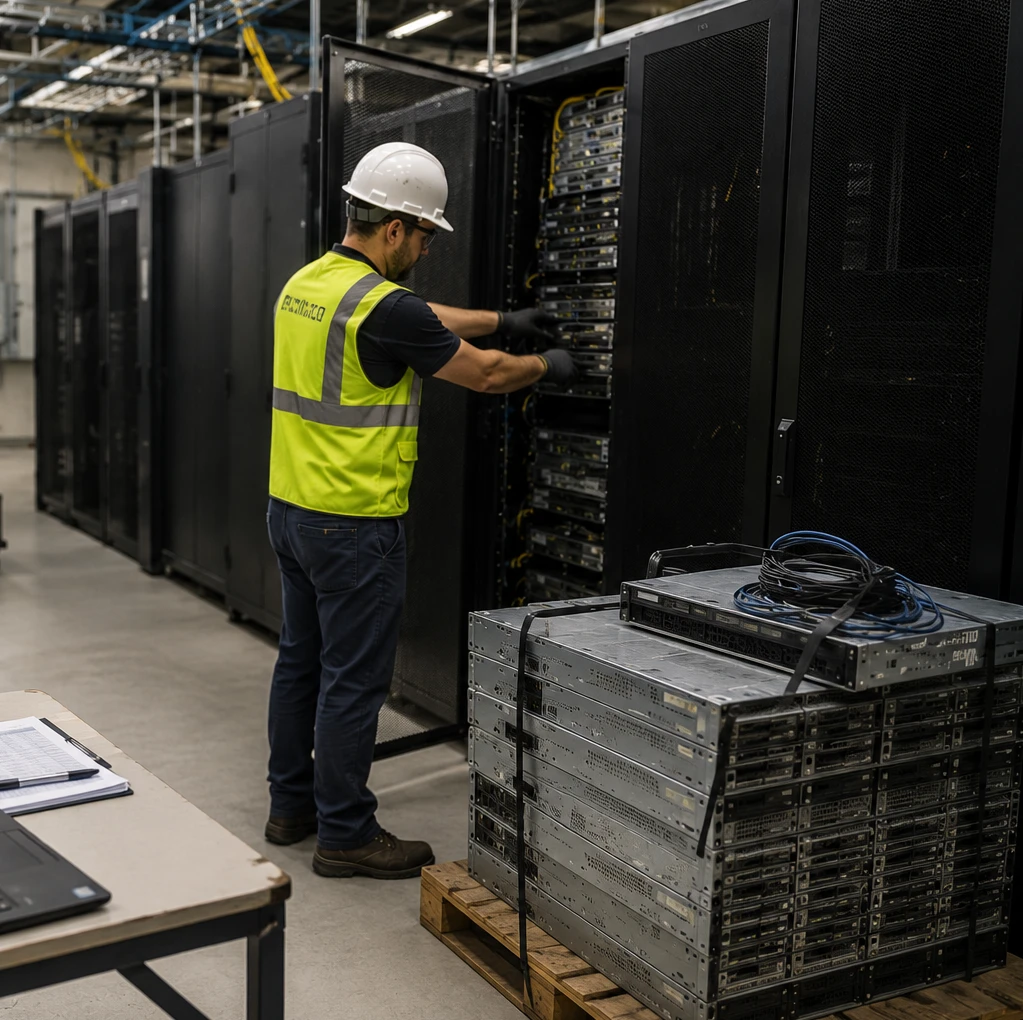
Data center decommissioning is the field operation. It covers the planned shutdown, deinstallation, de-racking, removal, and site coordination required to retire infrastructure.
ITAD is the disposition process. It covers what happens to retired assets after removal, including data destruction, chain of custody, resale, recycling, reporting, and certificates.
DES Technologies manages both. Our team supports data center decommissioning, IT asset disposition, hardware removal, and secure shipping. We also provide audit-ready documentation for complex IT projects.
Quick Answer: Data Center Decommissioning vs. ITAD
Data center decommissioning is the physical and technical process of retiring data center infrastructure. ITAD, or IT Asset Disposition, is the secure process for retired equipment. It can include tracking, erasure, resale, recycling, destruction, and reporting. A full data center exit usually needs both.
Side-by-Side Comparison
| Category | Data Center Decommissioning | ITAD |
|---|---|---|
| Main focus | Retiring infrastructure safely | Disposing of IT assets securely |
| Where it happens | At the data center, colo, server room, or facility | Onsite, in transit, and at the processing facility |
| Core work | Shutdown, deinstallation, de-racking, cabling, palletizing, removal | Inventory, data destruction, asset recovery, resale, recycling, reporting |
| Key dependencies | Power, cooling, racks, cages, lease deadlines, access windows, facility rules | Data risk, asset value, compliance, chain of custody, downstream disposition |
| Main risk | Downtime, facility damage, missed hardware, project delays | Data exposure, audit gaps, lost resale value, improper recycling |
| Final output | Equipment removed and site cleared | Assets processed, reported, and closed out |
What Is Data Center Decommissioning?
Data center decommissioning is the structured process of retiring data center infrastructure.
It often includes:
- Project scoping
- Asset discovery
- Shutdown planning
- Network and dependency review
- De-racking equipment
- Removing cables and power gear
- Packing and palletizing assets
- Coordinating dock access and freight
- Removing servers, storage, switches, racks, and related hardware
- Preparing the space for turnover or reuse
This is a field operation because it happens inside a live facility. The work may involve raised floors, cages, loading docks, access badges, change windows, power dependencies, and tight timelines.
A poor decommission can cause outages, missed assets, damaged equipment, lease penalties, and security gaps.
That is why DES treats data center decommissioning as a planned service, not a haul-away job.
What Is ITAD?
ITAD stands for IT Asset Disposition.
ITAD is the secure process of retiring IT equipment after it leaves active use.
It answers a different set of questions:
- What assets were retired?
- Who handled them?
- What data was on them?
- Was the data erased or destroyed?
- Which assets still have resale value?
- Which assets should be recycled?
- What documentation proves the result?
ITAD may apply to many asset types. These include laptops, desktops, servers, storage arrays, switches, routers, phones, hard drives, SSDs, tapes, and full data center lots.
DES provides ITAD services that support secure data destruction, asset recovery, certified recycling, chain of custody, and final reporting.
Why People Mix Them Up
People mix up decommissioning and ITAD because they often happen during the same project.
For example, a cloud migration may require the data center team to remove racks of equipment. That is decommissioning.
Those same servers, drives, storage arrays, and switches then need erasure, destruction, resale, recycling, and documentation. That is ITAD.
The project feels like one event. But the work has two sides.
Decommissioning gets the equipment out. ITAD closes the risk.
When You Need Data Center Decommissioning
You need data center decommissioning when the work includes facility, infrastructure, or onsite removal needs.
Common triggers include:
- Cloud migration
- Colo exit
- Data center consolidation
- Hardware refresh
- Lease deadline
- Office closure
- Disaster recovery redesign
- M&A activity
- Lab shutdown
- Server room cleanup
This work often needs onsite project management. It may also need hardware removal teams, freight planning, facility coordination, and clear change windows.
DES supports data center hardware removal for projects that require controlled deinstallation. DES can also support NIST 800-88-aligned data destruction, chain of custody, and asset recovery.
When You Need ITAD
You need ITAD any time IT equipment leaves active use.
This includes:
- Laptop refreshes
- Desktop replacements
- Server retirements
- Storage upgrades
- Networking refreshes
- Tape and drive disposal
- Medical IT equipment retirement
- School device refreshes
- Government surplus projects
- Data center decommissioning projects
ITAD is needed even when no data center is involved.
If a device may contain data, it needs secure handling. If it has resale value, it needs asset recovery. If it has no resale value, it needs responsible recycling.
The Role of Data Destruction
Data destruction is where both services meet.
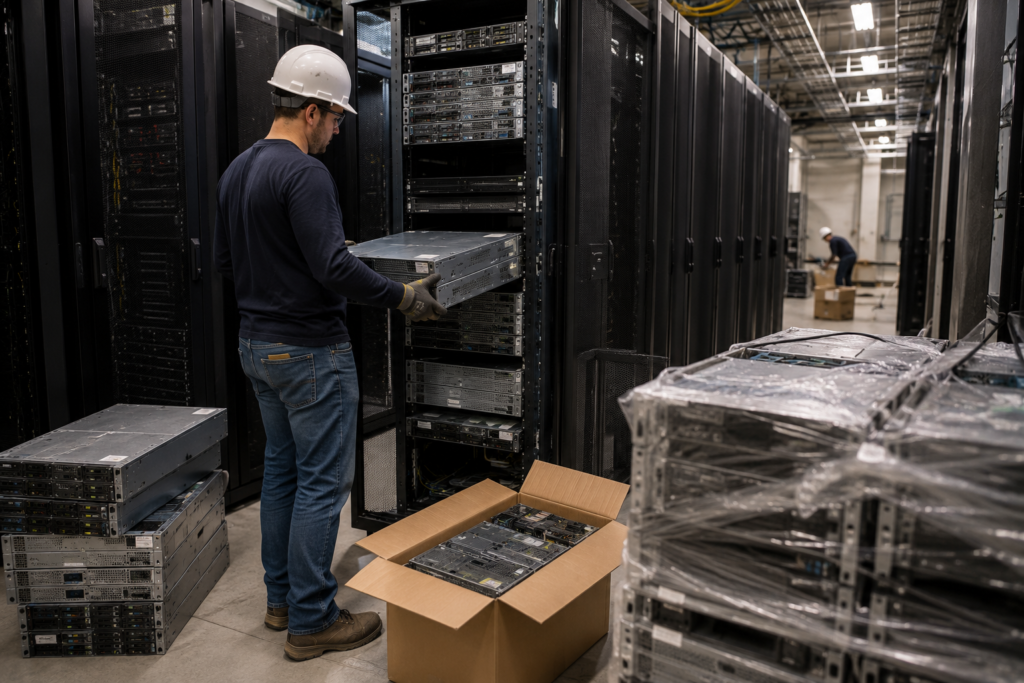
During a data center decommission, drives, SSDs, tapes, and storage systems may need onsite erasure. Some media may need onsite destruction before it leaves the facility. During ITAD, media may also be sanitized or destroyed at a secure processing center.
The key is choosing the right method for each media type.
NIST SP 800-88 Rev. 2 gives guidance for media sanitization. It helps organizations choose methods such as Clear, Purge, or Destroy based on data risk and media type.
DES provides data erasure, physical destruction, Zero Trace certified destruction, and Phoenix Certified processes for eligible media.
Chain of Custody Is Not Optional
Once equipment leaves your rack, you need to know where it goes.
Chain of custody is the documented record of each handoff. It tracks who handled the assets, when they moved, where they went, and what happened to them.
For regulated industries, this record is critical. Healthcare, finance, government, education, and enterprise teams may need proof for audits, customer reviews, insurance requests, or internal security policies.
DES builds chain-of-custody documentation into ITAD and decommissioning projects. That helps keep the project defensible from pickup to final disposition.
Secure Shipping Connects the Two
Shipping is often where projects get messy.
A decommission team may remove equipment correctly. But if the shipment is not sealed, tracked, documented, or received properly, the chain of custody can break.
DES offers secure shipping for enterprise IT equipment. This can include tamper-evident seals, photo verification, dedicated trucks, and pallet-level freight. It can also include inside pickups and documentation from pickup through final processing.
Secure shipping connects the field operation to the ITAD workflow.
What a Complete Project Should Include
A complete data center decommissioning and ITAD project should include both onsite execution and downstream disposition.
| Phase | What Happens | Why It Matters |
|---|---|---|
| Planning | Scope assets, timeline, access, dependencies, and compliance needs | Prevents downtime and missed requirements |
| Onsite work | Shut down, deinstall, de-rack, remove cables, and pack equipment | Clears the site safely |
| Data handling | Erase, degauss, shred, or destroy media based on policy | Protects sensitive data |
| Secure logistics | Seal, track, ship, and document equipment movement | Preserves chain of custody |
| ITAD processing | Test, grade, resale, recycle, or destroy assets | Recovers value and closes risk |
| Reporting | Provide asset reports, certificates, and disposition records | Supports audits and internal records |
Common Mistakes to Avoid
Avoid these mistakes during a data center exit or ITAD project:
- Treating decommissioning as basic moving
- Treating ITAD as simple recycling
- Pulling equipment before mapping dependencies
- Forgetting cables, optics, rails, drives, and spare parts
- Mixing leased and owned assets
- Shipping equipment without documented custody
- Destroying assets before checking resale value
- Reselling assets before confirming data destruction
- Accepting vague recycling receipts instead of asset-level reports
- Waiting until the lease deadline to plan removal
Most problems start with unclear ownership. Decide early who owns shutdown, removal, data security, logistics, resale, recycling, and final reporting.
Why DES Manages Both Together
Some vendors only remove hardware. Some only recycle hardware. Some only buy assets.
DES connects the full workflow.
Our team can help with:
- Data center decommissioning
- Onsite services
- Data center hardware removal
- Secure data destruction
- Asset inventory
- Chain-of-custody tracking
- Secure shipping
- Asset recovery and remarketing
- Certified recycling
- Certificates and final reports
This matters because decommissioning and ITAD are linked. A clean removal is not enough if the data path is unclear. A strong ITAD process is harder if the equipment was pulled, packed, or shipped without control.
DES gives IT, facilities, procurement, and compliance teams one process from rack to final report.
How to Choose the Right Scope
Use these questions before you request a quote:
- Are assets still installed in racks?
- Is the site active or already shut down?
- Are there lease or move-out deadlines?
- Do you need cables, racks, or power gear removed?
- Are drives, tapes, or storage arrays involved?
- Do assets need onsite destruction?
- Do you need secure shipping?
- Do you need serial-level reporting?
- Which assets may have resale value?
- Which assets must be recycled?
If the answer involves onsite removal, you need decommissioning. If the answer involves asset disposition, you need ITAD. If the answer involves both, DES can scope the project end to end.
Final Takeaway
Data center decommissioning and ITAD work best together.
Decommissioning handles the field operation. ITAD handles the disposition process. Decommissioning clears the site. ITAD closes the data, value, recycling, and documentation loop.
If your team is planning a cloud migration, colo exit, data center consolidation, or hardware refresh, plan early. Build one plan that covers onsite removal, secure shipping, data destruction, asset recovery, certified recycling, and final reporting.
Schedule a decommissioning or ITAD consultation with DES Technologies.
FAQ
What is the difference between data center decommissioning and ITAD?
Data center decommissioning is the onsite process of retiring and removing infrastructure. ITAD is the secure process of tracking, erasing, reselling, recycling, or destroying the equipment after it leaves active use.
Do I need ITAD if I already hired a data center removal company?
Yes, if the removed equipment contains data, has resale value, or needs documented recycling. Hardware removal clears the site. ITAD closes the data security, asset recovery, and compliance record.
Can DES handle both decommissioning and ITAD?
Yes. DES Technologies supports data center decommissioning, hardware removal, secure shipping, ITAD, data destruction, asset recovery, certified recycling, and final documentation.
What documentation should I receive after a decommission?
You should receive asset reports, chain-of-custody records, data destruction certificates, and disposition reports. You may also need project-specific documentation for your compliance team.
When should I start planning a data center decommission?
Start as soon as you know the migration, refresh, or exit date. Early planning helps avoid downtime, missed assets, rushed shipping, lost resale value, and incomplete documentation.