As organizations continue to generate massive amounts of data, many IT teams default to cloud and flash storage as the only viable options. While these technologies are important, a well-designed data storage strategy should also include tape—specifically modern Linear Tape-Open (LTO) technology.
Tape is not a legacy solution clinging to relevance. It is a proven, continually evolving storage tier that plays a critical role in backup, archival, ransomware protection, and long-term compliance. When used correctly, tape complements disk and cloud storage while dramatically reducing costs and risk.
Why Tape Still Belongs in Modern Data Storage
Enterprise IT environments today are more complex than ever. Data must be:
-
Protected against cyber threats
-
Retained for long periods to meet regulatory requirements
-
Stored cost-effectively as volumes continue to grow
-
Accessible when needed, without unnecessary expense
Tape addresses all of these challenges in ways that disk and cloud alone cannot.
Lower Total Cost of Ownership (TCO)
One of the strongest arguments for including tape in your data storage strategy is cost efficiency.
Independent industry research consistently shows that tape offers the lowest cost per terabyte of any enterprise storage medium. While cloud storage may appear affordable at first, long-term retention, access fees, and data egress charges add up quickly.
Tape storage reduces costs in several key areas:
-
Hardware costs are significantly lower over time
-
Energy consumption is minimal compared to always-on disk arrays
-
Cooling and data center footprint requirements are smaller
-
Operational overhead is reduced for long-term archives
Over a 10-year period, organizations using LTO tape for cold and archival data can save millions of dollars compared to disk-only or cloud-heavy infrastructures.
High Density Without the Data Center Sprawl
Modern LTO tape delivers extraordinary storage density.
Current generations of LTO media can store tens of terabytes per cartridge, allowing organizations to consolidate massive datasets into a small physical footprint. This makes tape ideal for:
-
Long-term archives
-
Video and media libraries
-
Surveillance footage
-
Scientific and research data
-
Compliance-driven retention
As data volumes grow, tape scales cleanly without requiring constant hardware refreshes or expanded power and cooling resources.
Unmatched Longevity for Long-Term Data Retention
Not all data needs to be accessed daily—but much of it must be retained for years.
LTO tape is designed for long-term data preservation, with a media lifespan that often exceeds 30 years when stored properly. In comparison:
-
Hard drives typically last 3–5 years
-
SSDs degrade over time, even when idle
-
Cloud storage depends on ongoing subscription costs
For industries with strict retention requirements—such as healthcare, finance, legal, and government—tape provides peace of mind that short-lived storage platforms simply cannot match.
Tape Is Faster Than Most People Realize
A common misconception is that tape is too slow for modern workloads. While tape is not intended to replace high-performance storage, modern LTO transfer speeds are more than sufficient for backup and recovery operations.
Each new generation of LTO has delivered significant performance gains, allowing organizations to move terabytes of data per hour. When used for its intended purpose—sequential access and large datasets—tape performs efficiently and reliably.
Smarter Tape With LTFS
Tape technology has evolved far beyond simple backup.
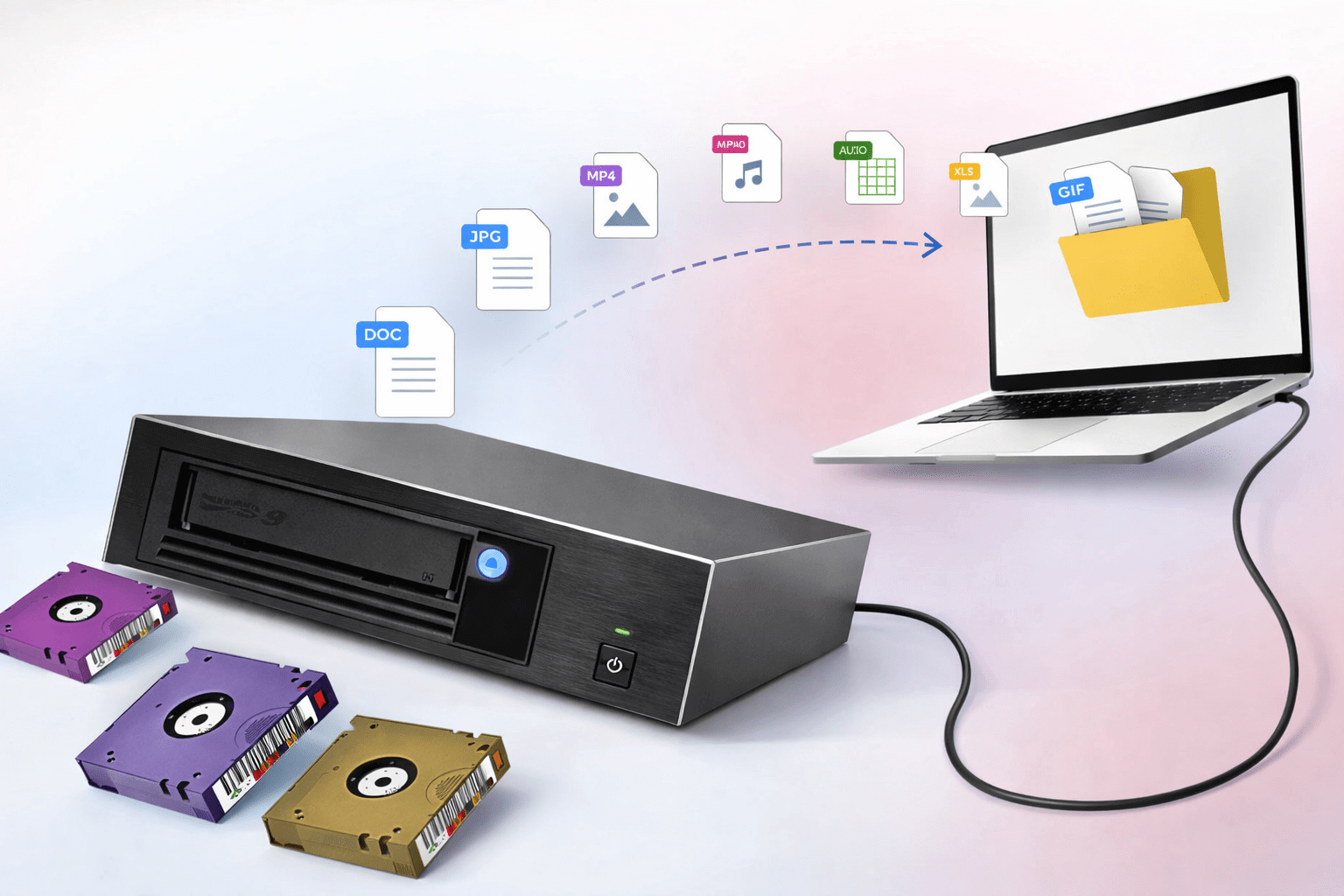
With Linear Tape File System (LTFS), tape media can function like a standard file system. This allows users to:
-
Browse files directly on tape
-
Drag and drop data without proprietary software
-
Integrate tape into tiered storage architectures
LTFS enables tape to act as an active archive, making it especially valuable for media production, surveillance data, and regulated content that must remain accessible but not constantly online.
A Critical Layer in Ransomware Defense
One of tape’s most important modern use cases is cybersecurity.
Tape supports air-gapped storage, meaning data can be physically isolated from networks. This makes it immune to ransomware, malware, and unauthorized remote access. Even the most sophisticated cyberattack cannot encrypt data that is offline.
Many organizations now rely on tape as part of a ransomware recovery strategy, ensuring they can restore clean data without paying attackers.
Built-In Security and Compliance Features
Modern LTO tape includes enterprise-grade security features, such as:
-
AES-256 hardware encryption
-
Write Once, Read Many (WORM) capabilities
-
Secure chain-of-custody tracking
These features support compliance with regulatory frameworks and data protection standards, including retention and immutability requirements.
If you’re planning for long-term data retention or decommissioning legacy systems, tape pairs well with secure data erasure and data destruction services.
(Internal link suggestion: /data-erasure/)
Sustainability and ESG Benefits
Tape is also one of the most environmentally responsible storage technologies available.
Because tape cartridges consume no power when not in use, they significantly reduce energy demand and carbon emissions. This aligns well with ESG initiatives and sustainability goals—especially for organizations managing large archival datasets.
Including tape in your storage strategy supports greener IT operations without sacrificing reliability.
The Future of LTO Tape Technology
Tape innovation is ongoing. The LTO Consortium continues to publish a clear roadmap for future generations, ensuring backward compatibility and steady increases in capacity and performance.
Leading manufacturers such as IBM continue to invest heavily in tape drives and automation systems, reinforcing tape’s role as a long-term enterprise solution—not a stopgap.
Why Tape Belongs in a Balanced Storage Strategy
No single storage technology is perfect for every workload. The most effective data storage strategies use a tiered approach, combining:
-
High-performance disk or flash for active workloads
-
Cloud for collaboration and elastic access
-
Tape for backup, archive, security, and compliance
When implemented correctly, tape reduces costs, strengthens data protection, and simplifies long-term data management.
Final Thoughts: Tape Is Not Dead—It’s Essential
Despite persistent myths, tape remains one of the most reliable, secure, and cost-effective data storage technologies available. Organizations that ignore tape often pay more, take on unnecessary risk, and complicate their data retention strategies.
Data storage should include tape—not as a replacement for modern technologies, but as a powerful complement that delivers long-term value.
If your organization is reviewing its data lifecycle, storage architecture, or end-of-life data handling, working with an experienced ITAD and data management partner can help ensure your strategy is secure, compliant, and future-ready.