In today’s rapidly evolving digital economy, organizations upgrade their technology faster than ever before. Servers are replaced in three to five years. Laptops are refreshed every two to three years. Smartphones are cycled out even more frequently. While this pace fuels innovation and operational efficiency, it also generates an enormous challenge: what happens to retired IT assets?
For years, traditional IT asset disposition (ITAD) focused on secure destruction, compliance, and downstream recycling. Those elements remain essential—but they are no longer enough. The future of IT asset disposition lies in something far more strategic and sustainable: circular technology.
Circular technology is transforming ITAD from a cost center into a value-driven sustainability initiative. It aligns environmental responsibility, regulatory compliance, data security, and financial return in one integrated approach. For forward-thinking organizations, circularity isn’t just a trend—it’s a competitive advantage.
Understanding Circular Technology in ITAD
Circular technology is rooted in the principles of the circular economy: eliminate waste, keep products and materials in use, and regenerate natural systems. In the ITAD world, this means:
- Extending the life of devices through reuse and refurbishment
- Recovering components and materials responsibly
- Ensuring secure data destruction before redeployment
- Minimizing landfill contributions
- Measuring environmental impact through reporting
Instead of a linear “take–make–dispose” model, circular ITAD follows a “use–recover–reuse” lifecycle.
Traditional IT disposal focused on end-of-life. Circular ITAD focuses on next-life value.
The Growing Problem of E-Waste
The urgency for circular technology is clear. Electronic waste (e-waste) is one of the fastest-growing waste streams globally. Millions of tons of electronic devices are discarded each year, often containing hazardous materials like lead, mercury, and cadmium.
Beyond environmental concerns, improperly handled IT assets pose serious risks:
- Data breaches from unsecured drives
- Regulatory penalties
- Brand reputation damage
- Loss of recoverable asset value
Organizations can no longer afford to treat retired technology as trash. It is both a liability and an opportunity.
Why Circular Technology Is a Strategic Imperative
1. Sustainability Is No Longer Optional
Environmental responsibility has moved from marketing messaging to boardroom strategy. Investors, regulators, and customers increasingly expect companies to demonstrate measurable ESG (Environmental, Social, Governance) performance.
Circular ITAD directly supports:
- Reduced carbon footprint
- Resource conservation
- Waste diversion metrics
- Sustainability reporting transparency
Extending device lifecycles significantly reduces emissions compared to manufacturing new hardware. Every laptop refurbished and redeployed avoids the environmental cost of mining, processing, manufacturing, and shipping a new device.
Circular technology transforms ITAD into a powerful ESG driver.
2. Data Security and Circularity Can Coexist
Some organizations hesitate to embrace reuse because of data security concerns. However, certified ITAD providers integrate advanced data sanitization methods, including:
- NIST-compliant data wiping
- Physical destruction when required
- Serialized tracking
- Chain-of-custody documentation
- Certificates of destruction
Circularity does not mean compromising security. It means extracting value after ensuring complete data sanitization.
The right ITAD partner combines secure data destruction with responsible asset recovery.
3. Financial Recovery and Cost Optimization
One of the strongest business cases for circular ITAD is financial return.
Instead of paying solely for destruction, organizations can:
- Recover resale value from refurbished equipment
- Offset new technology purchases
- Reduce storage and logistics costs
- Minimize waste disposal fees
Devices that still have usable components—memory, processors, hard drives, displays—retain market value. Even equipment beyond repair can yield recoverable materials like aluminum, copper, and rare earth elements.
Circular technology converts retired IT from a sunk cost into a measurable asset.
The Regulatory Landscape Is Changing

Compliance expectations are tightening across industries. Regulations surrounding data privacy, environmental protection, and electronic waste management are expanding at both state and federal levels.
Circular ITAD aligns with evolving regulatory frameworks by:
- Providing auditable documentation
- Ensuring downstream vendor accountability
- Supporting responsible recycling standards
- Demonstrating environmental due diligence
As regulations become stricter, companies relying on outdated disposal models face greater exposure. Circular strategies provide proactive compliance protection.
How Circular ITAD Works: From Pickup to Reuse
A mature circular ITAD program typically includes:
1. Asset Inventory and Tracking
Every device is serialized and documented. This ensures visibility and accountability throughout the lifecycle.
2. Secure Data Sanitization
Drives are wiped using recognized standards or physically destroyed when required.
3. Functional Testing and Grading
Assets are evaluated for reuse potential. Devices in good condition move into refurbishment channels.
4. Refurbishment and Redeployment
Working devices are repaired, upgraded, and resold or redeployed internally.
5. Responsible Recycling
Non-functional equipment is dismantled responsibly, with materials recovered and hazardous components handled properly.
6. Environmental and Financial Reporting
Organizations receive reports detailing diversion rates, carbon impact, and value recovery.
This process ensures security, sustainability, and measurable ROI.
The Environmental Impact of Extending Device Lifecycles
Manufacturing a single laptop can generate hundreds of kilograms of carbon emissions. Mining for rare earth metals and processing raw materials are energy-intensive and environmentally disruptive.
When organizations extend the usable life of technology:
- They reduce demand for new manufacturing
- They conserve raw materials
- They lower greenhouse gas emissions
- They minimize landfill waste
Circular ITAD becomes one of the simplest and most immediate ways for companies to reduce Scope 3 emissions—those generated across the supply chain.
Circular Technology Strengthens Corporate Responsibility
Modern consumers and enterprise clients evaluate vendors based on sustainability performance. Circular ITAD demonstrates commitment to:
- Responsible resource management
- Ethical recycling practices
- Social responsibility through refurbishment programs
- Community impact initiatives
Some ITAD providers even support digital equity programs by refurbishing devices for schools and underserved communities.
This positions organizations not just as compliant, but as responsible industry leaders.
The Role of Certification in Circular ITAD
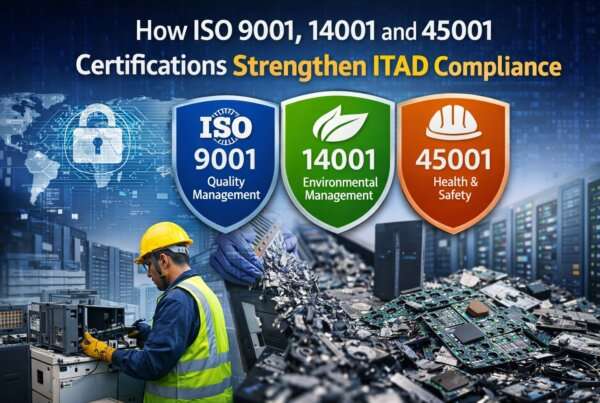
Not all ITAD providers operate at the same level of accountability. Certifications ensure that circular practices meet strict operational, environmental, and security standards.
Key certifications often associated with high-quality circular ITAD include:
- R2v3
- ISO 9001
- ISO 14001
- ISO 45001
These frameworks validate:
- Quality management systems
- Environmental management systems
- Worker safety protocols
- Data destruction processes
Partnering with certified providers ensures circular technology initiatives are defensible, auditable, and scalable.
Overcoming Common Myths About Circular ITAD
Myth 1: Reuse Is Risky
Reality: With proper data sanitization and documentation, reuse is secure and compliant.
Myth 2: Recycling Is Enough
Reality: Recycling is important—but reuse delivers significantly greater environmental impact.
Myth 3: It’s Too Complex
Reality: Experienced ITAD partners manage the entire process, from logistics to reporting.
Myth 4: There’s No Financial Benefit
Reality: Many organizations recover substantial value through resale and component harvesting.
Education is critical. Once stakeholders understand the benefits, circular ITAD becomes an obvious choice.
Circular Technology as a Competitive Advantage

Companies that embrace circular ITAD gain measurable advantages:
- Improved ESG scores
- Stronger investor confidence
- Lower total cost of ownership
- Reduced regulatory risk
- Enhanced brand reputation
In industries where procurement decisions increasingly factor in sustainability, circular practices can differentiate vendors during competitive bids.
Sustainability is no longer separate from business strategy—it is business strategy.
The Future of IT Asset Disposition
Looking ahead, circular technology will only grow in importance.
Emerging trends include:
- AI-driven asset tracking
- Blockchain-based chain of custody
- Advanced material recovery systems
- Carbon impact analytics
- Device-as-a-Service (DaaS) models
As hardware refresh cycles continue to accelerate, organizations must adopt smarter lifecycle management strategies. Circular ITAD provides the framework.
The future will not belong to companies that simply dispose of IT responsibly. It will belong to those that design technology lifecycles intentionally.
Building a Circular IT Strategy Today
Organizations ready to embrace circular ITAD should start by:
- Conducting a lifecycle audit of current IT assets
- Reviewing existing ITAD vendor certifications
- Establishing measurable sustainability goals
- Implementing serialized asset tracking
- Requesting environmental impact reporting
- Evaluating resale recovery performance
Leadership alignment is critical. Circular ITAD touches IT, compliance, finance, procurement, and sustainability teams.
When properly implemented, it becomes a cross-functional value driver.
Conclusion: From Disposal to Regeneration
Circular technology represents a fundamental shift in how organizations view retired IT assets.
Instead of asking, “How do we dispose of this securely?”
Forward-thinking leaders ask, “How do we extract maximum value responsibly?”
Circular IT asset disposition:
- Protects sensitive data
- Supports regulatory compliance
- Reduces environmental impact
- Recovers financial value
- Strengthens ESG performance
The linear model of IT disposal is outdated. Sustainability expectations are rising. Regulations are tightening. Supply chains are under scrutiny. Stakeholders demand transparency.
Circular technology answers all of these pressures in one cohesive strategy.
For organizations committed to innovation, responsibility, and long-term resilience, the path forward is clear:
Circular technology isn’t just the future of IT asset disposition—it is the standard that will define it.