


Using IT to Help First Responders Save Lives
Imagine sitting in rush-hour traffic late on a Friday afternoon. You glance in your rear-view mirror and see an ambulance approaching—lights flashing, sirens blaring—but traffic barely moves. In that moment, a thought cuts through the frustration: what if that ambulance was rushing someone you love to the hospital?
With today’s technology, it’s fair to ask why emergency response still faces these delays. The truth is, information technology is already changing how first responders operate—and when deployed correctly, it has the power to save lives.
From smart traffic systems to connected medical devices, IT is becoming an essential tool for police officers, firefighters, EMTs, and emergency coordinators. As cities modernize their infrastructure, technology is no longer just about efficiency—it’s about speed, safety, and survival.
The Rise of Smart Cities and Emergency Technology
Smart cities are no longer a future concept—they’re a growing reality. Municipalities across the country are investing in connected infrastructure designed to collect, analyze, and act on real-time data. For first responders, this shift is transformational.
One of the most immediate benefits comes from smart traffic management systems. Emergency vehicles equipped with GPS can communicate with traffic lights, automatically triggering green signals along their route. This reduces congestion, shortens response times, and lowers the risk of secondary accidents at intersections.
Beyond traffic, cities are deploying sensors that monitor the structural integrity of bridges, buildings, and roadways. These systems can detect early signs of failure, helping officials address hazards before they lead to injuries or fatalities. Preventative maintenance driven by data not only protects lives—it also reduces long-term costs for municipalities.
When More Data Isn’t Always Better
While connected technology offers tremendous promise, it also introduces real challenges. Smart cities generate massive volumes of data, and not all of it is useful—or manageable.
City officials often face two major obstacles:
-
Integrating new technology with legacy systems
-
Ensuring collected data is accurate, actionable, and secure
Without proper planning, new systems can overwhelm existing infrastructure or create blind spots that slow response times rather than improve them.
A commonly cited example is the Apple Watch. Its fall-detection feature has already helped save lives by automatically contacting emergency services when users appear to be incapacitated. For elderly individuals or people living alone, this technology can be life-changing.
However, false positives remain a concern. In dense urban environments, thousands—or even millions—of connected devices could unintentionally flood emergency call centers if sensors malfunction or misinterpret data. This highlights a critical truth: technology must be reliable, secure, and thoughtfully implemented.
How IoT and Connected Systems Improve Emergency Response
Despite these challenges, the advantages of smart technology for first responders are substantial.
A well-designed network of connected devices can help reduce accidents—or prevent them entirely. Advanced vehicle sensors, like those used by Tesla, demonstrate how real-time data can help avoid collisions and protect both drivers and pedestrians. Similar principles are now being applied to public safety fleets and emergency vehicles.
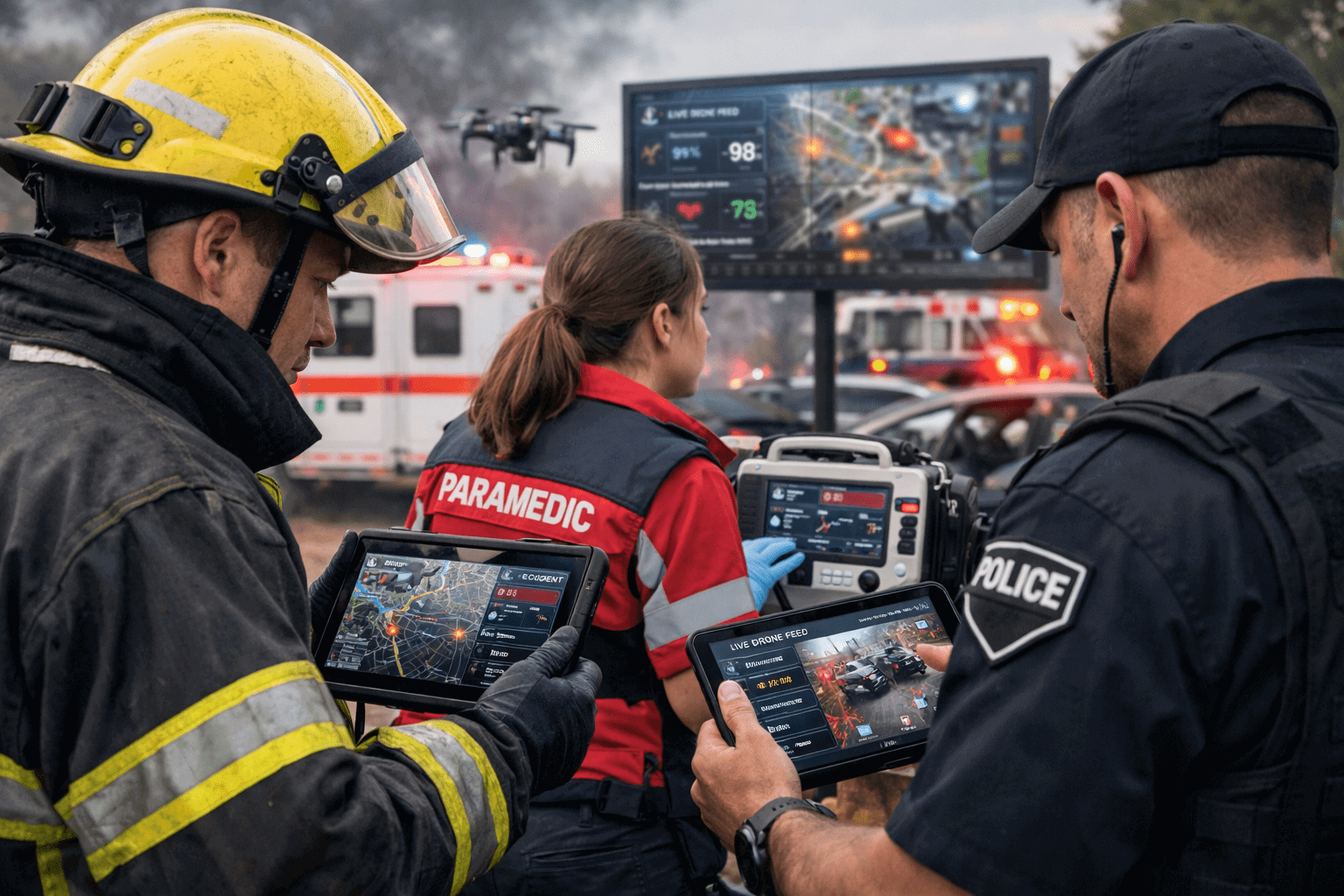
Connected systems also give responders better situational awareness before they arrive on scene. Wearable health devices, smart building sensors, and connected dispatch platforms can provide:
-
Real-time patient vitals
-
Live building layouts and occupancy data
-
Hazard alerts (fire, gas leaks, structural risks)
-
Faster coordination between departments
In emergencies, seconds matter. Access to accurate information before arrival can mean the difference between life and death.
Real-World Examples of Smart City Success
Cities that have begun adopting smart infrastructure are already seeing measurable benefits. In places like Corona, California, connected sensors and data platforms provide city officials with a clearer picture of traffic patterns, emergency incidents, and resource deployment.
Public-facing tools also play a role. Navigation apps such as Waze share anonymized traffic data that transportation departments use to reduce bottlenecks and reroute vehicles during emergencies. Law enforcement can distribute Amber Alerts instantly across entire populations, improving response times and public awareness.
As technology evolves, the possibilities continue to expand. In the near future, paramedics may receive live medical data from patients’ wearable devices before reaching the scene, allowing them to prepare life-saving interventions in advance.
Why Secure IT Infrastructure Matters for Public Safety
Behind every smart system is critical IT infrastructure—and it must be secure, resilient, and compliant.
Emergency response systems handle sensitive data, from medical records to real-time location tracking. Without proper safeguards, this data can become vulnerable to breaches, system failures, or misuse. That’s why secure lifecycle management of IT assets is essential for municipalities and public agencies.
At DES Technologies, we understand that technology supporting first responders must be treated as mission-critical. Our work with secure IT asset disposition, data destruction, and infrastructure lifecycle management helps organizations:
-
Protect sensitive public and medical data
-
Maintain compliance with regulatory standards
-
Retire outdated systems responsibly
-
Support sustainability and ESG initiatives
(Internal linking opportunity: Data Destruction Services, Certified ITAD Services, Secure Chain of Custody)
Reliable technology doesn’t just improve efficiency—it protects trust, safety, and lives.
The Future of IT in Emergency Response
Many of the most revolutionary public-safety technologies haven’t even been invented yet. But the foundation is already in place. As cities continue to modernize, IT will play an even greater role in how first responders serve their communities.
When thoughtfully designed and securely managed, smart technology can:
-
Reduce emergency response times
-
Improve responder safety
-
Enhance coordination across agencies
-
Elevate overall quality of life for residents
The goal isn’t technology for technology’s sake. It’s about using IT responsibly to empower the people who show up when it matters most.
Final Thoughts
First responders risk their lives every day to protect others. The least we can do is equip them with technology that works with them—not against them.
Smart cities, connected devices, and secure IT infrastructure are no longer optional. They are essential tools in building safer, more resilient communities. When innovation is paired with reliability, security, and thoughtful implementation, technology becomes more than an upgrade—it becomes a lifesaving force.


