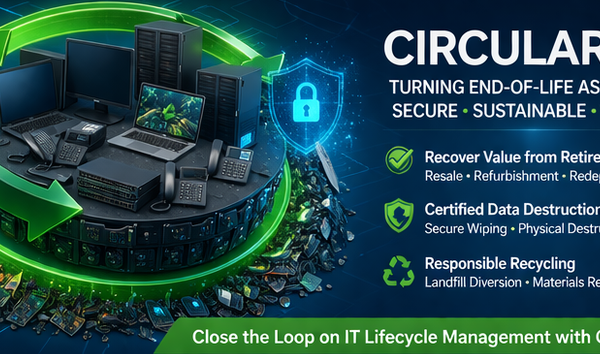
Enterprises today are managing more hardware, more endpoints, and more global locations than ever before. As IT footprints expand, so does the complexity of securely retiring, recycling, or reselling aging IT equipment. What was once a simple “remove and replace” workflow is now a board-level risk decision, tied directly to cybersecurity, ESG reporting, and regulatory compliance.
This Enterprise ITAD Playbook gives IT leaders, asset managers, and multi-site operations teams a practical, repeatable framework for secure, compliant Enterprise IT Asset Disposition at scale. From inventory planning to audit-ready reporting, each step is built to reduce risk, maintain chain of custody, and ensure consistent results across your entire organization.
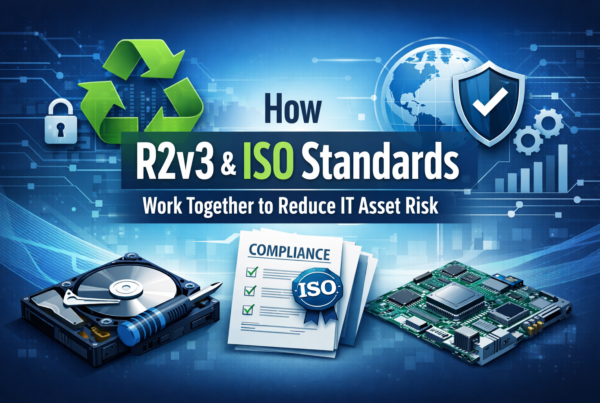
DES Technologies supports this framework through its Phoenix Certified™ Process, R2v3 certification, and ISO 9001/14001/45001 compliance—ensuring every asset is handled, tracked, and documented according to the highest global standards.
Why Enterprise-Level ITAD Requires a Formal Framework
Large organizations face unique challenges when decommissioning IT assets across campuses, global offices, remote employees, and data centers. The biggest pain points often include:
Outdated or incomplete asset inventories
Inconsistent processes across regions or departments
Lack of chain-of-custody documentation
Security gaps in data destruction workflows
Complex logistics and scheduling
Pressure from auditors or cybersecurity teams
Environmental, sustainability, and governance reporting
Vendor reliability concerns
A formal ITAD framework brings standardization, predictability, and accountability to an otherwise fragmented process. It also ensures your organization can prove compliance at any moment—even years after equipment leaves your facility.

Step 1: Build a Centralized and Accurate Asset Inventory
A scalable Enterprise ITAD strategy begins with visibility. Your organization must know exactly what assets you have, where they are located, who uses them, and their current condition.
A strong inventory program includes:
Capturing serial numbers, asset tags, and model numbers
Recording physical condition and functional status
Identifying data-bearing vs. non-data-bearing assets
Tracking end-of-life dates and refresh cycles
Determining potential resale value
Flagging equipment under support contracts or leases
DES Technologies supports multi-site organizations with asset tracking tools, serialized reporting, and intake logs to ensure you have an authoritative record before decommissioning begins.
For more insight into data-bearing asset security, see our page on Secure Data Erasure.
Step 2: Define Your Enterprise ITAD Policy and Compliance Requirements
Most organizations already have some form of IT asset policy, but few have one detailed enough to withstand today’s cybersecurity and environmental scrutiny.
A compliant ITAD policy should define:
Which IT asset types require data destruction
Approved sanitization methods (NIST 800-88, DoD 5220.22-M, degaussing, shredding)
Required chain-of-custody documentation
Vendor approval criteria
ESG and sustainability objectives
Recycling vs. resale pathways
Required certificates (Data Destruction, Recycling, Serial-Level Reporting)
Roles and responsibilities for IT, procurement, and facilities teams
DES Technologies’ Phoenix Certified™ Process ensures alignment with R2v3, ISO 9001, ISO 14001, and ISO 45001—the strictest standards for environmental health, safety, and security. These certifications give enterprises the audit-ready assurances they need.
Step 3: Establish a Repeatable Logistics and Collection Framework
Logistics can be the most challenging part of Enterprise ITAD, especially for organizations managing hundreds or thousands of devices across multiple sites.
A scalable logistics plan includes:
Standard packing and palletization requirements
Ensuring equipment is packaged properly to reduce damage during transit.
On-site or in-plant consolidation
Collecting assets from various departments or buildings into a centralized staging area.
Scheduled pick-ups or recurring service routes
Ideal for organizations with predictable refresh cycles.
Secure transportation
Chain-of-custody compliant carriers, tamper-proof containers, and GPS-tracked vehicles.
Global consistency
Every site must follow identical procedures, regardless of geography.
At DES Technologies, our logistics team coordinates nationwide and enterprise-level pick-ups, with full asset tracking from the moment equipment leaves your facility.
Step 4: Maintain Chain of Custody From Pickup Through Final Processing
This is where Enterprise ITAD most often fails—not because organizations lack good intentions, but because there is no centralized way to verify what actually happens to equipment after it leaves the site.
A proper chain-of-custody framework includes:
Serialized intake logs
Time-stamped transfer records
GPS tracking during transit
Serial-level reconciliation upon arrival
Secure facility access controls
Video-monitored processing areas
Role-based employee authorization
DES Technologies integrates chain-of-custody documentation into every step of its Phoenix Certified™ Process. The result is audit-ready tracking that reduces organizational risk and satisfies cybersecurity, compliance, and legal teams.
Step 5: Perform Data Destruction With Certified, Verifiable Methods
Data destruction is the heart of Enterprise IT Asset Disposition. Even a single overlooked drive, LTO tape, or flash module can result in a serious data breach.
A certified data sanitization workflow should include:
Hard Drives
NIST 800-88 Clear or Purge
DoD 5220.22-M protocols where required
Software wipes (KillDisk, Blancco)
Physical destruction when necessary
Tape Media (LTO, Enterprise Tape, 3592)
For organizations handling large tape libraries or archive migrations:
Serialized asset logging
Offload into secure, controlled environments
Two-pass full tape erasure
Verification reporting
Environmental recycling or resale
For deeper insight, explore our educational resource on Ways to Securely Erase Data from Tape Media.
Data destruction must always end with a Certificate of Data Destruction, tied to serial numbers and documented according to R2v3 and ISO standards.
Step 6: Maximize Value Recovery While Minimizing Waste
Enterprise ITAD is not only about risk mitigation—it’s also a financial opportunity.
A strong value recovery strategy includes:
Evaluating resale value for servers, storage arrays, networking gear, laptops, and mobile devices
Understanding global secondary markets
Identifying demand cycles for specific OEMs
Separating reusable components from recyclable materials
Leveraging refurbishment partners
Reducing landfill waste and improving ESG reporting
DES Technologies specializes in maximizing the usable life of enterprise hardware while ensuring environmentally responsible outcomes in line with R2v3 and ISO 14001 standards.
Step 7: Deliver Audit-Ready Reports and Documentation
For enterprise organizations, documentation is the final—and most important—stage of ITAD compliance.
Your reporting package should include:
Serial-level asset lists
Proof of data destruction
Environmental impact reports
Chain-of-custody logs
Recycling certificates
Settlement reports for revenue share
ESG-aligned summaries
Records formatted for internal auditors and cybersecurity teams
DES Technologies provides clear, comprehensive reporting designed to withstand regulatory audits, ISO inspections, corporate cybersecurity reviews, and board-level governance checks.
Step 8: Integrate the Framework Into Annual IT Lifecycle Planning
The most successful organizations treat ITAD as a continuous lifecycle process—not a one-time event.
To ensure long-term enterprise success:
Maintain annual refresh calendars
Integrate ITAD into procurement processes
Reuse standardized workflows across every site
Conduct routine audits of your ITAD partner
Track environmental and financial metrics
Align ITAD practices with corporate ESG goals
Standardization across your global footprint ensures predictable results and dramatically reduces risk exposure.

Why Enterprises Choose DES Technologies for Large-Scale ITAD
Enterprises rely on DES Technologies because our processes were built specifically for large, multi-site, compliance-driven organizations.
You benefit from:
R2v3 certification
ISO 9001 for quality
ISO 14001 for environmental leadership
ISO 45001 for worker safety
Phoenix Certified™ chain-of-custody
Highly secure facilities
Nationwide logistics
Certified data destruction
Transparent and audit-ready reporting
Our mission is simple: protect your organization, reduce risk, and deliver certified ITAD results at scale.
To learn more about how we help enterprises securely retire IT assets, explore our page on Certified Enterprise ITAD & Secure Asset Recovery.
Conclusion: A Repeatable Framework for the Modern Enterprise
As enterprise infrastructures grow more distributed—and as cybersecurity and ESG responsibilities tighten—ITAD can no longer operate without a structured, compliant framework. By following the playbook above, global IT leaders gain the visibility, control, and auditability needed to manage IT asset disposition confidently and consistently.
DES Technologies supports every stage of your Enterprise ITAD lifecycle with R2v3 and ISO-certified processes designed for scale, security, and accountability.