Certified ITAD Is Now a Board-Level Risk Decision
In today’s regulatory environment, IT Asset Disposition (ITAD) is no longer a back-office operational task. For CISOs, CIOs, CFOs, and compliance leaders, ITAD now sits squarely in the category of board-level risk management. Data breaches linked to improper disposal, gaps in chain-of-custody, and non-compliant recycling practices have resulted in multimillion-dollar fines, lost contracts, and permanent brand damage. The reality is simple: if your ITAD provider is not certified, your organization inherits the risk. That is why more enterprises are turning to partners who hold the industry’s highest certifications, including R2v3 and ISO Certifications—the exact standards DES Technologies has achieved to protect organizations during the complete lifecycle of their IT and data-center assets.
Why Uncertified ITAD Is Now a Major Organizational Liability
Even the most advanced cybersecurity program can be undermined by a single overlooked hard drive, untracked laptop, or improperly erased LTO tape. Uncertified ITAD creates three primary categories of enterprise risk:
1. Regulatory & Legal Exposure
Data privacy regulations such as HIPAA, GLBA, PCI DSS, FERPA, and state breach laws impose strict requirements for how data must be sanitized and documented. If a device leaves your facility without compliant data erasure, your company—not the ITAD vendor—remains legally responsible.
A breach caused by improper asset disposition can trigger:
Regulatory fines
Mandatory breach notifications
Civil liability
Loss of compliance certifications
This is especially true for highly regulated industries like healthcare, finance, and government—sectors DES Technologies regularly supports.
2. Brand & Contractual Risk
A single data-disposal failure can jeopardize customer trust, long-standing contracts, and future bids. Procurement teams now evaluate ITAD vendors the same way they evaluate cloud and cybersecurity partners. Without recognized third-party certifications, vendors cannot provide the level of assurance modern enterprises require.
3. Governance & Audit Readiness Gaps
Internal and external auditors increasingly request documentation for:
Asset tracking
Chain-of-custody
Data sanitization methods
Environmental compliance
Worker safety standards
An uncertified provider cannot deliver the audit-ready documentation required for a complete risk-management program.
How R2v3 Certification Protects Your Enterprise
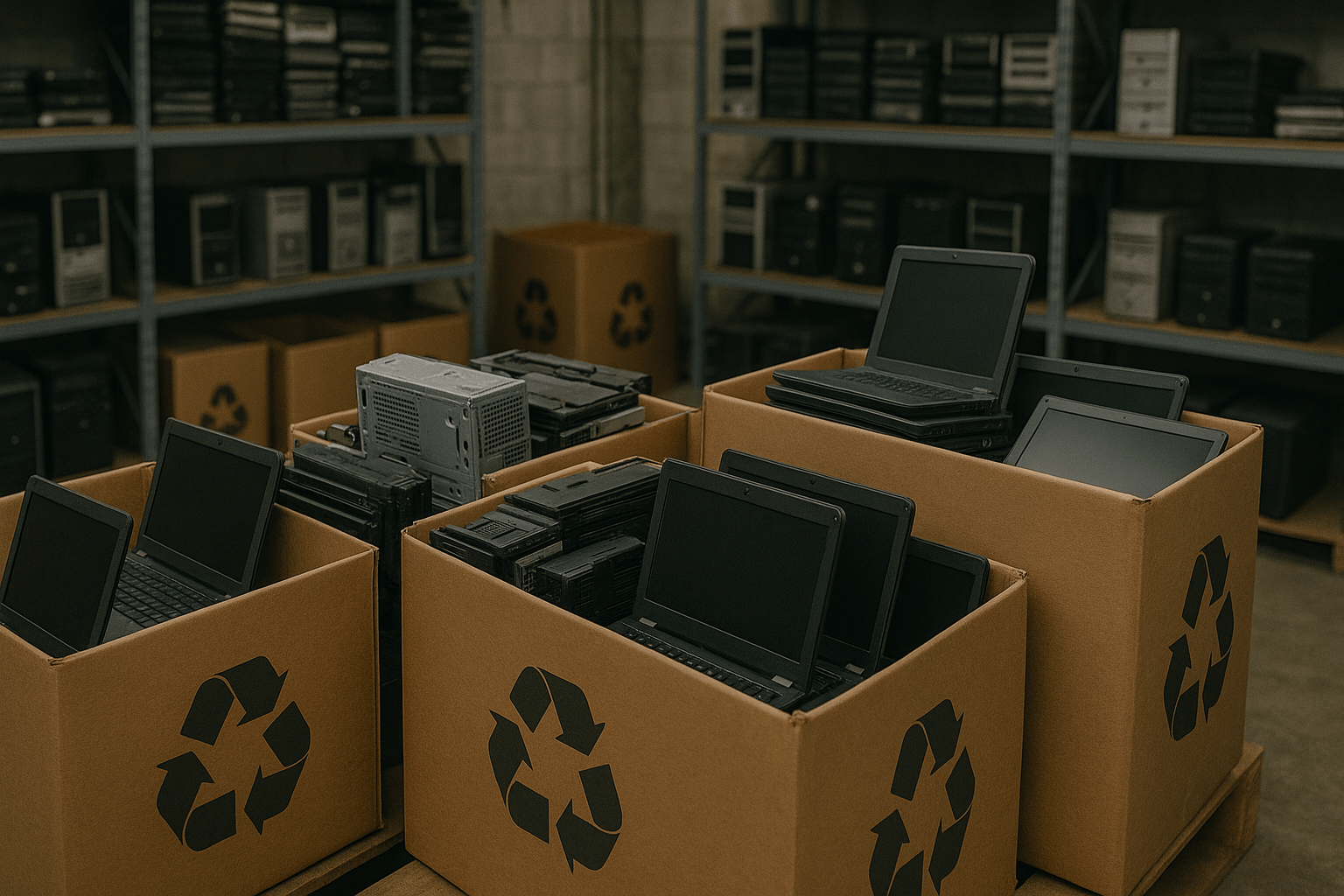
R2v3 is the most advanced global standard for responsible electronics reuse, repair, recycling, and data sanitization. Its requirements go far beyond traditional ITAD practices, imposing strict controls that protect both the environment and your corporate risk profile.
What R2v3 Means for CISOs, CIOs, and CFOs
Data security assurance:
R2v3 requires vendors to follow rigorous data-sanitization protocols and maintain verifiable documentation. DES Technologies follows NIST 800-88 standards and provides detailed reports for every device processed.
Proven chain-of-custody:
R2v3 mandates tracking each asset through every stage of disposition. This includes receiving, auditing, testing, erasure, destruction, and downstream material handling. Our internal processes—which include serialized tracking and auditable logs—ensure no asset is ever misplaced or unaccounted for.
Downstream vendor accountability:
R2v3 requires all partners and recycling outlets to meet strict environmental and health-and-safety standards. This prevents reputational risk associated with improper disposal or overseas dumping.
Environmental compliance:
Sustainability has become a board-level metric. With R2v3, you can confidently demonstrate that all e-waste is handled responsibly, ethically, and in alignment with corporate ESG goals.
Learn more about how DES Technologies approaches secure recycling on our Sustainable Decommissioning page.
How ISO Certifications Strengthen Governance and Reduce Operational Risk
DES Technologies maintains ISO 9001, ISO 14001, and ISO 45001. Together, these certifications create the governance framework enterprises need for ITAD at scale.
ISO 9001: Quality Management & Process Control
Ensures all ITAD services follow consistent, repeatable, audited procedures. This is essential for audits, procurement reviews, and contract compliance.
ISO 14001: Environmental Management
Demonstrates responsible handling of electronic waste and alignment with ESG objectives. This reduces the risk of fines, negative publicity, or violations related to improper disposal.
ISO 45001: Safety Management
Protects workers during equipment handling, deinstallation, and destruction. This mitigates liability, improves compliance, and strengthens vendor qualification.
Where ITAD Failures Happen—and How R2v3 and ISO Certification Closes the Gaps
Boards often assume their risk lies in active systems, but most ITAD failures occur after equipment is retired. Common failure points include:
Data left on HDDs or SSDs during bulk refresh cycles
Incomplete erasure of LTO or enterprise tape media
Missing or inaccurate serial-level logs
Improper handling of hazardous e-waste
Devices being resold or exported without approval
Vendors using unverified downstream recyclers
Our certified processes eliminate these gaps through:
Two-pass erasure options for tape media (learn more on our Tape Erasure Guide)
NIST-compliant data sanitization
Documented chain-of-custody
Secure onsite and offsite data destruction
Certified recycling and reuse pathways
Every step is measurable, traceable, and fully auditable.

Why R2v3 and ISO Certification Now Matters to the Entire C-Suite
For CISOs:
Reduces breach risk and ensures security frameworks extend to end-of-life assets.
For CIOs:
Improves lifecycle management, reduces refresh delays, and supports asset-level compliance.
For CFOs:
Protects against costly regulatory issues, contract losses, and environmental penalties—while improving recoverable value from surplus equipment.
For Boards:
Provides independent validation that ITAD is managed with the same rigor as cybersecurity, compliance, and procurement.
What Certified Enterprise ITAD Looks Like at DES Technologies
Our Phoenix Certified™ Process is built on a foundation of R2v3 and ISO certification standards and includes:
Serialized asset tracking
NIST-compliant data sanitization
Onsite and offsite destruction
Chain-of-custody documentation
Secure logistics and auditing
Certified downstream material handling
Comprehensive reporting for audits and compliance reviews
This is the level of governance enterprises expect—and the level of protection regulators now require.
Is Your Current ITAD Provider Putting Your Organization at Risk?
Most companies don’t discover gaps in their ITAD process until it’s too late. If your vendor cannot provide R2v3 and ISO documentation, downstream transparency, or complete chain-of-custody evidence, your organization may be exposed to avoidable risk.
Request an ITAD Risk Assessment
If you want a clear picture of how your current ITAD process aligns with board-level expectations, DES Technologies offers a complimentary ITAD Risk Assessment and program review.
We’ll evaluate your:
Data-sanitization process
Compliance posture
Asset-tracking and documentation
Chain-of-custody controls
Current ITAD vendor risks
Opportunities to reduce liability and increase equipment value
Contact DES Technologies today to schedule your assessment and strengthen your ITAD governance framework.