


Artificial intelligence is no longer a future roadmap item—it is an operational reality. From large language models to advanced analytics, automation, and real-time decision systems, AI workloads are reshaping how organizations think about compute, storage, and infrastructure at scale. At the center of this transformation is the AI datacenter.
Unlike traditional cloud or enterprise datacenters, AI datacenters are purpose-built environments designed to train and run massive artificial intelligence models continuously, efficiently, and at unprecedented scale. These facilities represent one of the largest infrastructure shifts the IT industry has experienced in decades.
For IT leaders, infrastructure planners, and organizations managing large technology footprints, understanding what an AI datacenter is—and how it impacts long-term infrastructure strategy—is now essential.
What Is an AI Datacenter?
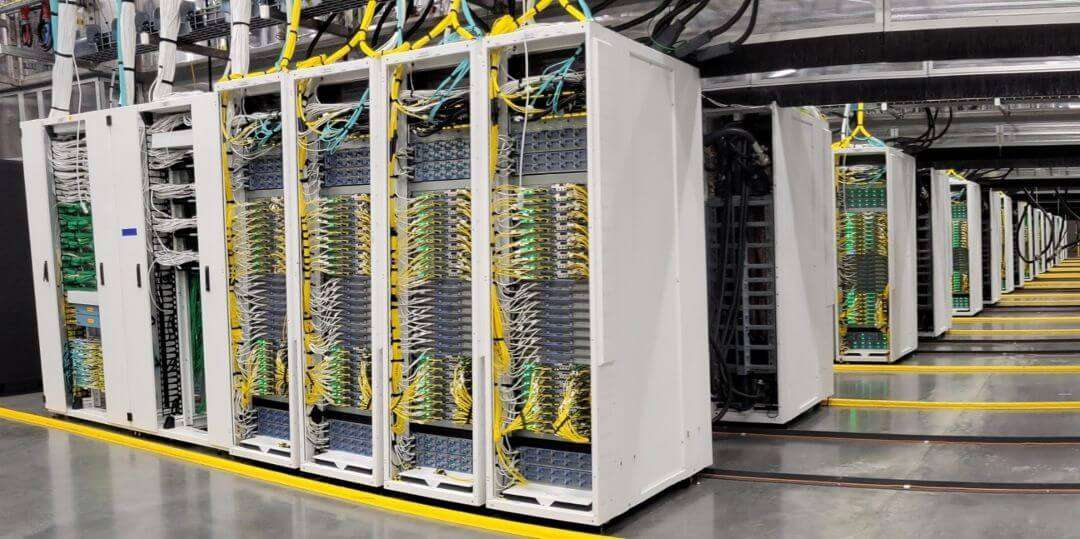
An AI datacenter is a specialized, high-density computing facility designed specifically for artificial intelligence training and inference workloads. These workloads require thousands—sometimes hundreds of thousands—of processors working in unison, processing enormous volumes of data with extremely low latency.
Unlike conventional datacenters that host many independent workloads such as email, file storage, or business applications, an AI datacenter operates more knowingly like a single, massive supercomputer.
These facilities power:
Large language models (LLMs)
Computer vision and image generation systems
Predictive analytics engines
AI copilots and automation platforms
Scientific and research simulations at extreme scale
Major hyperscale providers—including Microsoft—are now deploying AI datacenters globally to meet the exploding demand for AI-driven services.
Why AI Datacenters Are Fundamentally Different
Traditional datacenters are optimized for workload diversity. AI datacenters are optimized for workload intensity.
Here’s what sets them apart:
Massive GPU Density
AI datacenters rely on specialized accelerators—most commonly GPUs—to perform trillions of mathematical operations in parallel. These GPUs are deployed in extremely dense configurations, far beyond what air-cooled facilities can support.
Flat, High-Speed Networking
AI workloads require near-instant communication between processors. AI datacenters use ultra-low latency networking fabrics that allow every GPU to communicate with every other GPU without bottlenecks.
Unified Compute Behavior
Although physically composed of thousands of servers, an AI datacenter functions as a single logical machine. This allows entire AI models to be trained in parallel, drastically reducing training time.
Continuous Utilization
Idle hardware is unacceptable in an AI environment. Every design decision—from networking to storage access—is made to keep compute resources operating at full capacity.
The “Factories” of the AI Era
A helpful way to understand the role of an AI datacenter is to think of it as the factory floor of the AI economy.
AI models are trained through repeated cycles of prediction, correction, and optimization—executed billions or trillions of times. Each GPU acts like a worker on an assembly line, while ultra-fast networks synchronize every operation in real time.
If any component slows down—storage, networking, or compute—the entire system suffers. That’s why AI datacenters must be engineered holistically, rather than pieced together incrementally.
This is why hyperscale providers invest tens of billions of dollars into these facilities. The performance gains are exponential, not incremental.
Infrastructure at Frontier Scale
Modern AI datacenters deploy next-generation GPU platforms from industry leaders such as NVIDIA, integrating accelerators, CPUs, memory, and storage into tightly coupled systems.
Each rack may contain dozens of GPUs connected by high-bandwidth interconnects that allow them to function as a single processing unit. Racks are then grouped into clusters, and clusters into pods—creating an environment where tens of thousands of accelerators can collaborate on a single task.
To reduce latency, many AI datacenters now use multi-level physical layouts, stacking networking paths vertically as well as horizontally. This architectural shift allows GPUs to communicate faster than traditional datacenter layouts ever allowed.
Cooling the AI Revolution: Why Liquid Cooling Is Essential
AI hardware generates extraordinary heat. Traditional air cooling simply cannot scale to the densities required for AI workloads.
As a result, most AI datacenters rely on closed-loop liquid cooling systems, which circulate coolant directly to the hottest components inside servers.
Key advantages include:
Significantly higher rack density
Improved energy efficiency
Reduced environmental impact
Zero operational water waste in closed-loop designs
By integrating liquid cooling at the facility level, AI datacenters can support workloads that would be physically impossible in conventional environments.
Storage and Data Movement at AI Scale
AI workloads are only as fast as the data feeding them.
AI datacenters are paired with massive storage infrastructures capable of handling:
Millions of read/write operations per second
Exabyte-scale datasets
Continuous data ingestion and retrieval
To prevent compute resources from sitting idle, storage systems are architected to deliver high-throughput, low-latency access directly to GPU clusters. This tight coupling between storage and compute is critical for sustained AI performance.
Distributed AI: The Rise of the AI WAN
Today’s AI datacenters no longer operate in isolation.
Through high-capacity wide-area networks (WANs), multiple AI datacenters can be interconnected, allowing workloads to span regions and even continents. This creates a distributed AI supercomputer, where compute, storage, and networking resources are pooled globally.
For enterprises, this means:
Greater resilience
Geographic redundancy
Elastic scalability
Faster innovation cycles
AI is no longer constrained by the walls of a single facility.
What AI Datacenters Mean for Enterprise IT Strategy
For organizations outside the hyperscale cloud providers, AI datacenters still have major implications.
As AI workloads grow, enterprises must rethink:
Infrastructure lifecycle planning
Hardware refresh strategies
Energy and cooling requirements
Data governance and security
Responsible asset disposition
High-density AI hardware depreciates rapidly and requires specialized handling at end-of-life. This is where strategic IT asset disposition becomes critical.
At DES Technologies, we work with organizations navigating these transitions—helping them securely retire, redeploy, or monetize enterprise IT assets while maintaining compliance, data security, and sustainability goals.
Understanding AI datacenters isn’t just about technology—it’s about preparing your organization for what comes next.
The Future of the AI Datacenter
AI datacenters represent a fundamental redesign of computing infrastructure. They are not simply larger datacenters—they are purpose-built platforms for intelligence at scale.
As AI adoption accelerates, these facilities will continue to shape:
How software is built
How data is stored and moved
How IT assets are valued and managed
How organizations plan infrastructure investments
The AI datacenter is not a trend. It is the foundation of the next era of enterprise computing.


