In today’s fast-paced technology environment, effectively managing IT assets is no longer optional — it’s a business imperative. Asset Management ensures organizations maintain visibility, control, and strategic oversight over every piece of technology from acquisition to retirement. Whether it’s desktops and servers or software licenses and mobile devices, understanding your IT estate unlocks powerful benefits — from improved security and reduced costs to better operational performance and compliance.
In this guide, we’ll break down the full lifecycle of asset management, highlight best practices, and explain how it connects to related disciplines like IT Asset Disposition (ITAD) to maximize value at every stage.
What Is Asset Management?
At its core, Asset Management is the coordinated methodology for tracking, using, maintaining, and retiring an organization’s assets in the most efficient and risk-aware way possible. It’s more than inventory — it’s strategic oversight.
Here’s what that means:
Visibility and Tracking: Knowing what assets you own, where they are, and how they’re used.
Valuation and Risk Assessment: Understanding financial, security, and compliance implications.
Lifecycle Oversight: Strategically managing assets from purchase to end-of-life.
Governance and Reporting: Documented processes for audits, compliance, and executive decision-making.
Asset management can apply to tangible IT hardware (servers, laptops, networking gear), software licenses, and digital resources — all with unique lifecycle requirements and compliance risks.
Why Asset Management Matters Today
Most businesses don’t realize how much financial value and risk hide within their IT inventory. Without a strong asset strategy, organizations face:
Hidden Costs: Idle licenses, unnecessary replacements, or unmanaged warranties can inflate spending.
Data Security Vulnerabilities: Unknown or untracked devices are prime targets for breaches.
Compliance Gaps: Regulations demand visibility and documentation — poorly managed assets can trigger fines.
Operational Bottlenecks: Inefficient deployment or maintenance delays disrupt workflows.
A mature asset management approach converts technology from a cost center into a strategic advantage.
The Asset Lifecycle: From Planning to Disposal
Understanding an asset’s journey is essential. Most models include five main stages:
1. Planning & Acquisition
This foundational stage determines what should be purchased, when, and why. Strategic planning ensures investments align with business needs and budget forecasts.
2. Deployment & Configuration
Once assets arrive, they must be deployed securely, configured according to standards, and tracked centrally. Failure here creates blind spots in later stages.
3. Use & Maintenance
This phase focuses on maximizing uptime and performance through proactive maintenance, support, and user training. Tracking utilization data helps identify under-utilized assets.
4. Evaluation & Optimization
Asset managers must continuously evaluate performance, lifecycle costs, contract expirations, and warranty coverage to make timely decisions.
5. Retirement & ITAD
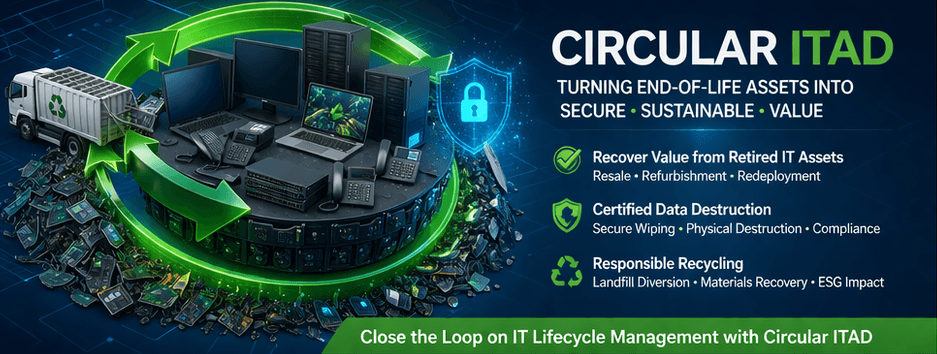
The final stage sees assets decommissioned, data sanitized, and disposed of responsibly — often through resale, recycling, or refurbishment. This is where IT Asset Disposition (ITAD) comes into play.
How Asset Management and ITAD Work Together
While asset management governs an asset’s full lifecycle, ITAD focuses specifically on the end-of-life phase. ITAD ensures:
Secure data destruction
Regulatory compliance
Responsible recycling
Maximum recovery of residual value
Organizations with strong asset tracking integrate ITAD early — planning for disposition long before an asset reaches retirement.
This delivers better financial outcomes and reduces security and environmental risks.
Core Benefits of Effective Asset Management
A strong asset management program directly drives measurable business impact:
Cost Savings
Strategic asset use and lifecycle planning reduce unnecessary purchases and avoid unplanned replacements.
Improved Productivity
Teams spend less time searching for devices or waiting on support, and more time driving outcomes.
Enhanced Security & Compliance
Knowing what’s on your network protects against unauthorized devices and supports audit readiness.
Better Decision-Making
Data-rich oversight enables forecasting, budget planning, and smarter purchase strategies.
Best Practices for High-Performance Asset Management
To be future-ready and resilient, leading organizations implement these strategies:
Centralized Asset Tracking
Use software tools that connect financial, contractual, and inventory data for real-time visibility.
Routine Audits
Schedule regular inventories and compliance checks — annual minimum but more frequent for high-risk environments.
Lifecycle Forecasting
Monitor warranties, depreciation curves, and usage metrics to plan replacements instead of reacting to failures.
Employee Education
Asset rules mean little without staff engagement. Training increases adherence to policies and data security standards.
Partner with Trusted ITAD Providers
Effective end-of-life handling ensures data safety, compliance, and returns on obsolete equipment.
How DES3 Technologies Supports Intelligent Asset Management
At DES3 Technologies, we believe asset management is more than tracking — it’s strategic stewardship of your technology investment. Our team brings deep ITAD, logistics, and compliance expertise to help you:
Maintain accurate inventory and audit trails.
Securely decommission and retire IT assets.
Claim the maximum financial value from end-of-life hardware.
Streamline processes while reducing business risk.
With a partner that understands both operational complexity and compliance standards, you can trust your asset strategy is working harder for your business.
Conclusion: Asset Management Is a Strategic Advantage
In a digital world, organizations cannot afford to guess about their IT environment. Asset Management delivers clarity, financial intelligence, and risk mitigation that leaders depend on to stay secure and efficient.
By incorporating lifecycle visibility, smart planning, and disciplined ITAD practices, your business gains control — not just over technology, but over how that technology impacts your bottom line.