In today’s digital economy, organizations depend heavily on technology assets to operate, communicate, and store valuable information. From laptops and servers to networking equipment and storage devices, IT assets carry enormous operational and data security responsibilities throughout their lifecycle. However, when these assets reach the end of their useful life, they often become one of the most overlooked sources of organizational risk.
Improper handling of end-of-life technology can lead to serious consequences, including data breaches, regulatory violations, environmental damage, and reputational harm. This is why organizations increasingly rely on structured frameworks and industry standards to guide responsible IT asset disposition (ITAD). Two of the most important frameworks in this space are the R2v3 (Responsible Recycling) standard and various ISO standards, particularly those related to information security, quality management, and environmental management.
When implemented together, R2v3 and ISO standards create a powerful system that significantly reduces IT asset risk while ensuring compliance, sustainability, and data protection.
This article explores how these standards complement each other, why they matter for modern businesses, and how organizations can leverage them to build a safer and more responsible IT asset lifecycle.
Understanding IT Asset Risk
Before examining the standards themselves, it is important to understand what “IT asset risk” actually means.
IT asset risk refers to the potential security, compliance, environmental, and operational threats associated with the lifecycle of technology equipment. These risks often increase during the retirement and disposal phase of IT assets.
Common risks include:
- Data breaches caused by improperly wiped or destroyed storage devices
- Regulatory violations involving privacy laws such as HIPAA, GDPR, or CCPA
- Environmental hazards from improper electronic waste disposal
- Loss of chain-of-custody visibility when assets leave company facilities
- Reputational damage resulting from irresponsible recycling practices
As organizations upgrade their infrastructure more frequently, the volume of retired hardware continues to grow. According to global e-waste reports, tens of millions of tons of electronic waste are generated each year, making secure and responsible IT asset disposition more critical than ever.
This is where structured frameworks like R2v3 and ISO standards become essential.
What Is the R2v3 Standard?
The R2v3 (Responsible Recycling version 3) standard is one of the most widely recognized certifications for electronics recycling and IT asset disposition providers. Developed by Sustainable Electronics Recycling International (SERI), R2v3 establishes strict guidelines for how organizations should handle, process, and recycle electronic equipment.
Unlike basic recycling guidelines, R2v3 focuses on both environmental responsibility and data security, making it particularly relevant for organizations managing sensitive information.
Key Principles of R2v3
R2v3 certification requires ITAD providers to meet rigorous standards in several areas:
1. Data Security Requirements
R2v3 mandates secure data sanitization processes for all data-bearing devices. This includes certified data wiping or physical destruction methods that ensure information cannot be recovered.
2. Chain of Custody
Every asset must be tracked throughout the recycling and processing lifecycle. This ensures accountability and prevents devices from being lost, stolen, or mishandled.
3. Environmental Responsibility
The standard requires recyclers to properly manage hazardous materials and ensure that electronic waste is processed safely and responsibly.
4. Downstream Vendor Accountability
R2v3-certified organizations must carefully audit and monitor any downstream vendors to ensure that materials are handled according to responsible recycling practices.
5. Worker Health and Safety
The standard includes strict policies designed to protect employees working with electronic waste and hazardous components.
By addressing these areas, R2v3 helps organizations reduce both security and environmental risks associated with retired IT assets.
Understanding ISO Standards in IT Asset Management

While R2v3 focuses specifically on electronics recycling and IT asset disposition, ISO standards provide broader operational frameworks that improve management systems across an entire organization.
Several ISO standards play a particularly important role in reducing IT asset risk.
ISO 27001 – Information Security Management
ISO 27001 is the global standard for information security management systems (ISMS). It establishes policies and procedures for protecting sensitive data throughout its lifecycle.
For IT asset disposal, ISO 27001 emphasizes:
- Secure data handling
- Risk assessments
- Asset inventory management
- Data destruction protocols
- Access control and documentation
These principles ensure that data protection remains a priority even when equipment is retired or replaced.
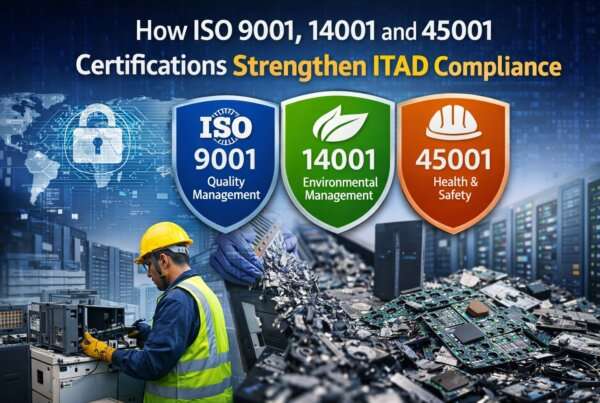
ISO 9001 – Quality Management Systems
ISO 9001 focuses on process consistency, quality control, and continuous improvement.
Within ITAD operations, ISO 9001 ensures that processes such as asset intake, testing, refurbishment, data destruction, and recycling are performed consistently and documented thoroughly.
This reduces the risk of errors, miscommunication, or operational breakdowns that could compromise asset security.
ISO 14001 – Environmental Management Systems
Electronic waste contains hazardous materials such as lead, mercury, and cadmium. Improper disposal can create serious environmental risks.
ISO 14001 provides a framework for environmental management systems (EMS) that help organizations reduce their environmental impact.
When applied to IT asset disposal, ISO 14001 ensures that:
- E-waste is processed responsibly
- Hazardous materials are handled safely
- Environmental compliance is maintained
- Sustainability goals are supported
How R2v3 and ISO Standards Complement Each Other
Individually, R2v3 and ISO standards provide valuable protections. However, when implemented together, they create a comprehensive risk management framework that covers the full lifecycle of IT assets.
1. Comprehensive Data Security
Data security is one of the most significant risks associated with retired technology.
R2v3 ensures that data-bearing devices are securely sanitized or destroyed, while ISO 27001 ensures that organizations have strong internal policies governing data protection.
Together, they create multiple layers of security:
- Secure internal data management (ISO 27001)
- Certified data destruction processes (R2v3)
- Documented procedures and audits (ISO frameworks)
This layered approach dramatically reduces the likelihood of data leaks or breaches.
2. End-to-End Asset Tracking
A common vulnerability in IT asset disposal is the moment when equipment leaves the organization’s facility.
Without proper tracking systems, devices may disappear or fall into unauthorized hands.
R2v3 requires strict chain-of-custody tracking, while ISO management frameworks require documented processes and asset inventories.
This ensures visibility across every stage of the IT asset lifecycle:
- Asset retirement
- Transportation
- Data destruction
- Recycling or resale
- Final material recovery
This transparency is essential for both compliance and risk management.
3. Strong Compliance and Regulatory Alignment
Modern businesses face increasing regulatory pressure regarding both data protection and environmental responsibility.
Regulations such as:
- GDPR
- HIPAA
- CCPA
- Environmental protection laws
require organizations to demonstrate responsible management of both information and electronic waste.
ISO standards help organizations implement structured compliance frameworks, while R2v3 ensures that electronics recycling operations meet industry-specific regulatory expectations.
This combined compliance support helps organizations avoid costly penalties and legal exposure.
4. Improved Vendor Accountability
Many organizations outsource their IT asset disposition to third-party providers. Without proper oversight, this can create hidden risks.
R2v3 requires recyclers to audit and monitor downstream vendors, ensuring that materials are handled responsibly throughout the recycling chain.
ISO quality management systems reinforce this oversight by requiring:
- Vendor evaluations
- Process documentation
- Performance monitoring
This reduces the risk of unethical recycling practices, illegal export of e-waste, or improper data handling.
5. Environmental and Sustainability Benefits

Sustainability has become a critical component of corporate responsibility. Improper e-waste disposal not only damages the environment but can also harm an organization’s public reputation.
ISO 14001 provides structured environmental management processes, while R2v3 ensures responsible recycling practices.
Together, they help organizations:
- Reduce electronic waste
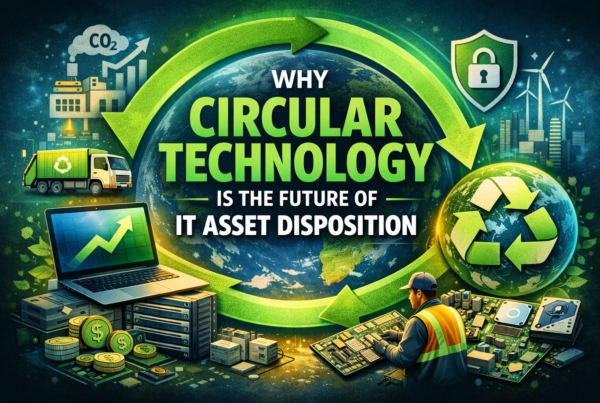
- Promote circular technology practices
- Recover valuable materials
- Minimize landfill impact
- Support ESG initiatives
This combination helps businesses align IT operations with broader sustainability goals.
Real-World Impact: Reducing IT Asset Risk
Organizations that partner with ITAD providers certified in both R2v3 and ISO standards gain several practical advantages.
Reduced Cybersecurity Risk
Certified data destruction processes significantly reduce the chance of sensitive information being recovered from retired devices.
Greater Operational Transparency
Chain-of-custody documentation ensures full visibility into how assets are handled and processed.
Regulatory Protection
Documented compliance frameworks help organizations demonstrate due diligence during audits or investigations.
Enhanced Corporate Responsibility
Responsible recycling and environmental management contribute to stronger sustainability initiatives.
Increased Stakeholder Trust
Customers, partners, and regulators are more likely to trust organizations that follow globally recognized standards.
Choosing the Right ITAD Partner
Not all IT asset disposition providers operate at the same level of security and accountability. Organizations should carefully evaluate potential vendors to ensure they meet the highest standards.
Key questions to ask include:
- Is the provider R2v3 certified?
- Do they maintain ISO certifications such as ISO 27001, ISO 9001, or ISO 14001?
- Can they provide data destruction certificates?
- Do they maintain full chain-of-custody documentation?
- How do they audit downstream vendors?
Selecting a provider that meets these standards significantly reduces the risks associated with IT asset retirement.
The Future of Responsible IT Asset Management
As technology cycles accelerate and data volumes continue to grow, organizations must take a more strategic approach to managing end-of-life IT assets.
Cybersecurity threats are increasing, environmental regulations are becoming stricter, and stakeholders expect greater transparency regarding sustainability and data protection.
Frameworks like R2v3 and ISO standards are quickly becoming the foundation of responsible IT asset management.
Together, they provide organizations with a clear roadmap for:
- Protecting sensitive information
- Maintaining regulatory compliance
- Reducing environmental impact
- Building secure and transparent IT asset lifecycles
Businesses that adopt these frameworks today will be better positioned to manage technology responsibly in an increasingly digital and regulated world.
Final Thoughts
Managing IT assets responsibly does not end when devices are retired. In many ways, the end-of-life stage is where the greatest risks emerge.
Improper data destruction, lack of chain-of-custody tracking, and irresponsible recycling practices can expose organizations to serious cybersecurity, legal, and environmental consequences.
By combining the R2v3 Responsible Recycling standard with globally recognized ISO management frameworks, organizations gain a powerful system for minimizing these risks.
Together, these standards create a structured, transparent, and accountable approach to IT asset disposition—protecting sensitive data, supporting sustainability, and ensuring that technology is handled responsibly from beginning to end.
As the global volume of electronic waste continues to rise, the collaboration between R2v3 and ISO standards will play an increasingly important role in shaping the future of secure and sustainable IT asset management.