In today’s digital-first economy, organizations generate and retire IT assets at an unprecedented pace. From laptops and servers to mobile devices and storage media, every piece of equipment eventually reaches end-of-life. What happens next is not just an operational decision—it is a critical risk, compliance, and sustainability decision.
For companies operating in California, the stakes are even higher. Strict environmental regulations, evolving data privacy laws, and increasing ESG expectations mean that choosing the right IT Asset Disposition (ITAD) partner is no longer optional—it’s essential.
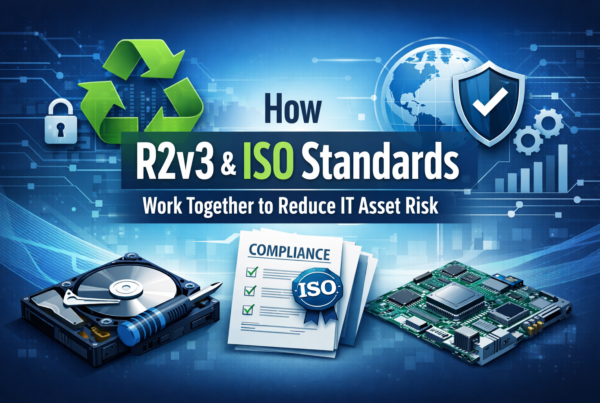
One of the most reliable ways to evaluate an ITAD provider is by looking at their certifications, specifically R2v3 and ISO standards. These certifications are not just badges; they represent a structured, auditable commitment to security, environmental responsibility, and operational excellence.
This blog breaks down why these certifications matter, what they mean in practice, and how they directly impact your organization’s risk exposure and long-term strategy.
The Growing Importance of ITAD in California
California leads the nation in both technological innovation and regulatory rigor. With laws such as the California Consumer Privacy Act (CCPA) and strict e-waste management requirements, organizations must ensure that retired IT assets are handled responsibly.
Improper IT asset disposal can result in:
- Data breaches and regulatory fines
- Environmental violations
- Brand damage and loss of customer trust
- Failed audits and compliance gaps
At the same time, companies are under pressure to meet Environmental, Social, and Governance (ESG) goals. ITAD plays a direct role in achieving sustainability targets through reuse, recycling, and responsible downstream management.
This is where certified ITAD providers come into play.
What Is R2v3 Certification?
R2v3 (Responsible Recycling version 3) is the latest and most rigorous standard for electronics reuse and recycling. Developed by Sustainable Electronics Recycling International (SERI), it sets strict requirements for how IT assets are handled throughout their lifecycle.
Unlike earlier standards, R2v3 places a strong emphasis on data security, traceability, and downstream accountability.
Key Components of R2v3
1. Data Security Requirements
R2v3 mandates strict protocols for data destruction, including:
- Verified data sanitization processes
- Chain-of-custody documentation
- Secure handling and storage of devices
This ensures that sensitive data does not leak during disposal.
2. Downstream Vendor Accountability
ITAD providers must track where materials go after initial processing. This prevents:
- Illegal export of e-waste
- Improper recycling practices
- Environmental harm in developing countries
3. Environmental and Worker Safety Standards
R2v3 enforces safe handling of hazardous materials and protects workers involved in recycling processes.
4. Equipment Reuse Prioritization
Rather than defaulting to destruction, R2v3 encourages reuse when possible, extending the life of IT assets and reducing environmental impact.
What ISO Certifications Bring to ITAD

While R2v3 focuses specifically on electronics recycling, ISO certifications provide a broader framework for operational excellence.
The most relevant ISO standards for ITAD providers include:
- ISO 9001 (Quality Management Systems)
- ISO 14001 (Environmental Management Systems)
- ISO 45001 (Occupational Health and Safety)
Together, these certifications create a comprehensive system for managing quality, environmental impact, and workplace safety.
ISO 9001: Quality and Consistency
ISO 9001 ensures that an ITAD provider has standardized processes in place. This means:
- Consistent service delivery
- Documented procedures
- Continuous improvement practices
For clients, this translates to reliability and predictability.
ISO 14001: Environmental Responsibility
ISO 14001 focuses on minimizing environmental impact. In ITAD, this includes:
- Proper recycling practices
- Waste reduction strategies
- Compliance with environmental regulations
This certification aligns directly with ESG goals.
ISO 45001: Worker Safety
ISO 45001 ensures safe working conditions for employees handling IT assets. This reduces risk across the supply chain and reflects a provider’s commitment to ethical operations.
Why R2v3 and ISO Together Matter
Individually, R2v3 and ISO certifications are valuable. Together, they create a powerful framework that addresses every critical aspect of ITAD:
| Area | R2v3 | ISO |
|---|---|---|
| Data Security | ✔️ | ✔️ (process support) |
| Environmental Compliance | ✔️ | ✔️ |
| Operational Quality | Partial | ✔️ |
| Worker Safety | ✔️ | ✔️ |
| Downstream Accountability | ✔️ | Partial |
This combination ensures that your ITAD partner is not only compliant but also operating at a high level of maturity and accountability.
The Risk of Choosing a Non-Certified ITAD Vendor
Working with an uncertified ITAD provider may seem cost-effective upfront, but it introduces significant hidden risks.
1. Data Breach Exposure
Without verified data destruction processes, sensitive information can be recovered from improperly wiped devices. This can lead to:
- Legal liability
- Financial penalties
- Reputational damage
2. Lack of Chain-of-Custody
If assets are not tracked properly, organizations lose visibility into where their equipment ends up. This creates:
- Audit failures
- Compliance issues
- Increased cybersecurity risk
3. Environmental Violations
Improper disposal can result in hazardous materials entering landfills or being exported illegally, violating California regulations.
4. No Documentation or Audit Trail
Certified providers maintain detailed records. Non-certified vendors often do not, leaving organizations without proof of compliance.
What to Look for in a California ITAD Partner
When evaluating an ITAD provider, certifications should be a baseline—not a bonus. Here are key factors to consider:
1. Verified Certifications
Ensure the provider holds:
- R2v3 certification
- ISO 9001
- ISO 14001
- ISO 45001
Ask for documentation and verify their status.
2. End-to-End Chain of Custody
A strong ITAD partner should offer:
- Asset tracking from pickup to final disposition
- Serialized reporting
- Secure transportation protocols
3. Data Destruction Capabilities
Look for providers that offer:
- On-site and off-site data destruction
- Certified wiping and shredding
- Detailed certificates of destruction
4. Transparent Reporting
Reporting should include:
- Asset inventory
- Disposition outcomes
- Environmental impact metrics
5. ESG Alignment
Your ITAD partner should support your sustainability goals through:
- Reuse-first strategies
- Responsible recycling
- Carbon impact reduction
The Role of ITAD in ESG Strategy
ITAD is no longer just an operational function—it is a strategic component of ESG.
Environmental Impact
Certified ITAD providers help reduce environmental harm by:
- Extending asset lifecycles through reuse
- Minimizing landfill waste
- Ensuring responsible recycling
Social Responsibility
Ethical labor practices and safe working conditions are ensured through ISO 45001 and R2v3 requirements.
Governance and Compliance
Strong documentation, audit trails, and certifications support governance frameworks and regulatory compliance.
How Certifications Support Audit Readiness

Audits are becoming more frequent and more detailed. Whether it’s internal audits, customer audits, or regulatory reviews, organizations must demonstrate:
- Secure data handling
- Proper asset disposition
- Environmental compliance
Certified ITAD providers simplify this process by providing:
- Detailed documentation
- Verified processes
- Third-party validation
This reduces audit stress and minimizes the risk of findings.
California’s Higher Standard for ITAD
California’s regulatory environment sets a higher bar than most states. Companies operating here must navigate:
- Strict e-waste disposal laws
- Data privacy regulations like CCPA
- Increasing ESG reporting requirements
Choosing a certified ITAD partner ensures alignment with these standards and reduces the burden on internal teams.
The Future of ITAD: From Cost Center to Strategic Asset
Forward-thinking organizations are redefining ITAD as a value-generating function rather than a cost center.
With the right partner, ITAD can:
- Recover value through asset resale
- Support circular economy initiatives
- Strengthen cybersecurity posture
- Enhance brand reputation
Certifications like R2v3 and ISO are the foundation that makes this transformation possible.
Final Thoughts
Choosing an ITAD partner in California is not just about logistics—it’s about trust, compliance, and long-term strategy.
R2v3 and ISO certifications provide a clear signal that a provider operates with:
- Verified data security practices
- Environmental responsibility
- Operational excellence
- Accountability across the entire lifecycle
In an environment where data breaches, regulatory penalties, and ESG expectations are all on the rise, working with a certified ITAD partner is no longer optional—it’s essential.
Organizations that prioritize certified providers position themselves to reduce risk, meet compliance requirements, and contribute to a more sustainable future.