A Growing Concern for Electronic Waste
The global demand for electronics has surged in recent decades, especially for smartphones, tablets, and laptops. Apple has become a dominant force in this space, producing millions of iPhones, MacBooks, and iPads each year. While innovation and performance remain Apple’s hallmarks, another pressing issue has emerged alongside this growth: electronic waste (e-waste).
According to the Global E-Waste Monitor, the world generated over 62 million tons of e-waste in 2022, with less than 25% being properly collected and recycled. This figure is projected to climb dramatically in the next decade as more devices are produced and discarded. Apple, with its massive footprint, is directly tied to this challenge.
To its credit, Apple has introduced several recycling initiatives, including its well-known Apple trade-in program. But an important question remains: is Apple doing enough to address the problem of e-waste? And equally important, how can businesses and consumers go beyond Apple’s baseline programs to ensure real sustainability?
This is where DES Technologies enters the conversation. As a leader in sustainable IT practices, DES Technologies not only supports Apple’s recycling vision but takes it several steps further by focusing on secure data handling, compliance, refurbishment, and maximizing the environmental impact of device recovery.
Apple’s Recycling & Trade-In Programs: What They Offer
Apple’s environmental initiatives are not new. For years, the company has promoted programs designed to extend the life cycle of its devices. These include:
1. Apple Trade-In Program
Apple encourages customers to bring in their old iPhones, iPads, MacBooks, or Apple Watches in exchange for credit toward a new purchase. Devices that can be reused are refurbished and resold through Apple’s Certified Refurbished store, while those that cannot be reused are sent to recycling facilities.
Pros:
Easy for consumers to participate.
Provides immediate financial incentives (discounts).
Refurbishment helps extend product life cycles.
Cons:
Limited to Apple’s ecosystem, often leaving out accessories and third-party devices.
Recycling process lacks transparency; consumers rarely know exactly what happens to their devices.
Data wiping responsibility largely falls on the consumer, creating potential risks.
2. Apple Recycling & Daisy Robot
Apple often highlights its recycling robots like Daisy, designed to disassemble iPhones and recover valuable materials such as rare earth metals, tungsten, and cobalt. While innovative, Daisy is limited in scale—handling only certain models and volumes.
Pros:
Advanced technology for recovering rare materials.
Supports Apple’s closed-loop manufacturing goals.
Cons:
Limited capacity; cannot handle the volume of devices Apple sells annually.
Focused mostly on high-value metals, leaving other components underutilized.
3. Apple’s Environmental Reporting
Apple publishes annual Environmental Progress Reports detailing its carbon reduction and recycling achievements. While impressive on paper, these reports often emphasize corporate commitments more than actual downstream accountability for consumer devices.
Are Apple’s Programs Enough?
Apple’s recycling initiatives are an important step, but they raise several critical issues:
Scale: Apple sells over 200 million iPhones annually, yet only a fraction return through trade-in or recycling.
Consumer Responsibility: Many consumers simply store old devices in drawers or dispose of them improperly, bypassing Apple’s systems altogether.
Data Security: Apple assumes users erase their data before trade-in, but incomplete wiping can lead to privacy risks.
E-Waste Leakage: Not all recovered devices are properly tracked, leaving room for improper disposal or export to countries with weak recycling regulations.
In short, Apple is doing something, but not necessarily doing enough. The e-waste crisis requires a broader approach that emphasizes not only recycling but also secure reuse, strict compliance, and maximizing the lifecycle of every device.
How DES Technologies Takes Sustainability Further
At DES Technologies, sustainability isn’t just a checkbox—it’s a core mission. While Apple’s programs focus on brand-driven recycling initiatives, DES Technologies looks at the full lifecycle of IT hardware, ensuring that devices—particularly Apple products—are handled with maximum environmental and security integrity.
1. Secure Data Wiping: Protecting Your Information
One of the biggest risks in recycling electronics is leftover data. Even when devices appear to be erased, sophisticated tools can sometimes recover sensitive information. DES Technologies eliminates this risk through industry-standard secure data wiping protocols that comply with leading frameworks such as:
NIST 800-88 Guidelines for Media Sanitization
GDPR requirements for personal data protection
HIPAA compliance for healthcare organizations handling patient data
By combining secure erasure software with physical destruction (when necessary), DES ensures that every Apple device leaving your hands is completely free of data.
2. Refurbishment Before Recycling
Where Apple often defaults to recycling, DES prioritizes refurbishment. Extending the life of a device is the most sustainable option—reducing demand for new manufacturing and minimizing resource extraction.
Functional iPhones, iPads, and MacBooks are refurbished and reintroduced into the market.
Refurbished devices are tested for quality, updated, and made available for resale at affordable prices.
This process not only reduces waste but also supports accessibility by making technology available to wider audiences.
3. Responsible Recycling When Refurbishment Isn’t Possible
For devices that cannot be refurbished, DES Technologies ensures environmentally responsible recycling. Unlike generic recyclers who may ship e-waste overseas, DES adheres to strict compliance standards, including:
R2 (Responsible Recycling) Certification
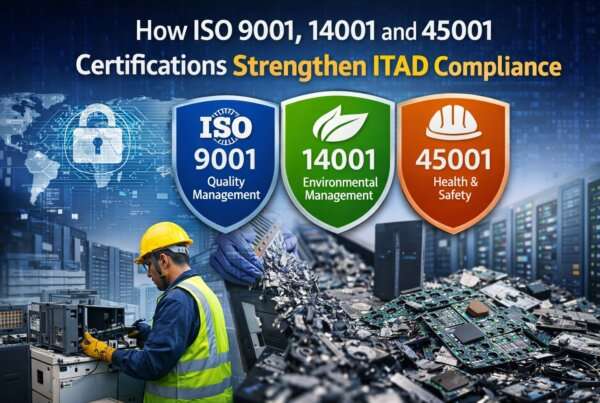
ISO 14001 Environmental Management Standards
Compliance with local, state, and federal regulations
This guarantees that every Apple device is recycled in a way that minimizes landfill impact, prevents environmental leakage, and aligns with INDUSTRY compliance expectations.
4. Corporate Partnerships & Large-Scale IT Asset Disposition (ITAD)
While Apple primarily targets individual consumers, DES specializes in enterprise-scale IT asset disposition (ITAD). Businesses often have dozens—or even thousands—of Apple devices in circulation. DES offers tailored solutions such as:
Bulk Apple device buybacks and trade-ins
On-site secure collection and logistics
Customized compliance reporting for audits
Certificates of data destruction for peace of mind
This enterprise-focused approach ensures organizations not only reduce electronic waste but also meet compliance obligations while recapturing residual value from their Apple hardware.
Selling Old Apple Products Responsibly
For consumers and businesses alike, the key question remains: What is the best way to sell or trade in old Apple devices while making a positive environmental impact?
With DES Technologies, the process is simple and effective:
Device Collection – You can send in your Apple products, whether you’re an individual or an enterprise with bulk devices.
Secure Wiping – All data is securely erased in compliance with industry standards.
Refurbishment or Recycling – Devices are either given a second life or responsibly recycled.
Financial Return – You receive fair market value for your Apple trade-in.
Environmental Impact – Each device handled through DES contributes to reducing global e-waste and supports sustainable IT.
By partnering with DES, you’re not just selling an old iPhone—you’re actively contributing to a circular economy.
Why DES Outperforms Apple’s Trade-In Programs
| Feature | Apple Trade-In | DES Technologies ITAD & Trade-In |
|---|---|---|
| Data Security | User responsibility | Secure wiping & destruction with compliance certifications |
| Refurbishment Focus | Limited scope | Strong emphasis on extending device life |
| Enterprise Solutions | Consumer-focused | Large-scale ITAD services for organizations |
| Compliance | General | Meets strict INDUSTRY compliance (NIST, R2, HIPAA, GDPR) |
| Environmental Impact | Recycling & rare materials recovery | Lifecycle approach: refurbish first, recycle responsibly |
| Transparency | Limited consumer visibility | Full compliance reporting and certificates |
This comparison makes it clear: while Apple offers a convenient program, DES Technologies ensures a deeper, more accountable sustainability model.
The Bigger Picture: Building a Sustainable IT Future
Electronic waste is not going away. With technology evolving rapidly, the need for sustainable IT practices is greater than ever. Apple deserves recognition for pioneering recycling initiatives in the tech sector, but corporations, governments, and third-party sustainability leaders like DES Technologies must work together to build scalable, transparent, and responsible systems.
Key takeaways for businesses and individuals:
Don’t just recycle—refurbish when possible. Extending device lifecycles is the greenest option.
Prioritize data security. Never assume a factory reset is enough.
Work with certified partners. Ensure compliance with industry standards to avoid liability.
Think circular. Every device reused or properly recycled contributes to reducing the global e-waste crisis.
Conclusion: A Smarter Way to Recycle Apple Devices
Apple has made meaningful strides in promoting sustainability through its trade-in and recycling initiatives, but the journey is far from complete. Consumers and enterprises need trusted partners who can provide secure, compliant, and environmentally responsible solutions that go beyond Apple’s efforts.
DES Technologies stands at the forefront of this movement, bridging the gap between consumer convenience and true sustainability. By securely wiping data, prioritizing refurbishment, ensuring responsible recycling, and adhering to INDUSTRY compliance standards, DES not only supports Apple’s vision but pushes it further.
So, the next time you’re thinking about what to do with your old iPhone, iPad, or MacBook, remember: it’s not just about trading in—it’s about making a lasting environmental impact. And with DES Technologies, you can do exactly that.